
When your doctor orders a resistive index, a Doppler ultrasound measurement that shows how easily blood flows through an artery. Also known as RI, it’s a simple number—usually between 0.5 and 0.8—that tells them if blood is moving smoothly or facing too much resistance. This isn’t just a number on a screen. It’s a real clue about how well your kidneys, liver, or even your baby’s brain (in pregnancy) are getting the blood they need.
High resistive index? That often means arteries are stiff, blocked, or under pressure. In the kidneys, a value above 0.7 can signal chronic kidney disease, high blood pressure damage, or even rejection after a transplant. In pregnant women, a rising renal resistive index might warn of preeclampsia before symptoms show. On the flip side, a low resistive index in the brain or liver can mean blood is flowing too freely—sometimes due to shunts or abnormal vessel connections. It’s not a diagnosis on its own, but it’s one of the first things specialists look at when something feels off.
Doctors use this tool because it’s quick, safe, and doesn’t need needles or radiation. You lie down, a probe glides over your skin, and in minutes, they get a picture of blood flow dynamics. It’s why you’ll see resistive index values in studies about kidney transplants, heart failure, and even neonatal care. But it’s not perfect. Age, dehydration, and even how the technician holds the probe can shift the number. That’s why it’s always looked at with other tests—like creatinine levels, blood pressure readings, or imaging.
What you’ll find in the posts below are real-world examples of how this number plays out. You’ll see how it connects to statin use, cyclosporine therapy, kidney health, and even how stress and inflammation affect blood vessels. These aren’t theory pages—they’re stories from patients, doctors, and labs showing what high resistive index actually means when it shows up on a report. No jargon. No fluff. Just what you need to understand what your numbers are telling you.
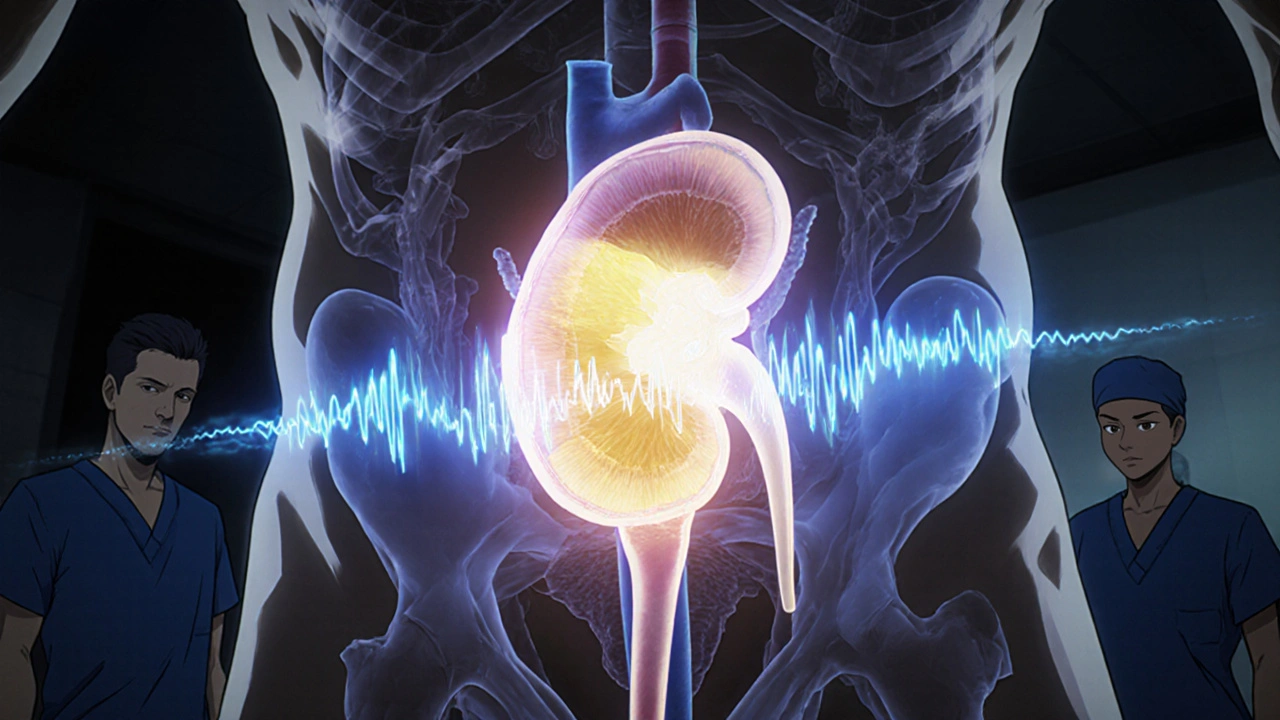
Renal ultrasound is the safest, first-line test for evaluating kidney obstruction and size. It detects hydronephrosis, measures kidney dimensions, and uses Doppler to assess blood flow - all without radiation. Learn how it works and when it's most useful.