
When a drug carries an FDA Boxed Warning, the strongest safety alert the U.S. Food and Drug Administration can issue for prescription medications. Also known as a black box warning, it’s printed in a bold, bordered box on the drug’s labeling to grab immediate attention. This isn’t just a caution—it’s a red flag that the drug has caused serious or life-threatening side effects in real patients, and the risks must be weighed carefully against the benefits.
These warnings aren’t random. They’re added after years of real-world use, post-market studies, or reports of deaths and severe harm. For example, opioids like oxycodone carry a Boxed Warning for addiction and respiratory depression. Some antidepressants warn of increased suicide risk in young adults. And drugs like clozapine, used for treatment-resistant schizophrenia, carry warnings for life-threatening blood disorders. The black box warning, a formal FDA requirement tied to documented patient harm forces doctors and patients to have honest conversations before starting treatment.
The goal isn’t to scare you away from needed medicine—it’s to make sure you’re aware of the stakes. Many of the posts below dive into specific drugs with these warnings: how they work, what to watch for, and how to manage the risks without stopping treatment. You’ll find details on opioid side effects, statin interactions, ketorolac dangers, and cyclosporine monitoring—all tied to real safety alerts. You’ll also see how drug interactions, a common trigger for Boxed Warnings can turn a safe combo into a dangerous one, like PPIs blocking antifungal absorption or decongestants raising blood pressure in vulnerable people.
What you won’t find here is fearmongering. You’ll find clarity. These warnings are tools—not verdicts. If your doctor prescribes a drug with a Boxed Warning, it’s because the benefit outweighs the risk in your case. But you need to know the signs of trouble, when to call your provider, and how to avoid common mistakes that turn manageable risks into emergencies. Below are real-world guides from patients and providers who’ve walked this line. They show you how to use these powerful drugs safely, spot trouble early, and ask the right questions before the next prescription.
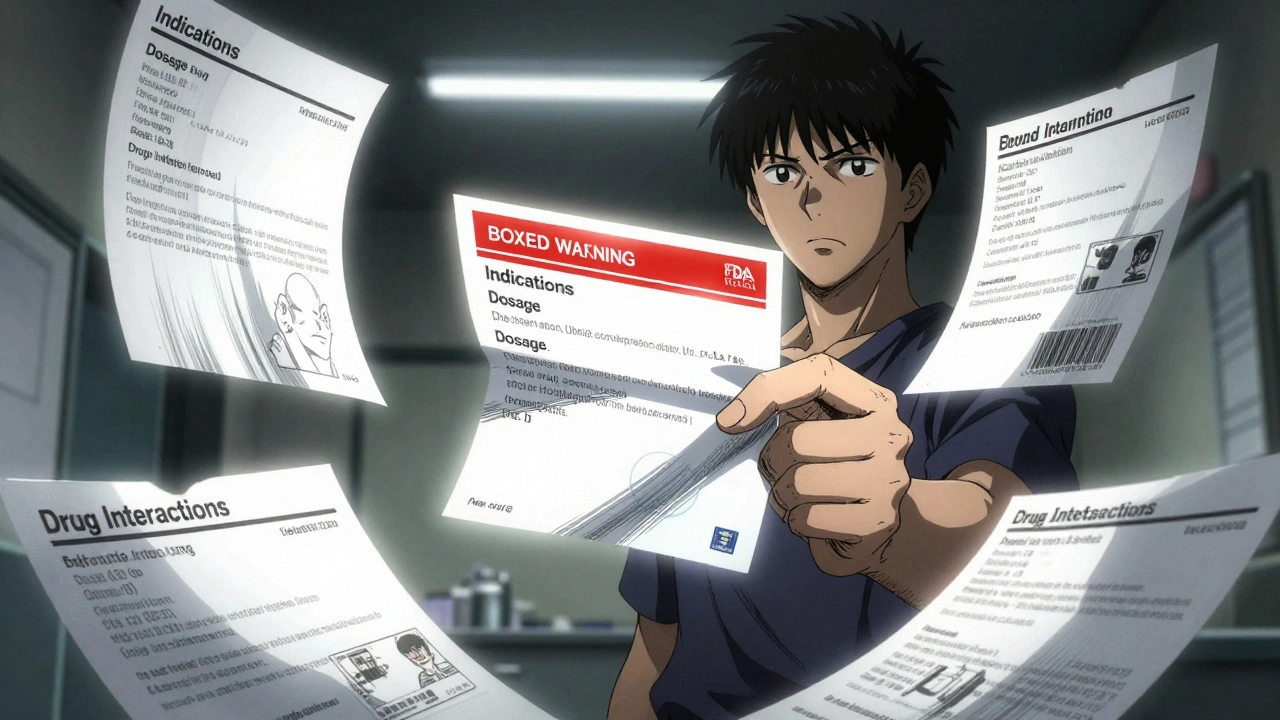
Learn how to read FDA drug labels to spot critical safety info like Boxed Warnings, dosing rules, and drug interactions. Stop guessing-use the official label to avoid mistakes and stay safe.