
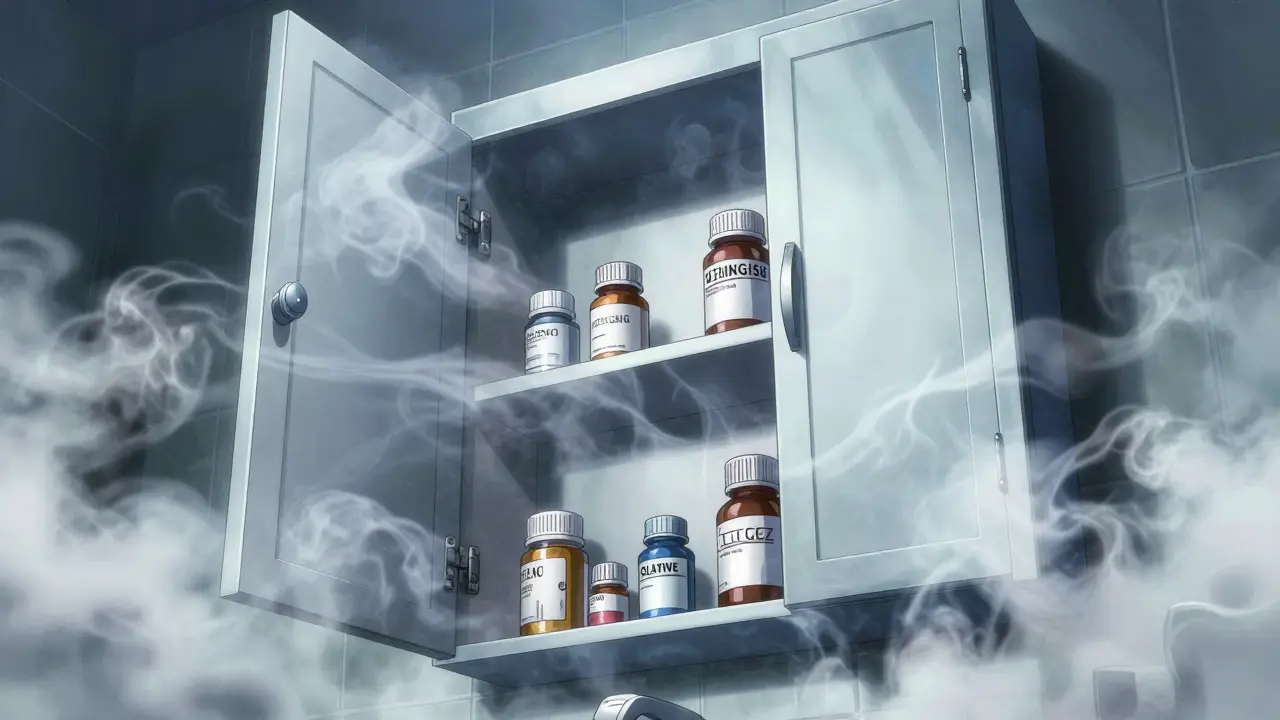
Most of us have a small cabinet right above the sink where we keep our aspirin, prescriptions, and vitamins. It seems like the most logical spot-it's convenient and keeps everything in one place. But here is the truth: that convenient spot is actually one of the worst places for your medicine. Medication storage is the practice of keeping pharmaceutical compounds in a controlled environment to maintain their chemical stability and therapeutic efficacy. When you store your pills in the bathroom, you are essentially putting them in a chamber designed to break them down.
The Invisible Enemy: Heat and Humidity
Think about what happens every time you take a hot shower. The room fills with steam, the temperature spikes, and the air becomes heavy with moisture. While this feels great for your muscles, it's a nightmare for your meds. Humidity is a primary driver of pharmaceutical degradation. Most medications are designed to be stable at a room temperature between 15°C and 25°C (59°F to 77°F). In a bathroom, these numbers fluctuate wildly. During a shower, temperatures can jump 10 to 15 degrees in minutes, and relative humidity can hit 100%.
This moisture doesn't just sit on the bottle; it gets inside. For tablets, this often leads to hydrolysis, where water molecules actually break the chemical bonds of the active ingredients. Capsules can become sticky or brittle, and powders may clump together. If you've ever opened a bottle and noticed the pills look slightly discolored or feel "tacky," you're seeing the physical evidence of the bathroom environment destroying your medicine.
When "Less Potent" Means Dangerous
You might think, "So what if my vitamin C is a bit weaker?" For a supplement, that's a minor annoyance. But for life-critical drugs, a drop in potency can be a disaster. Consider Beta-blockers, which are used to manage heart rate and blood pressure. Research published in Circulation showed that about 30% of patients who stored these drugs improperly experienced inconsistent blood pressure control. When the drug loses its strength, your condition isn't being managed, even though you're taking your dose exactly as prescribed.
Other high-risk examples include:
- Insulin: This protein-based medication becomes unstable if it hits temperatures above 30°C (86°F).
- Nitroglycerin: These tablets are incredibly sensitive to humidity and can lose their life-saving power rapidly.
- Oral Contraceptives: FDA stability testing indicates that hormonal degradation in poor environments can reduce effectiveness by up to 35%.
Even diagnostic tools aren't safe. Blood glucose test strips stored in bathrooms have been found to produce inaccurate readings in 68% of cases, according to the Journal of Diabetes Science and Technology. If you're making health decisions based on a faulty reading, you're putting yourself at risk.
The Safety Gap: Access and Accidental Poisoning
Beyond the chemistry, there is a serious safety issue. Bathroom cabinets are usually the most accessible storage areas in the house. Controlled Substances, such as opioids, should never be kept in a place where a curious child or a guest can easily find them. Data from the CDC reveals a shocking reality: 70% of misused prescription opioids actually come from home medicine cabinets.
If you have kids or pets, the risk is even higher. A study funded by the NIH found that over 60% of homes with minors still store high-risk medications within easy reach. The American Academy of Pediatrics is clear on this: all medications should be in locked cabinets, far away from where children play or bathe.
Where Should You Actually Put Your Meds?
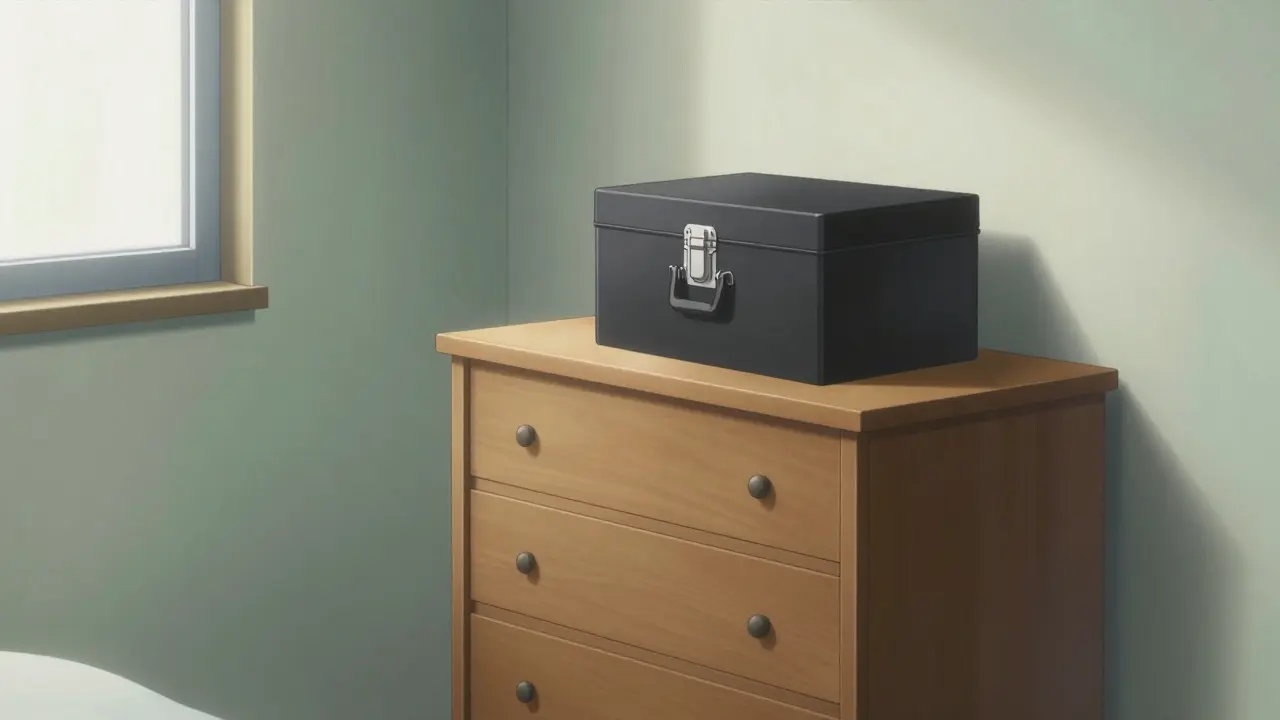
If the bathroom is out, where is the "gold standard" for storage? The rule of thumb is to find a place that is cool, dry, and dark. An interior bedroom dresser or a high shelf in a linen closet (away from the bathroom) is usually perfect. These areas don't suffer from the extreme temperature swings seen in bathrooms or kitchens.
| Location | Risk Level | Primary Issue | Verdict |
|---|---|---|---|
| Bathroom Cabinet | High | Steam, Heat, Humidity | Avoid |
| Kitchen Counter | Medium | Stove Heat, Sunlight | Avoid |
| Bedroom Dresser | Low | Stable Temp/Dry | Recommended |
| Dedicated Pharma Fridge | Very Low | Consistent Cold (2-8°C) | For Refrigerated Only |
Managing Special Storage Needs
Some medications have stricter requirements. About 12% of prescriptions require refrigeration. While a standard kitchen fridge is better than a bathroom, it's not perfect because every time you open the door to grab milk, the internal temperature fluctuates. For high-sensitivity meds, a dedicated pharmaceutical refrigerator that maintains a strict 2°C to 8°C (36°F to 46°F) range is the safest bet.
Another common mistake is leaving meds in the car. A vehicle can become an oven in the summer and a freezer in the winter. This rapid cycling is even more destructive than bathroom humidity, potentially rendering your medication useless in a matter of days.
The Importance of Regular Audits
Medications don't just degrade due to the environment; they also expire. Many people keep "just in case" pills for years. The Great Ormond Street Hospital recommends clearing out your supplies every three months. This prevents you from accidentally taking an expired drug that may have already been weakened by poor storage.
When you do an audit, look for these red flags:
- Pills that have changed color or developed spots.
- Capsules that feel sticky or have melted together.
- A strange smell coming from the bottle that wasn't there before.
- Tablets that crumble easily when touched.
If you see any of these, don't risk it. Toss them out-but do it safely. Don't just flush them down the toilet, as this contaminates the water supply. Use a designated drug take-back program or a pharmacy disposal kiosk.
Smart Solutions for Modern Homes
If you struggle to remember where you put your meds once you move them out of the bathroom, there are tools to help. Many pharmacies now include humidity-indicating desiccant packets in their bottles to soak up moisture. Some high-end manufacturers are even using temperature-sensitive labels that change color if the medication has been exposed to unsafe heat.
There are also "smart" medicine cabinets now available that monitor humidity and temperature, sending an alert to your phone if the environment becomes unsafe. However, the simplest and cheapest solution remains the best: move your medications to a cool, dry bedroom closet and keep them in a locked box.
Will my medicine go bad if I keep it in the bathroom for a few days?
A few days likely won't destroy a medication, but the damage is cumulative. Every time the room steams up from a shower, you're accelerating the degradation process. If you're just visiting or in a temporary spot, it's a minor risk, but as a long-term habit, it's dangerous.
What if my medicine cabinet is sealed and airtight?
While an airtight seal helps with humidity, it doesn't stop heat. Bathrooms still get significantly warmer than other rooms. Heat can penetrate the cabinet and degrade the active ingredients even if no moisture gets in.
How can I tell if my medication has been damaged by humidity?
Look for physical changes: pills that are crumbling, capsules that are sticky or fused together, or any unusual discoloration. If you notice these signs, contact your pharmacist to see if the medication needs to be replaced.
Is the kitchen a better alternative to the bathroom?
Not necessarily. Kitchens have a lot of "heat zones" near ovens and stoves, and sunlight from windows can degrade chemicals. A bedroom or a dedicated hallway closet is generally much more stable.
Why do so many bathrooms have medicine cabinets if they are bad for drugs?
It's a leftover from early 20th-century home design. When those cabinets became standard, we didn't have the advanced pharmaceutical stability data we have now. We're essentially following an outdated architectural trend that contradicts modern science.