
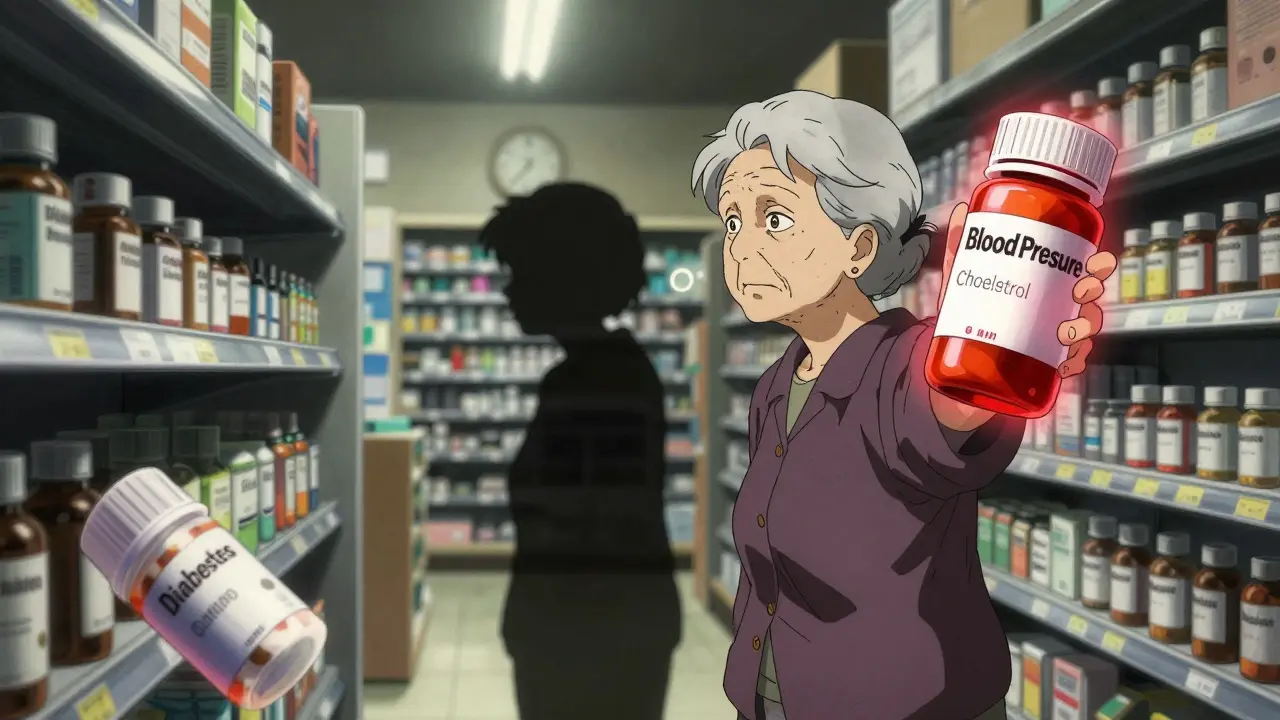
It’s not uncommon to hear someone say, "I forgot to take my pill today," or "I didn’t fill the prescription because it was too expensive." These aren’t just careless mistakes-they’re part of a massive, quiet crisis in healthcare. Medication adherence-taking your drugs exactly as prescribed-is one of the most overlooked factors in whether treatment works. And the truth? About half of all people with long-term conditions don’t take their medications properly. That’s not because they’re lazy or irresponsible. It’s because real, everyday barriers get in the way.
Forgetfulness Is the #1 Reason People Skip Doses
Think about your own day. You’re juggling work, kids, appointments, errands. Now imagine you’re supposed to take three different pills at three different times, each with its own instructions. If you’re over 60, chances are you’re also managing memory changes. A 2024 study found that 44% of diabetic patients aged 59 and older cited forgetfulness as their main reason for missing doses. It’s not about willpower. It’s about cognitive load. The brain simply can’t keep track of everything, especially when medications don’t feel like they’re doing anything right away. Blood pressure meds? You don’t feel different. Cholesterol pills? No immediate reward. So, it’s easy to skip one day… then another.Cost Stops More Prescriptions Than You Think
You might get a prescription, walk to the pharmacy, and then walk out without it. Why? Because the out-of-pocket price is too high. The CDC reports that 20% to 30% of new prescriptions are never filled due to cost. For people on fixed incomes, choosing between medicine and groceries isn’t a hypothetical-it’s daily reality. A 2023 AMA survey found that 50% of patients said cost was their primary barrier. And it’s not just insulin or specialty drugs. Even common medications like statins or blood pressure pills can cost $50 or more per month without insurance. That adds up fast when you’re on five or six drugs. Some patients cut pills in half. Others skip days. All of it leads to worse outcomes-and higher long-term costs.Complex Schedules Are a Recipe for Failure
One pill a day? Easy. Four pills a day, at different times, with different food rules? That’s a nightmare. A meta-analysis of 74 studies found that adherence drops from 79% for once-daily meds to just 51% for regimens requiring four or more doses. Why? Because complexity breeds confusion. Take a 70-year-old with high blood pressure, diabetes, and arthritis. They might have eight different pills. Each has its own timing: "take with food," "take on an empty stomach," "take at bedtime," "don’t take with grapefruit." No wonder they get it wrong. Studies show that for every additional medication a person takes, their chance of nonadherence increases by 16%. And it’s not just the number-it’s the timing. If your work schedule changes daily, or you’re a caregiver juggling multiple appointments, keeping a complex schedule is nearly impossible.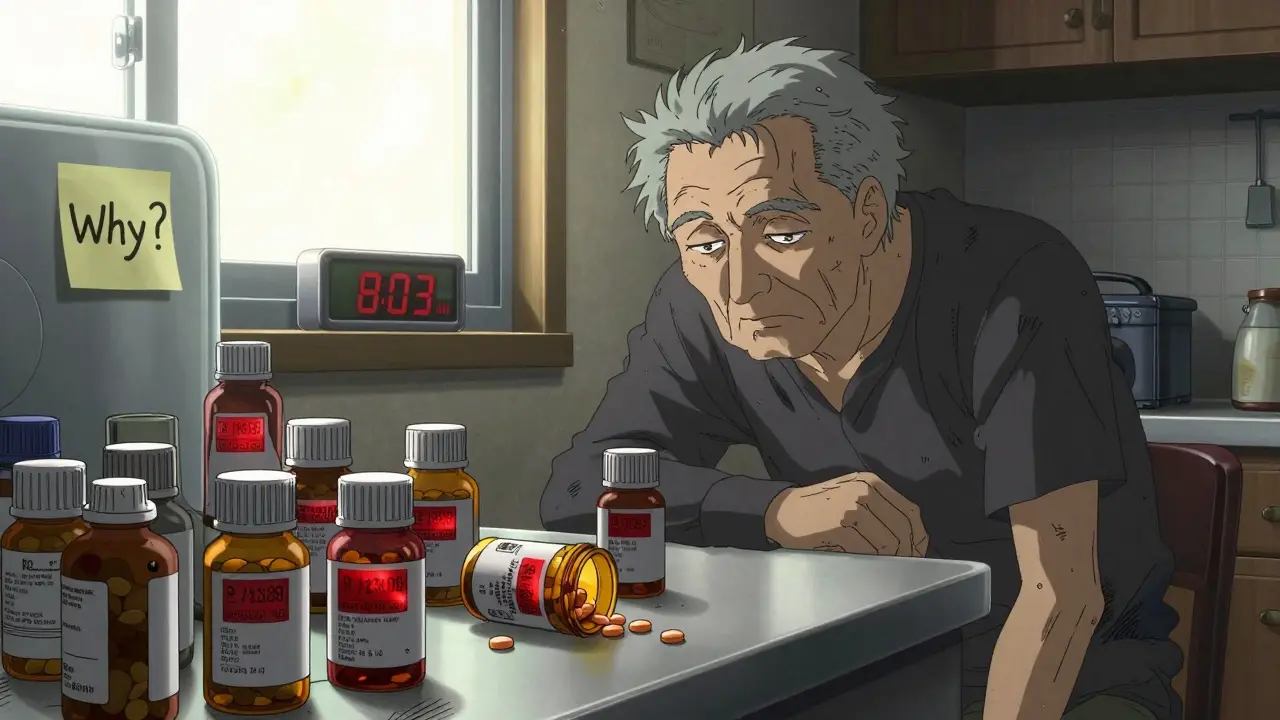
Bad Instructions and Poor Communication
Your doctor prescribes a pill. You leave the office. You get home. You open the bottle. The label is tiny print. The instructions say "take one tablet daily." But they don’t say why. Or when. Or what happens if you miss one. A 2024 study found that 84% of diabetic patients said they didn’t get clear guidance from their provider. One patient on HealthUnlocked shared: "My doctor never told me to take my blood pressure pill at night. I took it in the morning. My numbers got worse." That’s not the patient’s fault. That’s a system failure. If you don’t understand why you’re taking a drug, you’re less likely to stick with it. And if the instructions are confusing-like an insulin pen with unreadable markings-you might even overdose.Side Effects and Doubts About Effectiveness
Some people stop taking meds because they feel worse after starting them. A dry cough from blood pressure pills. Stomach pain from statins. Fatigue from antidepressants. These aren’t minor inconveniences-they’re real, uncomfortable experiences. A 2013 study found that 38% of nonadherence comes from fear of side effects. And 47% comes from doubting whether the medicine is even necessary. If you don’t feel sick, why take a pill? "I’m fine," they say. "I don’t need this." This is especially true for conditions like high cholesterol or early-stage hypertension, where symptoms don’t show up until damage is done. Patients aren’t being irrational-they’re responding to what they can see and feel.Other Hidden Barriers: Literacy, Technology, and Access
Health literacy matters. A 2024 study showed patients with low health literacy are 2.5 times more likely to miss doses. If you can’t read the label, understand the dosage, or follow a multi-step process, adherence drops fast. Then there’s technology. Apps and reminders sound great-but 42% of patients over 65 say they’re uncomfortable using digital tools. And what about transportation? If you live in a pharmacy desert-with no drugstore within five miles-you’re not going to refill that prescription every 30 days. A 2023 Robert Wood Johnson Foundation report found nonadherence rates are 37% higher in these areas. Even something as simple as not having a working pill organizer can make a difference.
What Actually Works to Fix This
The good news? We know how to fix this. But it takes more than telling patients to "be better." Solutions need to meet people where they are. Here’s what works:- Simplify the regimen. Switch to once-daily pills. Use combination drugs (like a pill that combines blood pressure and cholesterol meds). Fewer pills = fewer chances to mess up.
- Automate refills. 90-day mail-order prescriptions increase adherence by 15-20%. No more running out.
- Pharmacist-led support. Pharmacists who review all your meds and sync refill dates improve adherence by 18%. They’re the front line.
- Structured counseling. Just 10-15 minutes of clear, empathetic talk from a provider boosts adherence by 25%. Explain why it matters. Answer the "why" question.
- Low-tech solutions. Pill boxes, alarms, or even a simple calendar on the fridge work better than apps for many older adults.
The biggest mistake? Treating nonadherence as a patient problem. It’s not. It’s a system problem. We’ve built a healthcare model that expects people to be perfect at managing complex medical routines while ignoring the real barriers in their lives. The answer isn’t more guilt. It’s better design.
What’s Changing Now
In January 2024, Medicare started paying providers bonuses of up to $150 per patient who hits 80%+ adherence on heart meds. That’s a big shift-it’s no longer just about treating illness, but about making sure treatment works. Drugmakers are also launching longer-acting injections (like monthly shots for schizophrenia) that cut adherence rates from 45% to 85%. And AI tools are now predicting who’s likely to miss doses with 82% accuracy, so clinics can step in before a crisis hits. But until we fix the basics-cost, complexity, and communication-these innovations won’t reach the people who need them most.Why do people stop taking medications even when they know it’s important?
People often stop because the barriers outweigh the perceived benefits. If a medication causes side effects, costs too much, or requires a complicated schedule, the daily hassle can feel bigger than the distant risk of future illness. Many patients don’t feel sick, so they don’t see the point. It’s not about ignorance-it’s about trade-offs they’re forced to make every day.
Is forgetfulness really that big of a problem?
Yes. Forgetfulness is the single most common reason people miss doses, especially among older adults and those on multiple medications. One study found 44% of diabetic patients over 59 cited forgetfulness as their main barrier. When you’re taking 5-8 pills at different times of day, your brain can’t keep track. It’s not laziness-it’s cognitive overload.
Can medication adherence be improved without technology?
Absolutely. Simple, low-tech solutions often work better than apps. Pill organizers, alarms on a regular clock, refill reminders from a pharmacist, or even a sticky note on the fridge can be highly effective. For older adults or those with limited digital skills, these methods are more reliable and easier to trust.
How does polypharmacy affect adherence?
Each additional medication increases the chance of nonadherence by 16%. More pills mean more schedules, more side effects, more confusion, and more cost. When someone takes five or more drugs, adherence drops sharply. Doctors should regularly review prescriptions to remove unnecessary ones and combine drugs when possible.
Why do some patients refill their prescriptions but still not take the pills?
Refilling doesn’t equal taking. Many patients fill the prescription because they think they should-but then don’t take the pills due to side effects, cost concerns, confusion about instructions, or doubts about whether the drug works. They’re stuck between wanting to follow advice and feeling like it doesn’t fit their life.
What role do pharmacists play in improving adherence?
Pharmacists are critical. They can synchronize all your refills to one date, review your entire med list for interactions or redundancies, explain instructions in plain language, and offer free pill organizers. Studies show that pharmacist-led interventions improve adherence by up to 18%. Yet, only 32% of small pharmacies have formal adherence programs.
What You Can Do Next
If you’re managing multiple medications:- Ask your doctor: "Can any of these be combined or simplified?"
- Request a 90-day refill to reduce trips to the pharmacy.
- Ask your pharmacist for a pill organizer or refill reminder service.
- Write down why each medication matters-keep it on your fridge.
- If cost is an issue, ask about generic alternatives or patient assistance programs.
Healthcare systems need to change. But until they do, small, practical steps can make a big difference. Adherence isn’t about discipline. It’s about design. And everyone deserves a system that works with their life-not against it.


David L. Thomas
March 11 2026The cognitive load argument is spot-on. When you're juggling work, kids, aging parents, and a chronic condition, your prefrontal cortex isn't a Swiss Army knife-it's a butter knife. Add in polypharmacy and non-intuitive dosing schedules, and you're asking the brain to run a distributed system with no error handling. The real kicker? These aren't edge cases. This is the baseline for millions of Americans. We're not failing patients. We're failing systems designed by people who've never had to manage three prescriptions while working two jobs and paying rent.