

When you have a sore knee, aching shoulder, or nerve pain from shingles, swallowing a pill isn't always the best answer. Oral painkillers can mess with your stomach, kidneys, or liver - especially if you're older or taking other meds. That's where topical analgesics come in. These gels, patches, and creams go right on the skin, targeting pain at its source without flooding your whole body with drugs. In Melbourne, where arthritis and sports injuries are common, more people are turning to these options - and for good reason.
How Topical Analgesics Work (Without the Side Effects)
Unlike pills that get absorbed into your bloodstream and travel everywhere, topical analgesics work locally. They don’t need to reach your liver or kidneys to do their job. Instead, they block pain signals right where they start - in the nerves under your skin. This means you get relief without the dizziness, stomach ulcers, or kidney stress that often come with oral NSAIDs or opioids.
There are three main types, each with a totally different way of shutting down pain:
- Lidocaine - a numbing agent that blocks nerve signals like a circuit breaker.
- Capsaicin - the spicy compound from chili peppers that burns at first, then silences pain nerves.
- NSAID gels - like diclofenac, they reduce inflammation right where it’s happening.
Studies show these work better than you might think. For example, a 2018 Cochrane Review found that topical NSAIDs had a number needed to treat (NNT) of just 2.7 - meaning if you treat 3 people, 2 will feel real pain relief within a week. Compare that to oral NSAIDs, which need an NNT of 3.5. That’s a small difference, but when you’re the one in pain, it matters.
Lidocaine Patches: The Silent Numb
The 5% lidocaine patch (Lidoderm®) is the go-to for nerve pain - especially postherpetic neuralgia from shingles. It doesn’t make you feel high or drowsy. It doesn’t interact with blood pressure meds or diabetes drugs. It just sits on the skin, quietly blocking pain signals from overactive nerves.
How much gets into your blood? Almost nothing. A single 12-hour patch releases only 63 mg of lidocaine. Your peak blood level? Just 0.13 μg/mL - about 10% of what would trigger heart rhythm problems. That’s why it’s safe for older adults who can’t take oral painkillers.
Use it right: Apply one patch to the painful area, leave it on for 12 hours, then take it off for 12 hours. You can use up to three patches a day, but never longer than 12 hours on. Too much, too long, and you risk skin irritation - or worse, a toxic buildup. Most people see results after a few days. One user in a 2019 survey said, “It didn’t fix my pain, but it made it bearable. I could sleep again.”
Capsaicin: Burn to Heal
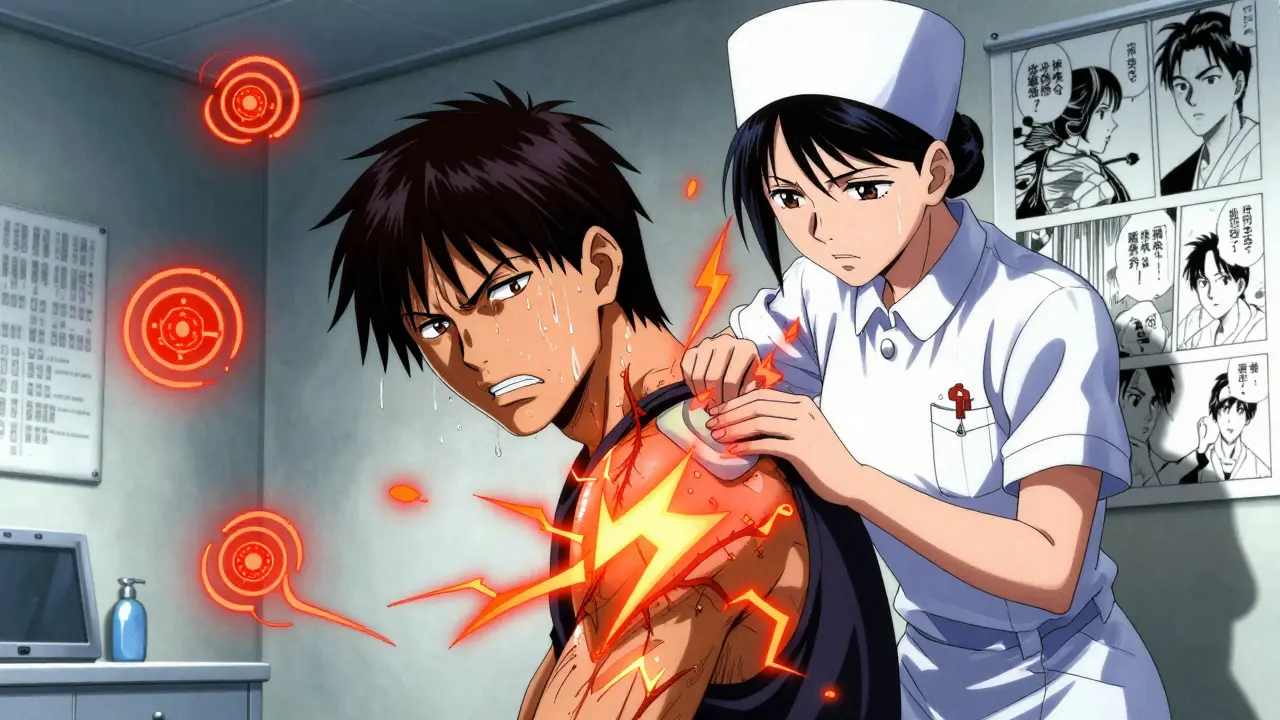
Capsaicin is weird. It makes your skin burn - on purpose. The 8% patch (Qutenza®) is a prescription-only treatment. It’s not something you slap on at home. A nurse applies it in a clinic, and you feel a burning sensation for 30 to 60 minutes. It’s intense. Some people cry. Others say it’s worth it.
Here’s why it works: capsaicin binds to TRPV1 receptors - the same ones that make your mouth feel hot when you eat chili. At first, it overloads those nerves, flooding them with signals. Then, it exhausts them. After that, they stop sending pain messages for weeks. One study showed 8% capsaicin had an NNT of 4.4 for shingles pain - meaning about 1 in 4 people got major relief.
But here’s the catch: 30 to 50% of people quit because the burning is too much. It’s not a “just try it” solution. You need to stick with the initial discomfort. One Reddit user wrote: “The application felt like a lightning strike. But after 2 hours? My PHN pain dropped from 8/10 to 3/10. And it lasted 8 weeks.”
Important: Never use capsaicin near eyes, mouth, or genitals. Wash your hands after applying. And don’t use it on broken skin - it’ll sting like hell.
NSAID Gels: The Anti-Inflammatory Touch
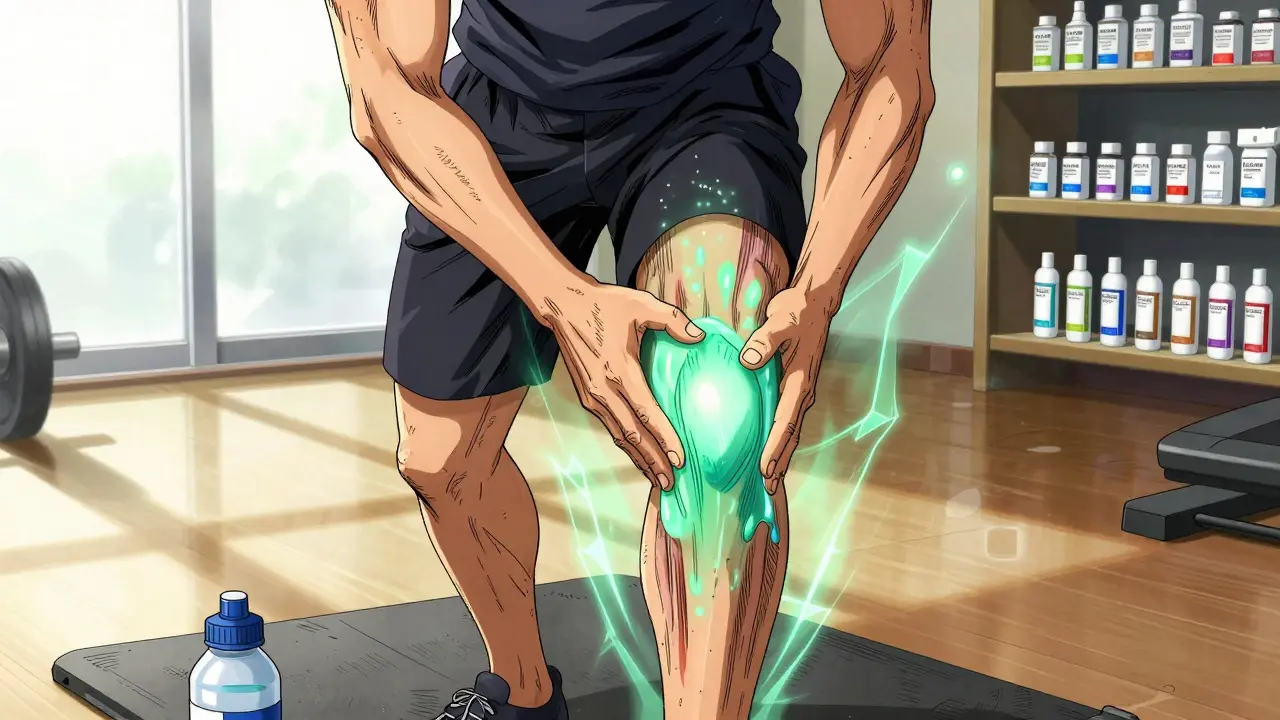
Think of diclofenac gel (Voltaren®) as a targeted version of ibuprofen. Instead of swallowing a pill that goes everywhere, you rub a small amount on your knee or elbow. The gel gets absorbed into the joint, muscle, and surrounding tissue - reaching concentrations 10 to 100 times higher than in your blood. That means it’s working hard where you need it, and barely anywhere else.
Studies show it cuts osteoarthritis pain by 60% in 4 weeks - especially for knees, wrists, and hands. But it barely helps deep joints like the hip. Why? Because the gel can only penetrate about 5 to 10 mm into the skin. If the pain is buried under layers of muscle or fat, it won’t reach.
Use it right: Apply a 2- to 4-inch ribbon of gel 4 times a day. Rub it in gently until it disappears. Don’t just dab it on. Most people underapply - 60% use less than needed. And don’t wash the area for at least an hour. Peak pain relief hits around 1.5 hours after application.
One user on Drugs.com said: “It takes 45 minutes to kick in, but once it does, I’m good for 6 hours. No stomach pain. No drowsiness. I’d never go back to pills.”
Who Benefits Most?
Topical analgesics aren’t for everyone - but they’re perfect for specific groups:
- Elderly patients - 42% of Medicare users in the U.S. use them for arthritis. They avoid liver and kidney strain.
- People on multiple meds - no drug interactions with blood thinners, diuretics, or heart medications.
- Those with stomach issues - no NSAID-induced ulcers.
- People avoiding opioids - these are now first-line in the American Pain Society’s 2023 guidelines.
They’re also great for athletes with tendonitis, office workers with carpal tunnel, or anyone with localized pain from overuse. But if your pain is deep, widespread, or moving around, you’ll need something else.
What Doesn’t Work
These aren’t magic. Here are the limits:
- Deep pain - If your hip joint is hurting, a gel won’t reach it. Injections or oral meds still win here.
- Broken skin - Never apply to cuts, burns, or rashes. It’ll sting, and you risk absorption that’s too strong.
- Quick relief - Lidocaine takes 30 minutes. Capsaicin takes hours. NSAID gels need 45 minutes. These aren’t “pop a pill and feel better in 10 minutes” solutions.
- Consistency - Skin thickness, sweat, and even weather affect absorption. If you’re applying it wrong, you won’t feel anything.
And yes - skin reactions happen. About 10 to 30% of users get redness, itching, or peeling. Capsaicin causes burning in half the users. Lidocaine patches cause mild rash in 5 to 15%. NSAID gels? Less than 5% have serious reactions.
What’s Next?
The field is evolving fast. New nanoemulsion gels are in trials - one showed 2.3 times better skin penetration than regular diclofenac gel. Researchers are also testing resiniferatoxin (RTX), a super-hot cousin of capsaicin, for osteoarthritis. The goal? To make treatments stronger, longer-lasting, and easier to use.
Right now, the market is booming. Global sales hit $5.2 billion in 2022 and are expected to hit $8.7 billion by 2028. Why? Because people are tired of opioids. Tired of stomach pain. Tired of pills that don’t fit their lives.
In Melbourne, where aging populations and active lifestyles meet, these patches and gels are becoming routine. No prescription needed for OTC versions. Just clean skin, the right amount, and patience.
Can I use lidocaine patches with other painkillers?
Yes. Lidocaine patches have almost no drug interactions because they barely enter your bloodstream. You can safely use them with blood pressure meds, diabetes drugs, or even antidepressants. Always check with your doctor if you’re on heart medications, but in most cases, it’s safe.
How long does it take for capsaicin to work?
The first application causes burning that lasts 30 to 60 minutes. Pain relief doesn’t start until after that - usually within 2 to 4 days. Full effects take up to 2 weeks. You need to stick with it. The pain doesn’t vanish overnight, but the relief lasts 8 to 12 weeks after one application.
Is Voltaren gel better than ibuprofen pills?
For localized pain like knee osteoarthritis, yes - and here’s why. A 2023 study showed Voltaren gel reduced pain by 60% in 4 weeks with almost no side effects. Oral ibuprofen reduced pain by 55%, but caused stomach upset in 15% of users. If your pain is in one spot and you have a sensitive stomach, the gel wins.
Can I use topical analgesics if I have kidney problems?
Lidocaine patches and capsaicin are safe. NSAID gels like diclofenac are also low-risk because they rarely enter the bloodstream. But if you have severe kidney disease, talk to your doctor. Even small amounts can add up over time. For most people with mild to moderate kidney issues, topical NSAIDs are safer than pills.
Why do some people say topical pain relief doesn’t work for them?
Mostly because they use it wrong. Common mistakes: applying too little gel (60% do this), not massaging it in, using it on broken skin, or expecting instant results. Also, if your pain is deep (like a hip joint), the gel can’t reach it. Make sure you’re applying it correctly - and give it time. It’s not a quick fix.
Final Thought
Topical analgesics aren’t a cure-all. But for millions of people with localized pain, they’re a game-changer. No pills. No side effects. Just targeted relief. If you’ve been struggling with joint pain, nerve pain, or muscle soreness - and pills have left you worse off - it’s time to try what’s on your skin instead of in your stomach.


Michael FItzpatrick
February 24 2026Man, I wish I'd known about this stuff years ago. I spent a decade on NSAIDs for my knee, and by 65, my stomach was a war zone. Tried the diclofenac gel after my PT pushed it - holy hell, it's like someone turned down the volume on my pain. No more bloating, no more midnight acid reflux. Just clean, quiet relief. I even got my sister on it for her wrist arthritis. She called it 'the magic lotion.'
And lidocaine patches? Game-changer for nerve pain. My buddy with shingles nerve pain said it was the first thing that let him sleep in months. No drowsiness. No interactions. Just… peace. I wish doctors handed these out like Advil instead of acting like they're some secret underground drug.