

When blood clots form in the portal vein - the main vessel carrying blood from your intestines to your liver - it’s called portal vein thrombosis (PVT). This isn’t just a rare imaging finding. Left untreated, it can lead to serious complications like intestinal damage, worsening liver disease, or even death. But here’s the good news: if caught early and treated properly, most people recover well. The key is knowing when to act, which drugs to use, and who should avoid them.
What Exactly Is Portal Vein Thrombosis?
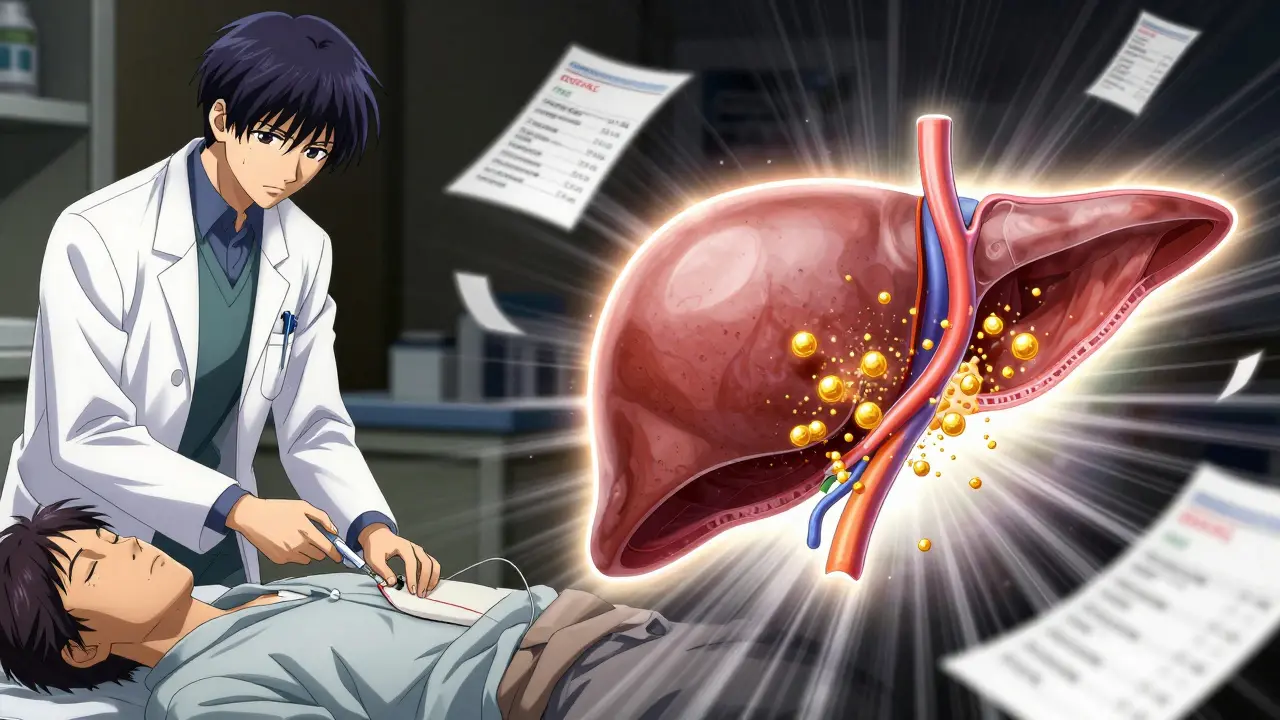
Portal vein thrombosis happens when a clot blocks or narrows the portal vein. This vein collects nutrient-rich blood from your stomach, intestines, and spleen and delivers it to your liver for processing. When that flow stops, pressure builds up. Your body tries to compensate by creating new, smaller blood vessels around the blocked area - a process called cavernous transformation. But these new vessels are fragile and can bleed.
PVT can be acute (sudden, within two weeks) or chronic (lasting over six weeks). Acute cases often cause sudden abdominal pain, bloating, or fever. Chronic PVT may show no symptoms at all - which is why it’s sometimes found accidentally during scans for other issues. The real danger? If the clot spreads into the veins of your intestines, it can cut off blood supply to parts of your bowel. That’s a medical emergency.
How Is It Diagnosed?
Ultrasound is the first test doctors use. It’s cheap, safe, and surprisingly accurate - detecting portal vein blockages in 89 to 94% of cases. A Doppler ultrasound doesn’t just show the clot; it shows whether blood is still flowing around it. If the portal vein looks empty or has no flow, that’s a red flag.
If the ultrasound is unclear, a CT scan or MRI with contrast is next. These give detailed 3D images of the entire portal system. Radiologists look for three things: how much of the vein is blocked (less than 50%, 50-99%, or fully blocked), whether collateral vessels have formed, and if the clot extends into the superior mesenteric vein (which drains the small intestine).
But diagnosis isn’t just about imaging. Doctors need to know why the clot formed. Was it due to liver cirrhosis? Cancer? A recent infection? Or an inherited blood disorder? Blood tests check for liver function (Child-Pugh score), kidney function, platelet count, and clotting factors. About 25-30% of non-cirrhotic patients have an underlying thrombophilia - meaning their blood has a natural tendency to clot. Tests for Factor V Leiden, prothrombin gene mutation, and protein C/S deficiency are often done.
Why Anticoagulation Is the Standard Treatment
For years, doctors debated whether to give blood thinners to people with PVT - especially if they had cirrhosis. The fear was bleeding. But data from the last five years has changed everything. Now, major guidelines from the American Association for the Study of Liver Diseases (AASLD) and the European Association for the Study of the Liver (EASL) agree: anticoagulation should be offered to nearly all patients with acute PVT, even if they have cirrhosis.
The goal isn’t just to prevent more clots. It’s to dissolve the existing one. Studies show that patients who start anticoagulation within six months of diagnosis have a 65-75% chance of full recanalization - meaning the vein reopens and blood flow returns. If you wait longer, that drops to 16-35%.
One 2023 study of 93 non-cirrhotic patients treated with DOACs found that 70% had complete or near-complete vein reopening. Another showed that patients who got anticoagulation before liver transplant had an 85% one-year survival rate - compared to 65% for those who didn’t.
Which Blood Thinners Work Best?
Not all anticoagulants are created equal. The choice depends on liver function, bleeding risk, and whether the patient has cancer or a genetic clotting disorder.
- Low molecular weight heparin (LMWH) - like enoxaparin - is often used first, especially in cirrhotic patients. It’s given as daily injections. Dosing is based on weight: 1 mg/kg twice daily or 1.5 mg/kg once daily. Target anti-Xa levels are 0.5-1.0 IU/mL. It’s preferred in Child-Pugh A or B cirrhosis because it’s easier to monitor and adjust than warfarin.
- Vitamin K antagonists (VKAs) - like warfarin - require regular INR checks. The target is INR 2.0-3.0. But in cirrhosis, the liver makes fewer clotting factors, so INR can be misleading. Many doctors avoid VKAs in advanced cirrhosis because they’re unpredictable.
- Direct oral anticoagulants (DOACs) - rivaroxaban, apixaban, dabigatran - are now first-line for non-cirrhotic patients. Rivaroxaban 20 mg daily and apixaban 5 mg twice daily are standard. A 2020 study found DOACs achieved 65-75% recanalization rates, compared to 40-50% with warfarin. In 2024, new AASLD guidance expanded DOAC use to include Child-Pugh B7 patients, based on trial data showing safety and effectiveness.
DOACs are easier to use - no lab monitoring, fewer food interactions. But they’re not for everyone. They’re still not recommended in Child-Pugh C cirrhosis or severe kidney disease. And until recently, there was no reversal agent. Now, andexanet alfa can reverse apixaban and rivaroxaban in emergencies.
Who Should NOT Get Anticoagulation?
Not every patient with PVT should get blood thinners. There are clear red flags:
- Recent variceal bleeding (within the last 30 days)
- Uncontrolled ascites (fluid buildup in the belly)
- Child-Pugh class C cirrhosis
- Platelets below 30,000/μL without transfusion support
For cirrhotic patients, the biggest risk is bleeding from esophageal varices - enlarged veins in the esophagus. That’s why experts now recommend endoscopic band ligation before starting anticoagulation. A 2022 study at UCLA showed this cut major bleeding events from 15% to just 4%.
Also, if PVT is found incidentally in a cirrhotic patient with no symptoms and no cancer, some experts advise against anticoagulation. Dr. Paul Angulo argues that in these cases, the bleeding risk may outweigh the benefit. But if there’s any sign of clot extension, active cancer, or intestinal symptoms - treat.
What If Anticoagulation Fails?
Some patients don’t respond. Or they can’t tolerate blood thinners. When that happens, other options exist - but they’re more invasive.
- Transjugular Intrahepatic Portosystemic Shunt (TIPS) - a small metal tube placed inside the liver to bypass the blocked vein. It works in 70-80% of cases but can cause hepatic encephalopathy (brain confusion due to liver dysfunction) in 15-25% of patients. Used only after anticoagulation fails.
- Surgical shunts - open surgery to reroute blood flow. Rare today due to high complication rates.
- Percutaneous mechanical thrombectomy - a catheter is inserted to physically remove the clot. Immediate success rates are 60-75%, but it’s only available in major transplant centers.
These are last-resort options. They’re expensive, risky, and require specialized teams. Anticoagulation remains the safest, most effective first step.

Long-Term Management and Monitoring
How long do you stay on blood thinners?
- If PVT was triggered by a temporary cause - like recent surgery or infection - treatment lasts at least 6 months.
- If you have an inherited clotting disorder (like Factor V Leiden), lifelong anticoagulation is recommended.
- If cancer is the cause, continue anticoagulation as long as the cancer is active.
Follow-up imaging is critical. Repeat ultrasound or CT every 3-6 months to check for recanalization. Liver function tests should be tracked regularly, especially if you’re on DOACs or have cirrhosis. Platelet counts matter too - if they drop below 50,000/μL, treatment may need adjustment.
At Mayo Clinic, patients who started anticoagulation within 30 days of diagnosis had a 78% success rate in vein reopening. Those who waited longer? Only 42%. Timing isn’t just important - it’s everything.
Real-World Challenges
Even with clear guidelines, PVT management is messy in practice. A 2023 survey found only 35% of general gastroenterologists feel confident managing it. Why?
- Many community hospitals don’t have access to Doppler ultrasound expertise.
- DOACs are expensive, and insurance often requires prior authorization.
- Patients with cirrhosis are often excluded from clinical trials, so real-world data is limited.
Successful programs use a team approach: hepatologist, interventional radiologist, transplant coordinator, and pharmacist. At Johns Hopkins, this reduced complications by 35%. At UCSF, anticoagulation cut the number of transplant candidates disqualified due to PVT from 22% to 8%.
The biggest mistake? Waiting. Too many patients are diagnosed after they’ve already developed intestinal ischemia - a condition with a 22% mortality rate. Prompt diagnosis saves lives.
The Future of PVT Treatment
Things are changing fast. By 2025, DOACs are expected to be used in 75% of non-cirrhotic PVT cases. New drugs like abelacimab are in phase 2 trials. Genetic testing is becoming part of routine workups - patients with certain mutations respond better to extended anticoagulation.
One thing is certain: anticoagulation is no longer controversial. It’s the standard. The debate now is about who gets it, when, and which drug - not whether to use it at all.
Can portal vein thrombosis be cured?
Yes, in many cases. With early anticoagulation, 65-75% of patients achieve complete recanalization - meaning the clot dissolves and blood flow returns to normal. This is especially true for non-cirrhotic patients treated within six months of diagnosis. Chronic PVT is harder to reverse, but anticoagulation still prevents complications and improves survival.
Is anticoagulation safe for people with cirrhosis?
It can be, but only in compensated cirrhosis (Child-Pugh A or B). Studies show LMWH and newer DOACs are safe and effective in these patients when bleeding risks are managed. Endoscopic screening and banding of varices before starting anticoagulation reduces major bleeding from 15% to under 5%. Anticoagulation is not recommended in Child-Pugh C cirrhosis due to high bleeding risk.
What are the signs of portal vein thrombosis?
Acute PVT often causes sudden abdominal pain, bloating, nausea, or low-grade fever. Chronic PVT may have no symptoms at all. Some people develop ascites (fluid in the belly) or worsening liver function. If the clot extends into the intestines, it can cause severe pain, bloody stools, or signs of bowel ischemia - which is life-threatening. Many cases are found accidentally during imaging for other reasons.
How long do you need to take blood thinners for PVT?
For provoked PVT - caused by a temporary issue like surgery or infection - treatment lasts at least 6 months. For unprovoked PVT or if you have an inherited clotting disorder, lifelong anticoagulation is recommended. If cancer caused the clot, continue treatment as long as the cancer is active. Recanalization rates drop sharply after six months without treatment, so timing matters.
Do DOACs work better than warfarin for PVT?
Yes, in non-cirrhotic patients. Studies show DOACs like rivaroxaban and apixaban achieve 65-75% recanalization rates, compared to 40-50% with warfarin. They’re easier to use (no lab monitoring), have fewer interactions, and now have reversal agents. In cirrhotic patients, LMWH remains preferred due to more predictable effects. DOACs are now approved for Child-Pugh B7 patients as of early 2024.


Suzette Smith
February 10 2026Okay but have we considered that maybe the whole 'anticoagulation for everyone' thing is just Big Pharma pushing pills? I mean, I read somewhere that 80% of clotting disorders resolve on their own if you just chill and drink more water. Also, why are DOACs so expensive? Sounds like a scam.