
Milk Thistle Drug Interaction Checker
Check Your Medication
Interaction Results
Risk Level:
Mechanism:
Timing:
- Monitor your blood levels (INR, drug levels) closely
- Check for unexplained bruising, fatigue, or muscle pain
- Never adjust medication doses without consulting your doctor
Select a medication to see interaction details
Many people take milk thistle to support liver health - especially those with fatty liver, hepatitis, or just wanting to "detox" after a heavy drinking season. But if you're also on prescription meds, especially ones that your liver processes, you might be walking into a hidden risk. It's not a myth. It's not hype. It's science - and it's more complicated than most supplement labels let on.
What Exactly Is Milk Thistle Doing in Your Liver?
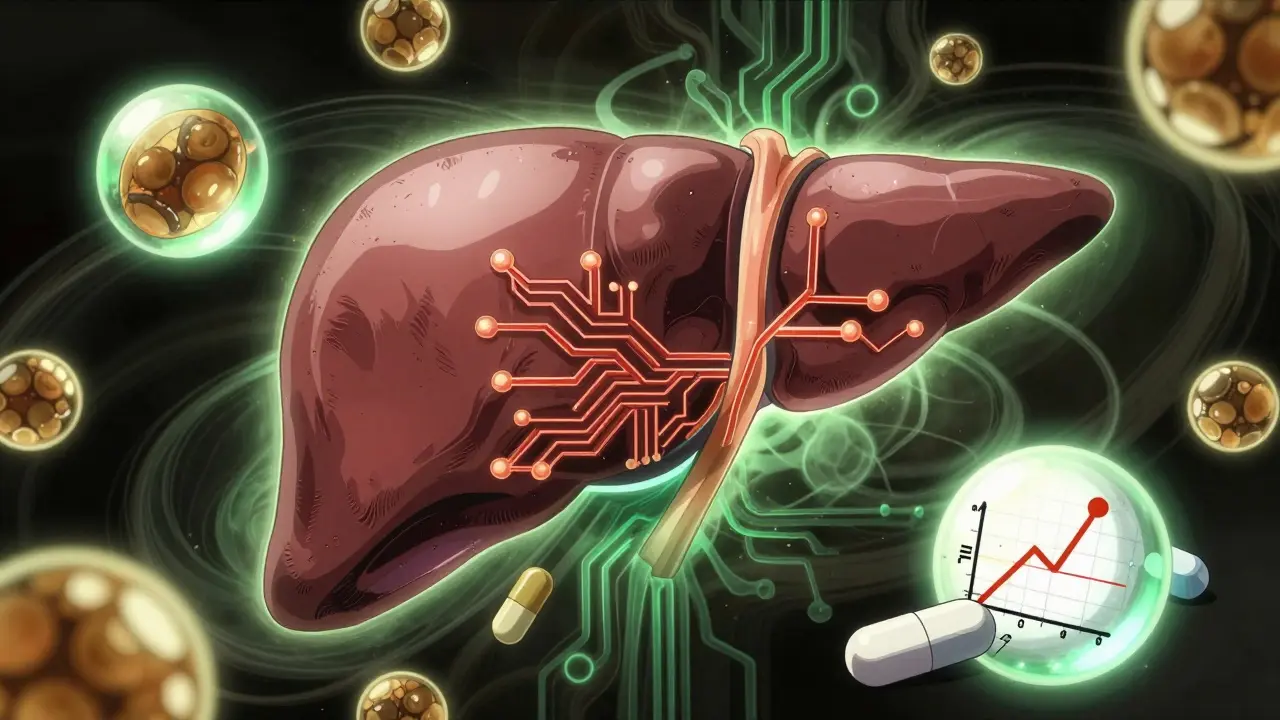
Milk thistle isn't just a trendy herb. Its active ingredient, silymarina mixture of flavonolignans including silybin, silychristin, and silydianin, extracted from the seeds of the Silybum marianum plant, has been studied for over 60 years. Originally used in ancient Greece for liver ailments, today it's one of the most popular herbal supplements worldwide. The global market for milk thistle extracts hit $187.6 million in 2022 and is expected to grow past $285 million by 2030. Most supplements contain 70-80% silymarin, with common doses ranging from 140 mg to 420 mg daily.
But here’s the catch: silymarin doesn’t just sit in your liver and act as a shield. It talks to your liver’s drug-processing machinery - specifically, the cytochrome P450 (CYP) enzymesa family of liver enzymes responsible for breaking down more than 70% of all prescription drugs. These enzymes - especially CYP3A4, CYP2C9, and CYP2D6 - are like gatekeepers. They decide how fast or slow your body clears medications like blood thinners, seizure drugs, statins, and even some antidepressants.
The Contradictory Science: Inhibition, Induction, or Neither?
Here’s where things get messy. Some studies say milk thistle blocks these enzymes. Others say it boosts them. Some say it does nothing at all. Why?
- A 2021 study in JBCPM found that silymarin inhibited CYP2C9the enzyme that metabolizes warfarin, phenytoin, and many NSAIDs by 15-23% in lab tests - meaning drugs processed by this enzyme could build up in your blood, raising the risk of bleeding or toxicity.
- But a 2019 trial in Clinical Pharmacology & Therapeutics gave 420 mg of silymarin daily to 24 healthy volunteers for two weeks. They used midazolam (a drug known to be broken down by CYP3A4) as a test marker. Result? Only a 7.2% increase in drug levels - way below the 20% threshold considered clinically meaningful.
- Then there’s the twist: time matters. A 2020 study showed that when people took milk thistle for just a few days, CYP2C9 activity dropped by 18.3%. But after 28 days? The enzyme activity went up by 12.7%. That’s not a mistake. It’s a biphasic effect - inhibition first, then induction.
This isn’t just academic. For someone on warfarin, that early dip in enzyme activity could mean a spike in INR levels - and a trip to the ER. For someone on a statin, the delayed boost might mean their cholesterol control suddenly worsens.
Real-World Stories: What Patients Are Actually Experiencing
Science doesn’t always tell the whole story. Real people do.
On Reddit’s r/Supplements, a February 2024 thread titled "Milk Thistle wrecked my INR levels while on warfarin" had 87 comments. Forty-three people reported changes in their INR after starting milk thistle. Twenty-eight of them had to adjust their warfarin dose by 15-35%. One man, 62, said his INR jumped from 2.8 to 5.1 in 10 days - he almost bled internally.
Meanwhile, on Amazon, 1,247 reviews of top-selling milk thistle products showed only 2.1% mentioned drug interactions. Most praised "improved energy" and "better digestion." But here’s the disconnect: people who had serious reactions didn’t post on Amazon. They went to Reddit, or to their doctor.
The FDA’s Adverse Event Reporting System (FAERS) logged 47 possible milk thistle-drug interactions between 2018 and 2023. Only nine were confirmed as causal. That sounds low - until you realize how many people don’t report it. Most assume their headache or bruising is just aging, not a supplement reaction.
And then there’s the outlier: a 58-year-old man on Drugs.com who took 420 mg of milk thistle daily for 12 weeks alongside sofosbuvir/velpatasvir - a powerful hepatitis C combo - and reported zero issues. That aligns with clinical data: direct-acting antivirals don’t seem to interact with milk thistle. But that’s not the whole story.
How Milk Thistle Compares to Other Liver Supplements
Not all liver supplements are created equal.
| Supplement | Primary Mechanism | CYP Interaction Risk | Adverse Event Rate |
|---|---|---|---|
| Milk Thistle (Silymarin) | Modulates CYP2C9, CYP3A4, CYP2D6 | Variable - inhibition or induction | 1.2% |
| N-Acetylcysteine (NAC) | Boosts glutathione | Negligible | 0.8% |
| Artichoke Extract | Inhibits CYP2C9 | Consistent inhibition (15-20%) | 2.1% |
| Ursodeoxycholic Acid (UDCA) | Bile acid modulator | Minimal | 8.7% |
Compare that to NAC - another popular liver support. It’s safe because it doesn’t touch CYP enzymes at all. Artichoke extract? It consistently inhibits CYP2C9, so the risk is predictable. Milk thistle? It’s unpredictable. That’s why experts are split.
Dr. Joseph Pizzorno, a leading voice in integrative medicine, says the risk is "vastly overstated," citing only 12 documented case reports in 40 years. But Dr. David Bernstein, a hepatologist at UConn, warns: "Until we have standardized extracts and consistent data, proceed with caution."
That’s why the European Medicines Agency says "no clinically relevant interactions expected," while the U.S. NIH’s LiverTox database lists milk thistle as "possibly interacting" with CYP2C9 substrates. Two agencies. Two different conclusions.
Who’s at Real Risk - And What to Do
You’re not at risk if you’re healthy and taking a low-dose supplement with no meds. But if you’re on any of these, you need to pause:
- Warfarin - even a 10% change in INR can be dangerous.
- Phenytoin - used for seizures. Too much = toxicity; too little = seizures.
- Statins - especially simvastatin and atorvastatin, which are CYP3A4-dependent. Higher levels = muscle damage risk.
- Immunosuppressants - like cyclosporine or tacrolimus (used after transplants). A small change can mean rejection or overdose.
- Some antidepressants - like amitriptyline or fluoxetine, metabolized by CYP2D6.
Here’s what to do:
- Don’t start milk thistle without telling your doctor - especially if you’re on more than two medications.
- Get baseline lab tests - INR, liver enzymes, drug levels - before starting.
- Monitor closely for 4-6 weeks - enzyme changes don’t happen overnight. Inhibition shows up in 1-2 days. Induction takes 7-10 days.
- Use standardized extracts - 70-80% silymarin. Avoid "whole herb" powders. They’re inconsistent.
- Stop if you notice unexplained bruising, fatigue, dizziness, or muscle pain - these could be signs of drug buildup.
And here’s a hard truth: only 32% of milk thistle supplements on the market meet their label claims. The FDA found some products contained less than half the silymarin they advertised. Others had contaminants. You can’t trust the bottle. You have to trust your doctor.
The Bigger Picture: Why This Matters
Milk thistle is popular because it works - for liver health. Studies show it improves liver enzymes in 65.5% of NAFLD patients. It’s safer than most pharmaceutical options. But safety doesn’t mean "no interactions." It means "low side effects" - not "no interference with your meds."
That’s why the market is shifting. Companies are now developing silybin-phosphatidylcholine complexes - designed to boost absorption and reduce CYP interactions. Phase 2 trials are underway. But until then, you’re on your own.
More than 27% of U.S. adults with liver conditions take milk thistle. That’s 8 million people. And nearly two-thirds of primary care doctors say they’re not confident advising patients on it. That’s not a gap in knowledge - it’s a gap in care.
Don’t assume it’s harmless. Don’t assume it’s dangerous. Assume it’s unpredictable - and treat it like medicine.
Can milk thistle raise my INR levels if I’m on warfarin?
Yes, it can. Multiple case reports and user testimonials confirm that milk thistle can increase INR levels by 15-35% in some individuals, likely due to inhibition of CYP2C9, the enzyme that breaks down warfarin. This raises bleeding risk. If you're on warfarin, get your INR checked weekly for the first month after starting milk thistle. Some patients need to reduce their warfarin dose. Never start milk thistle without consulting your anticoagulation clinic.
Does milk thistle interact with statins?
Theoretically, yes. Statins like simvastatin and atorvastatin are metabolized by CYP3A4. While clinical trials show minimal interaction at standard doses, real-world reports suggest some people experience muscle pain or elevated liver enzymes when combining the two. The risk is low, but not zero. If you’re on a statin and start milk thistle, watch for unexplained muscle weakness or dark urine - signs of rhabdomyolysis. Talk to your doctor before combining them.
Is milk thistle safe with antidepressants?
It depends on the antidepressant. Medications like amitriptyline, fluoxetine, and paroxetine are metabolized by CYP2D6, which milk thistle may inhibit or induce. This could lead to increased side effects (drowsiness, dizziness) or reduced effectiveness. There’s no blanket answer. If you’re on an SSRI or tricyclic, monitor for changes in mood, sleep, or energy after starting milk thistle. Ask your pharmacist to check for known interactions.
How long does it take for milk thistle to affect liver enzymes?
Effects can appear quickly - inhibition of CYP2C9 may occur within 24-48 hours. But enzyme induction (where the liver starts breaking down drugs faster) takes longer, usually 7-10 days of daily use. This means your drug levels could drop after a week, even if they spiked in the first few days. That’s why monitoring over 4-6 weeks is critical.
Are all milk thistle supplements the same?
No. Only 32% of supplements tested by the FDA met their label claims for silymarin content. Some contained less than half the advertised amount. Others had heavy metals or fillers. Look for brands that use standardized extracts (70-80% silymarin) and third-party testing (USP, NSF, or ConsumerLab). Avoid "raw herb" powders - they’re inconsistent and harder to dose safely.
Can I take milk thistle if I’ve had a liver transplant?
Generally, no. Transplant patients take immunosuppressants like cyclosporine or tacrolimus - drugs with extremely narrow therapeutic windows. Even small changes in their blood levels can lead to rejection or overdose. While some patients report using milk thistle without issues, clinical guidelines strongly advise against it. The risk far outweighs any potential benefit. Always consult your transplant team before taking any supplement.
What Comes Next
The future of milk thistle isn’t in your local supplement aisle. It’s in labs developing silybin-phosphatidylcholine complexes - designed to bypass CYP interactions while delivering better liver protection. But that’s years away.
Right now, the safest approach is simple: know your meds. Know your dose. Know your risk. And if you’re unsure - don’t guess. Talk to your pharmacist or doctor. They can check for interactions you didn’t even know existed.
Milk thistle isn’t the enemy. But treating it like harmless tea? That’s where the danger lies.


jared baker
March 15 2026Milk thistle isn't magic. It's a liver enzyme modulator. If you're on warfarin, statins, or anything metabolized by CYP2C9 or CYP3A4, you're playing roulette. I've seen patients bleed out because they thought 'natural' meant 'safe.' Don't be that guy. Get your INR checked before and after starting it. And if your doctor shrugs? Find a new one.
Standardized extract. 70-80% silymarin. No exceptions. Most supplements are junk. The FDA found half of them contain less than half the labeled dose. You're not getting what you paid for. You're getting filler, heavy metals, or worse.