
Medication Palpitation Risk Checker
Check Your Medication Risk
Select medications you're currently taking. We'll analyze potential interactions and risk levels based on clinical guidelines.
Raises heart rate by 15-25 bpm
2x increased risk of rapid heartbeat
Raises heart rate by 10-20 bpm
Risk if TSH < 0.1 mIU/L
Prolongs QT interval
Raises heart rate by 3-5 bpm
Risk Assessment
When Your Medication Makes Your Heart Race
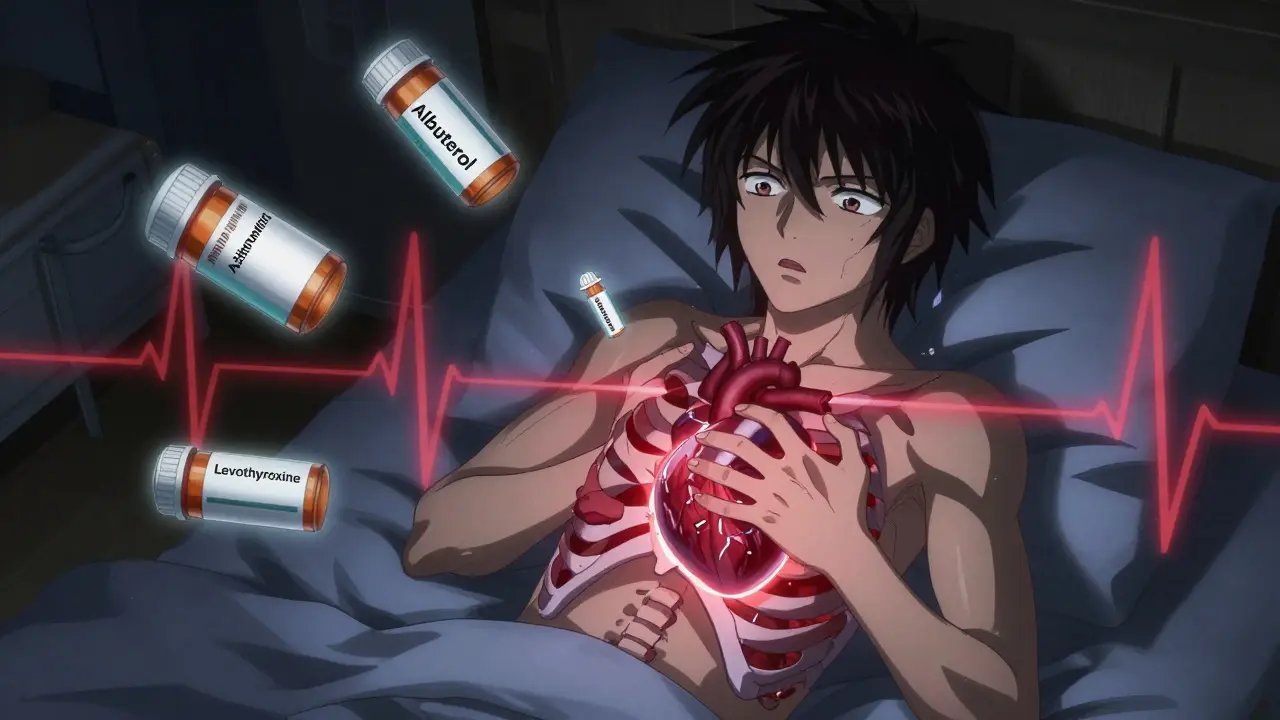
Feeling your heart pound, flutter, or skip a beat after starting a new pill? You’re not alone. Thousands of people experience palpitations or a sudden rapid heartbeat because of medications they’re taking - often without realizing it’s the drug, not stress, anxiety, or caffeine. These symptoms aren’t always harmless. In some cases, they’re warning signs of something serious: a dangerous heart rhythm called torsades de pointes, which can lead to cardiac arrest if ignored. The good news? Most of these reactions are preventable - if you know what to look for and what to ask your doctor.
Which Medications Are Most Likely to Cause Palpitations?
It’s not just heart drugs that can mess with your rhythm. Common prescriptions and even over-the-counter pills can trigger rapid heartbeat. Here are the top offenders, backed by clinical data:
- Asthma inhalers like albuterol (Ventolin, ProAir) can spike your heart rate by 15-25 beats per minute within half an hour. If you’re using them more than twice a week, you’re at higher risk.
- Antibiotics - especially azithromycin (Zithromax) - are a leading cause. Studies show they increase the chance of rapid heartbeat by over 2 times. Fluoroquinolones like levofloxacin and ciprofloxacin also carry risk, particularly in older adults or those with existing heart conditions.
- Decongestants like pseudoephedrine (Sudafed) and phenylephrine raise heart rate by 10-20 bpm. Taking more than one dose a day, especially with caffeine or high blood pressure, ups the danger.
- Thyroid meds like levothyroxine (Synthroid) can cause palpitations if your dose is too high. This happens when your TSH drops below 0.1 mIU/L. Many people don’t realize their heart racing is tied to their thyroid pill.
- Antidepressants - especially tricyclics like amitriptyline and high-dose citalopram (Celexa) - can prolong the QT interval on your ECG, leading to irregular rhythms. Citalopram doses above 40 mg/day are especially risky for seniors.
- Newer weight-loss drugs like semaglutide (Ozempic, Wegovy) may seem safe, but clinical trials show they raise heart rate by 3-5 bpm on average. For some, that’s enough to feel like their heart is racing.
What’s surprising? Even common meds like ibuprofen or certain antifungals can interact with others to create dangerous combinations. The real danger isn’t just one drug - it’s stacking them.
How Doctors Evaluate Medication-Induced Palpitations
If you report palpitations, your doctor shouldn’t just shrug it off. A proper evaluation includes four key steps:
- Full medication review - including every pill, supplement, and herbal remedy. Many people forget to mention things like cold medicine, energy pills, or CBD oil, which can all contribute.
- ECG (electrocardiogram) - this checks your heart’s electrical activity. The key number? QTc interval. If it’s over 450 ms in men or 460 ms in women, you’re at higher risk. A jump of more than 60 ms from your baseline is a red flag.
- Blood tests - low potassium or magnesium can turn a mild side effect into a life-threatening rhythm. These levels are checked routinely in high-risk cases.
- 24- to 48-hour Holter monitor - if your ECG looks normal but you still feel your heart racing, this portable device records your rhythm over time. It catches intermittent problems that a single ECG misses.
Some clinics now use tools like the Brigham and Women’s Hospital Risk Score, which adds points for age over 65, being female, having heart disease, or taking multiple QT-prolonging drugs. A score above 5 means you need urgent attention.
What to Do If You’re Experiencing Symptoms
Not all palpitations require stopping your medication - but you need to act smartly.
- Mild cases (palpitations without dizziness, chest pain, or fainting, and QTc under 500 ms): Your doctor may suggest lowering the dose, switching timing (e.g., taking it in the morning instead of at night), or checking electrolytes. Weekly ECGs may be recommended.
- Moderate cases (symptoms with QTc between 480-500 ms): Dose reduction works in 60-70% of cases within 72 hours. Don’t wait - talk to your prescriber.
- High-risk cases (QTc over 500 ms, fainting, or signs of torsades): Stop the drug immediately. This is not something to wait on. Hospitals follow strict protocols to discontinue the offending medication and may give magnesium sulfate or isoproterenol to stabilize your rhythm.
Switching medications is often possible. For example, if you need an antibiotic and have a history of heart issues, amoxicillin is far safer than azithromycin. For depression, switching from citalopram to sertraline often resolves palpitations without losing antidepressant benefits.
Prevention Is the Best Treatment
Doctors are starting to screen before prescribing. The American Heart Association now recommends a baseline ECG before starting high-risk drugs like azithromycin, certain antidepressants, or thyroid meds - especially if you’re over 65, have heart disease, or take other QT-prolonging drugs.
Here’s what you can do right now:
- Keep a simple log: Write down when you take each medication and when you feel palpitations. Note your heart rate if you have a smartwatch.
- Never combine two QT-prolonging drugs. This increases your risk over fivefold.
- Ask your pharmacist: “Does this medicine affect my heart rhythm?” They’re trained to catch these interactions.
- Get your potassium and magnesium checked if you’re on diuretics, have vomiting/diarrhea, or are on long-term meds.
- Don’t start new OTC drugs without checking with your doctor - especially decongestants, weight-loss pills, or herbal stimulants like ephedra or guarana.
One study found that if every patient starting azithromycin got a simple ECG first, over 15,000 serious heart events could be prevented in the U.S. each year. That’s not a small number - it’s life-saving.
Real Stories, Real Risks
On patient forums, people describe the same patterns:
- A 68-year-old woman started azithromycin for a sinus infection and felt her heart pounding within 48 hours. Her ECG showed a QTc of 510 ms. She stopped the drug, got magnesium, and recovered fully.
- A man on levothyroxine for hypothyroidism began waking up with his heart racing. His TSH was 0.04 - way too low. His dose was cut by 12.5 mcg, and his palpitations vanished in 10 days.
- A cancer patient on trastuzumab noticed rhythmic palpitations only during infusions. Her oncologist added metoprolol, and the symptoms disappeared without affecting her treatment.
These aren’t rare. They’re predictable - and preventable.

What’s Changing in 2026
Hospitals are rolling out smarter systems. Electronic health records now flag dangerous combinations before a prescription is even filled. If you’re on citalopram and your doctor tries to add azithromycin, the system will pop up a warning. Over 67% of U.S. hospitals use these alerts now.
Research is moving fast. Scientists are testing genetic tests to find who’s most vulnerable. For example, people with a CYP2D6 gene variation are 3.4 times more likely to have bad reactions to certain beta-blockers or antidepressants. In the next few years, this kind of testing may become routine before prescribing.
The European Heart Rhythm Association is tracking 50,000 patients across 15 countries to build better risk models. Their findings will shape global guidelines by late 2025.
When to Call Your Doctor
You don’t need to panic every time your heart skips. But if you have any of these, call your provider within 24 hours:
- Palpitations that last more than a few minutes
- Heart racing without obvious cause (like exercise or caffeine)
- Feeling lightheaded, dizzy, or fainting
- Chest pain or pressure
- Shortness of breath you didn’t have before
- Palpitations that started after a new medication or dose change
Don’t wait for it to get worse. Medication-induced arrhythmias can escalate quickly - but they’re also among the most reversible.
Can over-the-counter cold medicine cause heart palpitations?
Yes. Decongestants like pseudoephedrine (Sudafed) and phenylephrine can raise your heart rate by 10-20 beats per minute. This is especially risky if you’re over 60, have high blood pressure, or take other heart-affecting meds. Even one dose can trigger palpitations in sensitive people. Always check labels and ask your pharmacist before using OTC cold remedies.
Are heart palpitations from medication always dangerous?
Not always. Many people feel occasional palpitations that are harmless - especially if they’re triggered by stress, caffeine, or mild anxiety. But when they start after a new medication, appear with dizziness or chest discomfort, or happen frequently, they’re a red flag. The key is timing and context. If your palpitations began within 72 hours of starting a new drug, it’s likely related - and needs evaluation.
Can I just stop the medication myself if I feel palpitations?
Only if it’s a mild, non-essential drug like an OTC decongestant. Never stop antibiotics, antidepressants, thyroid meds, or heart medications on your own. Stopping abruptly can cause rebound effects or worsen your original condition. Always talk to your doctor first. They can help you taper safely or switch to a safer alternative.
How long do medication-induced palpitations last?
It depends. For many, symptoms improve within 24-72 hours after stopping or lowering the dose. With thyroid meds, it can take up to two weeks for levels to stabilize. If the drug stays in your system longer - like some antibiotics or antidepressants - palpitations may persist for several days. If they don’t improve after a week of stopping the medication, see your doctor. There may be another cause.
Can I still take my medication if I have palpitations?
Sometimes, yes - but only under supervision. For example, if you’re on a life-saving cancer drug that causes mild palpitations, your doctor might add a beta-blocker like metoprolol to protect your heart. Or if your thyroid dose is slightly too high, they can reduce it. The goal isn’t always to stop the drug - it’s to manage the risk so you can keep getting the benefit safely.
Is there a test to find out if I’m genetically at risk for medication-induced palpitations?
Not yet standard, but it’s coming. Early genetic tests can identify people who metabolize certain drugs slowly (like CYP2D6 poor metabolizers), making them more vulnerable to side effects. Some hospitals and specialty clinics now offer this testing for patients on high-risk medications. If you’ve had bad reactions before, ask your doctor if pharmacogenetic testing is right for you.
Next Steps: What You Should Do Today
- Make a list of every medication and supplement you take - including vitamins, herbal teas, and OTC painkillers.
- Check the start date of each. Did palpitations begin within 3 days of starting one?
- Call your doctor or pharmacist and ask: “Could any of these be causing my heart to race?”
- If you’re over 65, have heart disease, or take more than five medications, ask for a baseline ECG.
- Start a simple journal: note your heart rate (if you can measure it) and when you take each drug. This helps spot patterns fast.
Medications save lives - but they can also surprise you. Being informed gives you power. Don’t ignore your body’s signals. A quick conversation with your doctor could prevent a serious event - and help you feel better sooner.


Jan Hess
January 15 2026I had no idea Sudafed could do this. I’ve been taking it every winter like it’s candy. My heart’s been racing since December. Gonna see my doc this week. Thanks for the wake-up call.