

Many people take medication every day - for blood pressure, diabetes, cholesterol, depression, or pain. But what if the side effects - nausea, fatigue, weight gain, muscle pain - weren’t inevitable? What if small, daily choices could make those side effects disappear or at least get a lot better?
The truth is, they can. And it’s not magic. It’s science.
Doctors don’t always talk about it. Pharmacies don’t print it on the label. But research from the American Heart Association, Harvard Medical School, and the National Institutes of Health all say the same thing: lifestyle changes can cut medication side effects in half - sometimes more.
How Your Body Processes Medicine: The Hidden Link
Your body doesn’t treat medicine like a magic bullet. It’s a complex system. What you eat, how you sleep, how much you move, and how you handle stress all change how your liver and kidneys process drugs.
For example, statins (cholesterol pills) are broken down by an enzyme called CYP3A4. If you drink grapefruit juice - even just one glass a day - that enzyme gets blocked. Your body can’t clear the statin fast enough. Blood levels spike. Muscle pain goes from rare to common. That’s not the drug’s fault. That’s your morning smoothie.
Or take blood pressure meds. If you’re eating 3,000 mg of sodium a day (typical for processed food lovers), your body holds onto water. Your blood pressure stays high. Your doctor might keep raising your dose. But if you cut sodium to 1,500 mg? Your systolic pressure can drop 8-14 mmHg. That’s like dropping one pill entirely.
It’s not about replacing medicine. It’s about making medicine work better - and with fewer side effects.
Food: The Silent Drug Interaction
Food isn’t just fuel. It’s a drug interaction waiting to happen.
For blood pressure meds: The DASH diet isn’t just for losing weight. It’s for making your meds work better. Eat more vegetables, beans, nuts, and whole grains. Cut back on salt, sugary drinks, and processed snacks. A 2020 study in the American Journal of Clinical Nutrition showed that people on the DASH diet reduced their blood pressure as much as those on one pill - without the dizziness or dry cough.
For warfarin (blood thinner): Leafy greens like kale, spinach, and broccoli are full of vitamin K. That’s good for your bones. Bad for warfarin. Too much vitamin K can make warfarin less effective. That means more risk of clots. Stick to a steady amount - say, one cup of spinach a day - and don’t suddenly switch to salads every day or none at all.
For diabetes meds like metformin: The biggest side effect? Stomach upset. Nausea, bloating, diarrhea. A 2022 study in Diabetes Care found that eating the same amount of carbs at the same time every day - around 30 grams per meal - cut those side effects by 37%. No more skipping breakfast and then eating a giant pasta dinner.
For GLP-1 agonists (like semaglutide for weight or diabetes): These drugs cause nausea in up to 73% of people. But here’s the fix: eat slowly. Chew each bite 20 times. Keep meals under 500 calories. Avoid spicy, greasy, or acidic foods. Don’t eat within 3 hours of bedtime. Drink 2.2-3 liters of water daily. Do all that? Nausea drops to 29%.
Movement: When Exercise Becomes Medicine
Exercise doesn’t just help your heart. It helps your pills.
For statins: Muscle pain is the #1 reason people quit statins. A 2021 study in the Journal of the American College of Cardiology found that adding just two 20-minute resistance sessions a week - light weights, 10 reps - cut muscle pain from 29% to 11%. Add 200mg of CoQ10 daily? Even better. Your body makes CoQ10 naturally. Statins block it. Replenishing it helps.
For beta-blockers: These can make you feel tired. Drained. But here’s the twist: being inactive makes it worse. Start with 10 minutes of walking twice a day. Gradually build to 30 minutes five days a week. Within 8 weeks, energy levels jumped 41% in a study by the American Heart Association. You’re not fighting the drug. You’re working with it.
For antipsychotics: Weight gain is common. The National Institute of Mental Health recommends 45 minutes of moderate-to-vigorous exercise daily - brisk walking, cycling, dancing - plus 30 grams of protein per meal. That combo cuts annual weight gain from 7.8 kg to just 2.1 kg.
For antidepressants: Weight gain? It’s real. A 2022 study found that people on SSRIs gained an average of 7.3 pounds in the first year. But those who did 150 minutes of walking or cycling a week - and ate enough protein (1.6g per kg of body weight) - cut that gain by 68%.

Sleep: The Forgotten Pill
You take your pill at night. But are you sleeping well enough for it to work?
Your liver does most of its drug-cleaning work while you sleep. If you’re getting less than 7 hours, or your sleep is broken (snoring, frequent waking), your body can’t process meds properly. A 2021 study from the National Sleep Foundation found that people who slept 7-9 hours had 22% better drug metabolism - especially for statins, antidepressants, and painkillers processed by the CYP3A4 enzyme.
Fix it with simple habits:
- Go to bed and wake up at the same time - even on weekends.
- Keep your bedroom cool (18-20°C).
- Avoid screens 1 hour before bed.
- Don’t drink caffeine after 2 p.m.
- If you toss and turn, try 10 minutes of deep breathing before sleep.
One man in Melbourne, 62, was on three meds for high blood pressure and cholesterol. He slept 5 hours a night. His doctor kept raising doses. He started sleeping 7.5 hours. His BP dropped. His cholesterol improved. His doctor cut one pill. No side effects. Just better sleep.
Stress: The Hidden Amplifier
Stress doesn’t just make you feel awful. It changes how your body handles medicine.
High cortisol (your stress hormone) slows down liver enzymes. That means drugs stick around longer. Side effects get worse. For antidepressants, stress can make them less effective - and increase weight gain, fatigue, and brain fog.
A 2021 study in JAMA Psychiatry showed that 30 minutes of mindfulness - sitting quietly, focusing on your breath - lowered cortisol by 27%. That boosted antidepressant effectiveness by 31% and cut side effects like weight gain and drowsiness.
It doesn’t have to be fancy. Try:
- 5 minutes of deep breathing when you wake up.
- 10-minute walk without your phone.
- Writing down three things you’re grateful for before bed.
One woman on antidepressants said she felt like a zombie. She started 10-minute breathing sessions after lunch. Within 3 weeks, her fatigue lifted. Her appetite returned to normal. She didn’t change her dose. Just her routine.
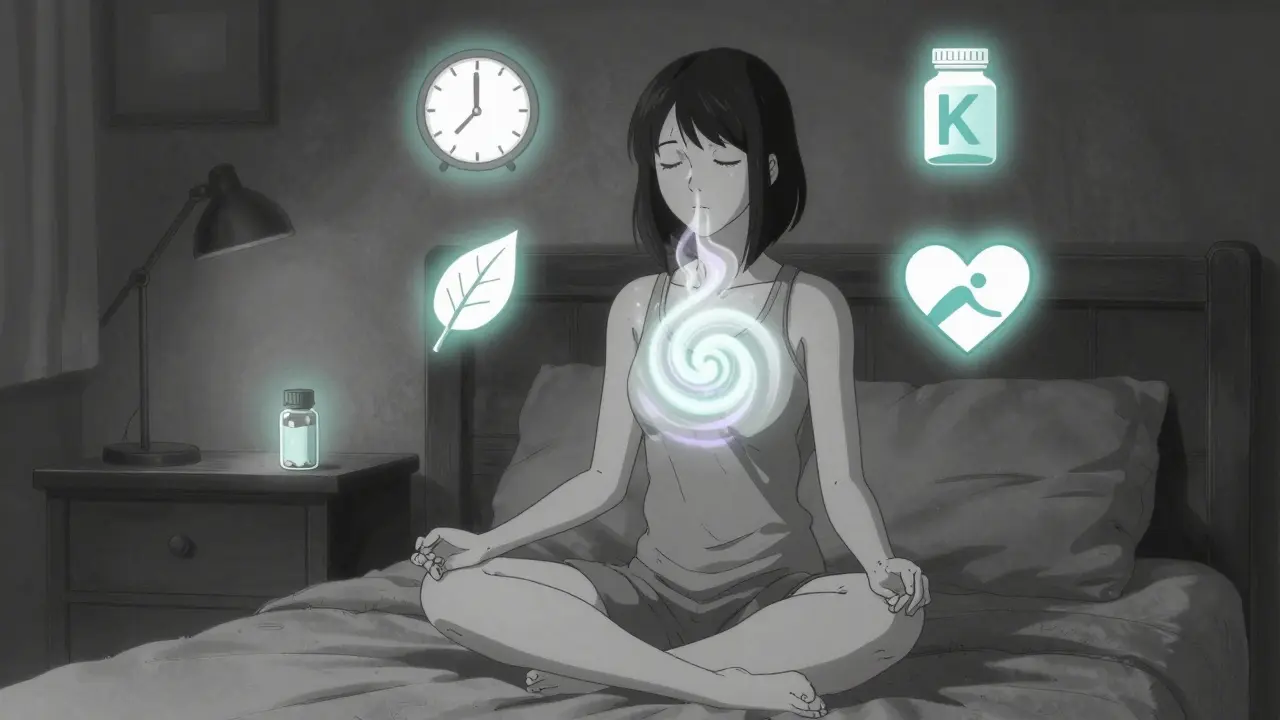
Putting It All Together: Your 7-Day Plan
You don’t need to overhaul your life overnight. Start small. Pick one thing. Do it for a week. Then add another.
Day 1-3: Hydration - Drink 2.5 liters of water daily. No soda, no sugary drinks. Just water. This helps your kidneys flush out drug byproducts.
Day 4-5: Meal Timing - Eat your meals at the same time every day. Especially carbs. If you take metformin, aim for 30g of carbs per meal. No big dinners.
Day 6-7: Movement - Walk 20 minutes after dinner. No phone. Just you and your steps. That’s 140 minutes a week - enough to start seeing energy gains.
After a week, pick one more:
- Swap one processed snack for nuts or fruit.
- Turn off screens 1 hour before bed.
- Try 5 minutes of breathing when you feel stressed.
Don’t try to fix everything at once. You’ll burn out. Progress, not perfection.
What Your Doctor Needs to Know
Lifestyle changes are powerful - but they’re not a do-it-yourself project.
Never stop or reduce your meds on your own. Rebound high blood pressure. Dangerous spikes in blood sugar. Withdrawal from antidepressants. These can be life-threatening.
Your doctor needs to know what you’re doing:
- Are you eating more greens? (Can affect warfarin)
- Are you drinking grapefruit juice? (Can boost statin levels dangerously)
- Are you sleeping better? (Can change how fast your body clears drugs)
- Are you walking more? (Can lower blood pressure - maybe too much)
Bring your plan to your next appointment. Say: “I’ve started doing X, Y, Z. I feel better. Can we look at my meds?”
Doctors are catching on. A 2023 survey found 87% of board-certified physicians now talk about lifestyle changes with patients. But only 38% of visits include a formal check. So you have to bring it up.
Why This Works - And Why It’s Not Widely Used
It’s simple. It’s cheap. It’s backed by decades of research. So why isn’t everyone doing it?
Because the system isn’t built for it.
Doctors have 10 minutes per visit. Pharmacies print warnings on tiny labels. Insurance doesn’t pay for health coaches. Medical schools teach 2 hours of nutrition in four years.
But that’s changing. The NIH’s All of Us program is building AI tools to predict which lifestyle changes will help which patient - based on their genes, meds, and habits. Stanford is testing gut microbiome scans to tailor diets. In 2024, the American Medical Association rolled out digital tools to help doctors track lifestyle changes in real time.
For now? You’re ahead of the curve. You’re not waiting for the system to fix itself. You’re fixing your own health - one meal, one walk, one breath at a time.


marjorie arsenault
March 3 2026Start small. One walk. One glass of water. One breath. That’s all it takes to begin reclaiming your body from the side effects.
It’s not about being perfect. It’s about showing up.
I started with 20 minutes after dinner-no phone, just me and my feet.
Three weeks in, my antidepressant nausea vanished.
Not because I stopped the med.
Because I finally stopped rushing.
My doctor was shocked.
I told her I didn’t change my dose.
I changed my rhythm.
And now? I sleep like I used to.
Simple. Not easy. But possible.
Don’t wait for the system to catch up.
You’re already doing the work.
Just keep going.
One step at a time.