
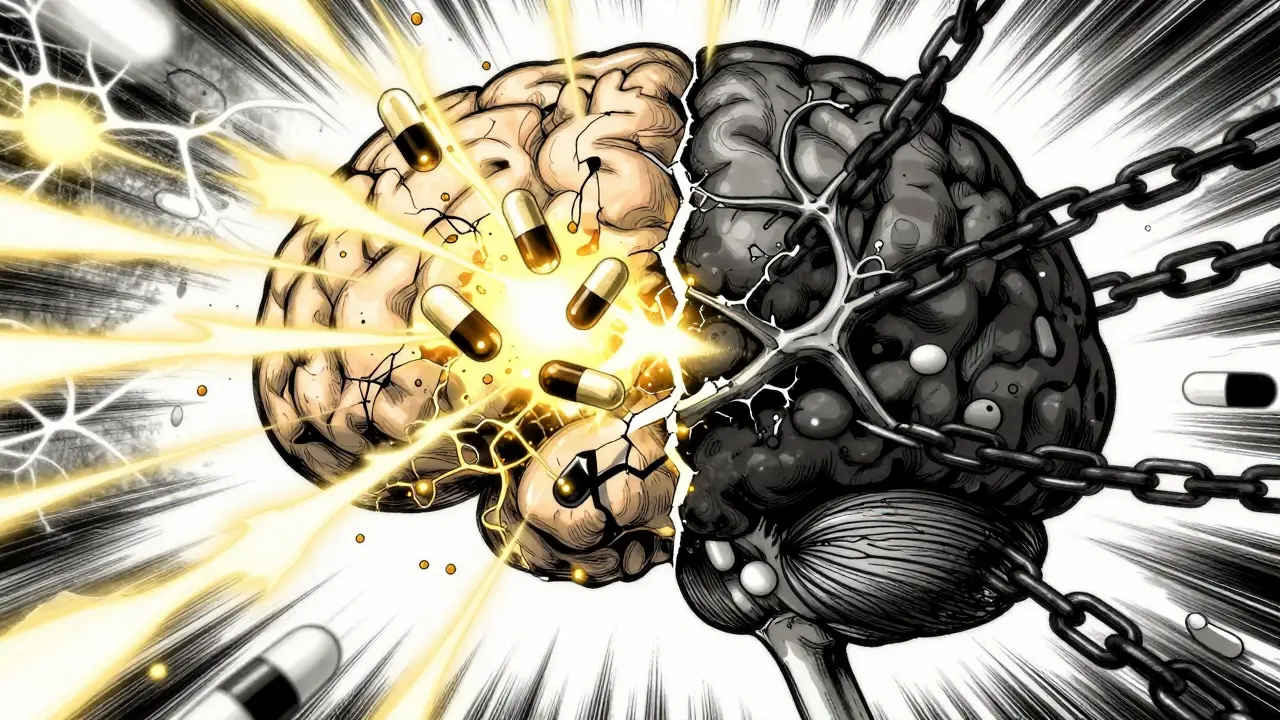
When someone with Parkinson’s disease starts experiencing hallucinations or delusions, it’s a terrifying turn. They’re already managing tremors, stiffness, and slow movement. Now their mind is playing tricks on them. The go-to solution? An antipsychotic. But here’s the catch: that same antipsychotic can make their Parkinson’s symptoms worse-sometimes dramatically. Why? Because levodopa and antipsychotics don’t just work differently-they work in opposite directions on the same brain chemical: dopamine.
Levodopa: Rebuilding a Broken Dopamine System
Levodopa is the gold standard for treating Parkinson’s. It’s not a drug that stimulates dopamine-it’s a building block. Your brain converts levodopa into dopamine, replacing what’s been lost as dopamine-producing neurons die off. In early Parkinson’s, this works smoothly. The remaining neurons store and release dopamine in a controlled way, like a well-managed water tank.
But as the disease progresses, those neurons keep dying. By the time someone has had Parkinson’s for 5-10 years, the system is broken. There are no more neurons left to regulate dopamine release. So when you take levodopa, it floods the brain all at once. That’s why patients develop sudden, uncontrollable movements-dyskinesias-after taking their dose. PET scans show dopamine levels spike 3-4 times higher than normal in these patients, even with the same dose they took years ago. Levodopa stops being a gentle replacement and becomes a blunt instrument.
Antipsychotics: Shutting Down Dopamine Signals
Antipsychotics like haloperidol, risperidone, and even quetiapine work by blocking dopamine receptors-especially the D2 type. In schizophrenia, this helps calm the overactive dopamine signals thought to cause hallucinations and paranoia. But in Parkinson’s, dopamine isn’t overactive-it’s barely there. Blocking what little dopamine remains is like turning off the last few lights in a dark room.
The result? Motor symptoms return or worsen. Studies show that when antipsychotics are added to levodopa in Parkinson’s patients, UPDRS motor scores increase by 25-35%. That means more freezing, more rigidity, more trouble walking. One 2015 study tracked 127 Parkinson’s patients on antipsychotics. Nearly all saw their movement decline within days. Some became nearly immobile.
The Therapeutic Trap
This is the cruel paradox: treating psychosis in Parkinson’s often makes motor symptoms worse. Treating Parkinson’s can make psychosis worse. It’s not just theory-it’s documented in real patients.
At the Cleveland Clinic, 17 Parkinson’s patients were started on risperidone at low doses (0.5 mg/day). Within 72 hours, every single one had a sharp drop in motor function. One patient, a 72-year-old retired teacher, went from walking with a cane to needing a wheelchair. Her hallucinations improved-but she couldn’t feed herself anymore.
And it works the other way too. People with schizophrenia who take antipsychotics for years sometimes develop Parkinson-like stiffness or tremors. If they’re given levodopa to treat it-say, for restless legs-their psychosis can explode. A 1988 study gave 300 mg of levodopa daily to schizophrenia patients. Sixty percent had their hallucinations return or get worse. One patient, stable for two years, had a full psychotic break after just one dose.

Why Some Antipsychotics Are Less Bad (But Still Dangerous)
Not all antipsychotics are created equal. First-generation ones like haloperidol are the worst-they bind tightly to D2 receptors and don’t let go. They’re rarely used in Parkinson’s today.
Quetiapine is often tried first because it’s weaker at blocking D2 receptors. But even then, 30-50% of patients still see motor decline. A 2022 survey of movement disorder specialists found that 89% avoid typical antipsychotics entirely. Only 67% use quetiapine, and even then, they start at 12.5 mg-half a pill-and go slowly.
Pimavanserin (Nuplazid) is the only FDA-approved antipsychotic for Parkinson’s psychosis. It doesn’t block dopamine at all. Instead, it targets serotonin receptors (5-HT2A). That’s why it doesn’t worsen movement. But it’s expensive-over $1,000 a month-and not everyone responds. Still, it’s the best option we have for avoiding the dopamine tug-of-war.
When Stopping Is More Dangerous Than Continuing
Here’s something many don’t realize: suddenly stopping levodopa can be deadly. If a Parkinson’s patient is on antipsychotics and their levodopa is cut back or stopped-maybe because of a hospital admission or a mistaken diagnosis-they can develop neuroleptic malignant syndrome (NMS).
NMS is rare, but deadly. It causes high fever, muscle rigidity, confusion, and organ failure. Mortality rates are 10-20%. The CDC and NCBI both warn that abrupt levodopa withdrawal is a known trigger. Even a 24-hour delay in a dose can set it off.
And here’s the kicker: dopamine agonists like pramipexole are sometimes used to reverse NMS. Why? Because you’re trying to replace what the body lost. It’s a desperate, life-saving fix that proves how delicate this balance is.
What Clinicians Are Doing Differently
Specialists now treat Parkinson’s psychosis like a minefield. They don’t jump to antipsychotics. First, they check for infections, dehydration, sleep deprivation, or medication interactions-all of which can trigger hallucinations. They adjust levodopa timing or reduce doses if possible.
If they must use an antipsychotic, they follow strict protocols. The Cleveland Clinic requires daily motor assessments for the first two weeks. If UPDRS scores rise more than 15 points, the drug is stopped immediately. No exceptions.
Only 38% of general neurologists feel confident managing this. But among movement disorder specialists? It’s 89%. That gap is dangerous. Many patients end up on the wrong meds because their doctor doesn’t know the risk.
The Future: Avoiding Dopamine Altogether
The pharmaceutical industry knows this problem. That’s why new drugs are being developed that don’t touch dopamine at all.
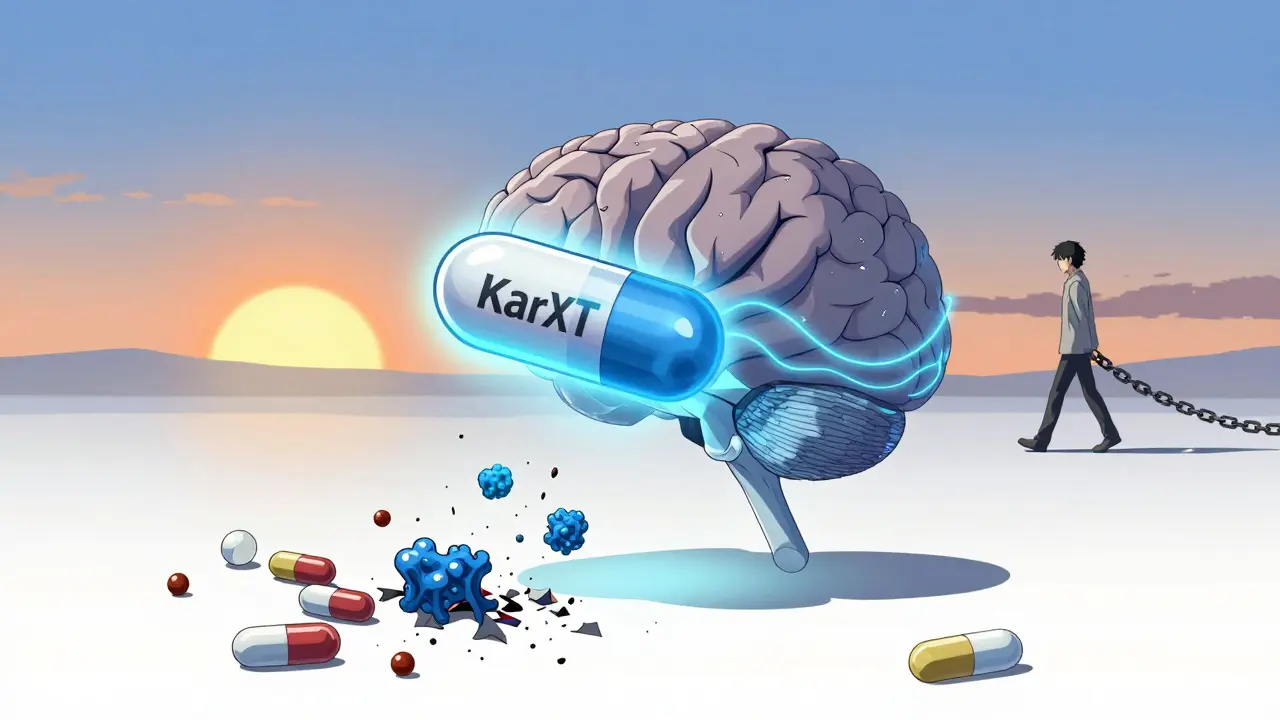
KarXT (xanomeline-trospium), a new drug tested in 2023, targets muscarinic receptors instead. In a Phase 3 trial, it reduced psychosis by 25%-with no worsening of motor symptoms. That’s huge.
Researchers are also looking at alpha-synuclein-the protein that clumps in Parkinson’s brains. If they can clear those clumps, maybe psychosis will fade without touching dopamine. Early trials are promising.
The FDA now explicitly asks drug makers to design treatments that are "dopamine-sparing." That’s a major shift. It means the field finally accepts: we can’t keep playing tug-of-war with dopamine.
What Patients and Families Should Know
- Never start or stop levodopa or antipsychotics without talking to a movement disorder specialist.
- If you or a loved one has Parkinson’s and starts hallucinating, ask: "Could this be caused by something else?" Infections, sleep issues, or even a new medication can trigger psychosis.
- If an antipsychotic is prescribed, ask: "Is this the lowest possible dose? Will you monitor my movement every few days?"
- Pimavanserin isn’t perfect-but it’s the only one that won’t make your Parkinson’s worse.
- Reddit and online forums are full of stories about this exact problem. You’re not alone. But don’t self-diagnose or self-medicate. This is too dangerous.
There’s no easy fix. But awareness saves lives. The more people understand that levodopa and antipsychotics are on opposite sides of a chemical war, the better the choices become.
Can levodopa make psychosis worse in people with schizophrenia?
Yes. Studies show that 60% of schizophrenia patients experience worsening hallucinations or delusions after taking levodopa-even at low doses like 300 mg/day. This is because levodopa increases dopamine in the brain, and excess dopamine in certain areas is linked to psychotic symptoms. It’s why levodopa is rarely given to people with schizophrenia unless they also have Parkinson’s.
Why can’t doctors just use any antipsychotic for Parkinson’s psychosis?
Most antipsychotics block dopamine receptors, and Parkinson’s is already caused by low dopamine. Blocking what little dopamine remains makes tremors, stiffness, and freezing worse. First-generation antipsychotics like haloperidol can cause severe motor decline within days. Even "safer" ones like risperidone still worsen movement in up to half of patients.
Is pimavanserin the only safe antipsychotic for Parkinson’s patients?
It’s the only one approved specifically for Parkinson’s psychosis and the only one that doesn’t block dopamine receptors. Instead, it works on serotonin. That’s why it doesn’t worsen movement. But it’s not perfect-it’s expensive, doesn’t work for everyone, and can cause side effects like swelling or confusion. Still, it’s the best option we have to treat psychosis without making Parkinson’s worse.
What happens if someone stops levodopa suddenly while on antipsychotics?
It can trigger neuroleptic malignant syndrome (NMS), a life-threatening condition. Symptoms include high fever, muscle rigidity, confusion, and organ failure. Mortality rates are 10-20%. This is why doctors never stop levodopa abruptly in Parkinson’s patients-even if they’re on antipsychotics. A gradual taper and close monitoring are essential.
Are there new treatments coming that won’t affect dopamine?
Yes. KarXT, a drug that targets muscarinic receptors instead of dopamine, showed promising results in a 2023 trial-reducing psychosis without worsening movement. Researchers are also testing drugs that target alpha-synuclein, the protein that builds up in Parkinson’s brains. If these work, they could treat psychosis without touching dopamine at all, ending the current therapeutic conflict.
What to Do Next
If you’re managing Parkinson’s and psychosis-or if a loved one is-don’t accept a quick fix. Ask for a referral to a movement disorder specialist. Request a full review of all medications. Ask about non-dopamine options. Keep a daily log of motor symptoms and mood changes. Bring it to every appointment.
This isn’t just about pills. It’s about preserving quality of life-keeping someone mobile, safe, and connected to their family. That’s worth the extra effort.


April Williams
January 28 2026This is why I stopped trusting doctors after my mom got stuck on risperidone. She went from walking the dog daily to crying in her chair because she couldn’t stand. They called it 'progression'-nope. It was the damn antipsychotic. I had to beg the neurologist to switch her to pimavanserin. Took three weeks, but now she’s back to baking cookies. Don’t let them gaslight you into thinking it’s just the disease.