
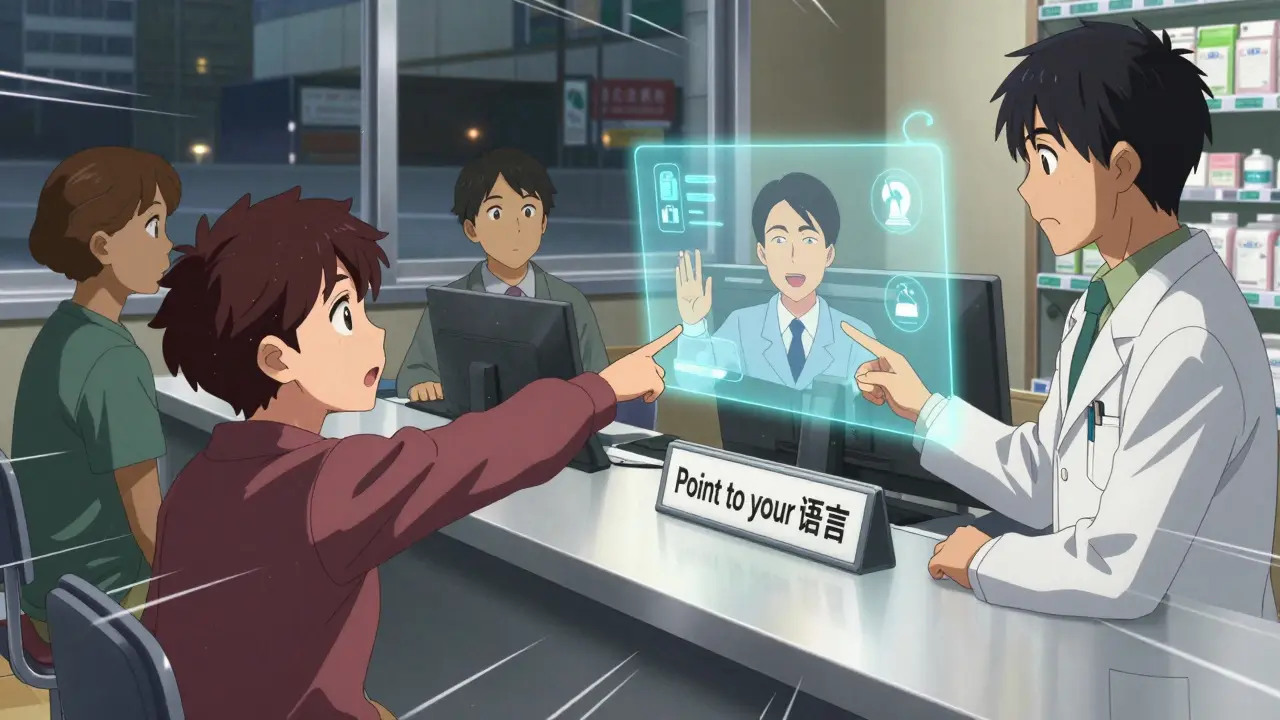
When you pick up a prescription, you expect the pharmacist to explain how to take it-when to take it, what to avoid, and what side effects to watch for. But what if you don’t speak English well? Or at all? For millions of people in the U.S., that simple conversation doesn’t happen unless the law steps in. And it does-because getting medication instructions wrong can kill.
Why Language Access Isn’t Optional
In 2024, about 25 million people in the U.S. have limited English proficiency. That’s one in every 13 people. Many of them rely on prescription medications daily-insulin, blood pressure pills, antidepressants, anticoagulants. If they don’t understand the label or the pharmacist’s instructions, they might skip doses, take double amounts, or mix drugs dangerously. A 2018 study found that poor comprehension of medication directions is one of the top causes of adverse drug events among non-English speakers. That’s not just inconvenient-it’s life-threatening. Federal law now requires every pharmacy that takes Medicare, Medicaid, or any other federal funding to provide meaningful access to patients who don’t speak English. This isn’t a suggestion. It’s a legal duty. And it includes more than just handing out a translated label. It means real-time, professional interpretation during counseling.What the Law Actually Demands
Under Section 1557 of the Affordable Care Act, updated in July 2024, pharmacies must:- Provide free oral interpretation services at the time of counseling
- Translate all written materials: prescription labels, warning stickers (like "May cause drowsiness"), and patient handouts
- Post visible signs near the counter that say "Point to your language"-in multiple languages
- Document each patient’s language preference in their file
- Never force a patient to use a family member as an interpreter unless the patient asks for it
How Interpretation Actually Works
You might think a pharmacist speaks five languages. They don’t. Most don’t speak even two fluently. So how do they communicate? Pharmacies use phone or video interpreters. Most contracts are with companies like LanguageLine Solutions or TransPerfect. A pharmacist just presses a button, connects to a trained medical interpreter in seconds, and the conversation flows in the patient’s language. Video interpreters can even show hand gestures or point to pictures on screen to clarify complex instructions. The law doesn’t require an interpreter to be in the room. But it does require them to be available immediately-24 hours a day, 7 days a week. That’s critical for emergency refills or weekend pickups. One patient in Brooklyn reported waiting 45 minutes for help on a Saturday because the pharmacy hadn’t activated their phone line. That’s a violation. The law says "immediate." Not "when it’s convenient."
Signage That Saves Lives
The "Point to your language" signs aren’t decoration. They’re a lifeline. A 2022 study by New York’s Office of Immigrant Affairs found that 83% of LEP patients recognized the signs and knew exactly what to do. Many didn’t know they had a right to an interpreter until they saw those signs. One woman from Guatemala told researchers: "I thought I had to guess what the pills did. I didn’t know I could ask. Then I saw the picture of the mouth pointing to Spanish. I pointed. And someone came. I cried. I hadn’t understood my medicine in three years." The signs must be bilingual or multilingual. They can’t just say "Need help?" They must list the languages offered. And they must be visible from the entrance and the counter. If they’re hidden behind a counter or faded, that’s a violation-and the state has fined pharmacies for it.What Happens When Rules Are Ignored
In 2022, the New York State Attorney General’s office documented 147 violations of language access rules. The most common? No signs (42% of cases) and no offer of interpretation (38%). Some pharmacies had the signs but didn’t train staff to use them. Others kept the phone interpreter service turned off to save money. One pharmacy in the Bronx was fined $15,000 after a patient took too much blood thinner because the pharmacist didn’t offer an interpreter. The patient didn’t know the word for "warfarin" in English. He thought "take once a day" meant "take whenever I remember." He ended up in the ER with internal bleeding. The FDA and CMS now track these violations. Pharmacies with repeated failures risk losing federal funding. That’s a death sentence for most pharmacies. No Medicare? No customers.Small Pharmacies Struggle-But Support Exists
Big chains like CVS and Walgreens have teams dedicated to compliance. They spend thousands on training, software, and interpreter contracts. But small, independent pharmacies? Many can’t afford it. A 2023 survey found that 23% of independent pharmacies in New York reported difficulty staying compliant. The cost of a yearly interpreter contract can run $5,000-$10,000. For a mom-and-pop shop, that’s more than their monthly rent. But help is available. New York’s Office of Language Access Services offers free compliance guides, templates for signs, and even connects small pharmacies with low-cost interpretation providers. The federal Language Access Help Desk (1-800-688-8814) answers questions 24/7. And many local community groups now offer free training for pharmacy staff on cultural competency and interpreter protocols.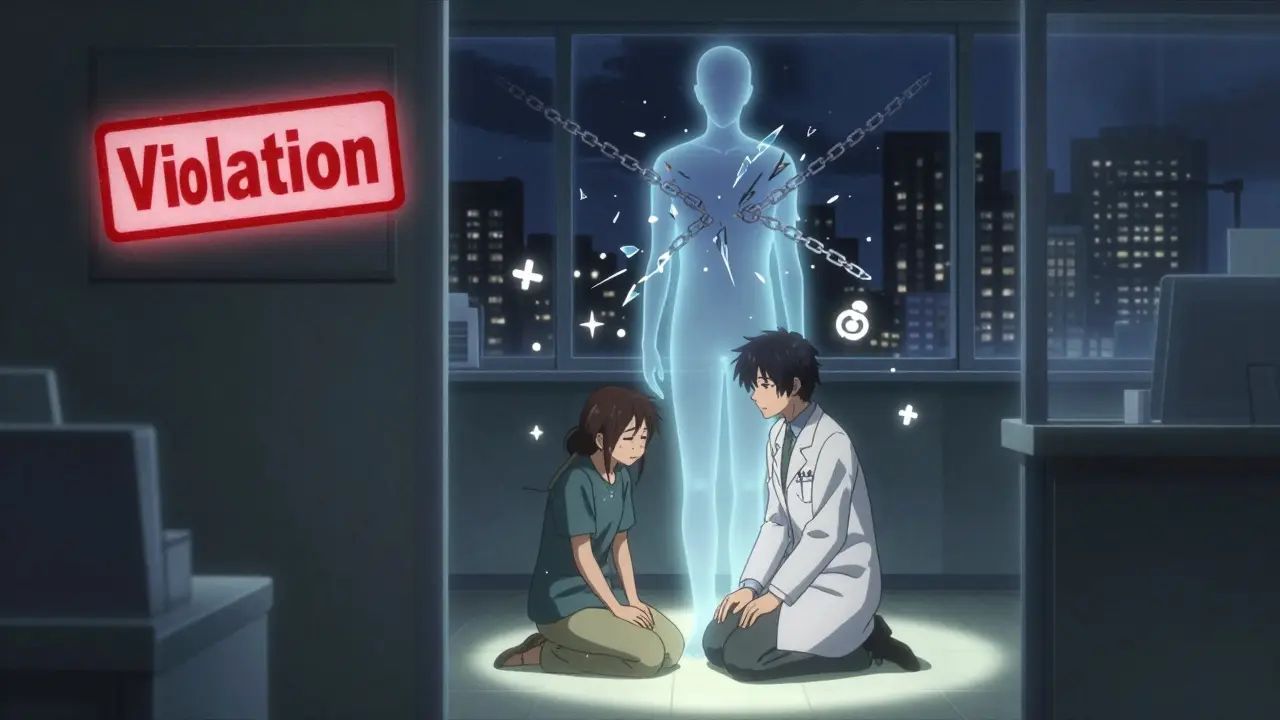
What Patients Can Do
You don’t have to wait for a pharmacy to do the right thing. You have rights.- Ask for an interpreter as soon as you walk in. Say: "I need someone to help me understand my medicine."
- If they say "We don’t have one," ask: "Can you connect me to a phone interpreter right now?"
- If they refuse or make you wait more than 5 minutes, ask for the manager.
- Check if the "Point to your language" sign is posted. If it’s missing, report it to the state health department.
- Never let a child, relative, or friend interpret your medication instructions. They might misunderstand, forget, or be too scared to ask questions.
What’s Changing in 2025
The rules are getting tighter. By June 2025, every federally funded pharmacy must have a written Language Access Plan on file. That means documenting which languages they serve, how they train staff, and how they handle complaints. California passed a similar law in 2022. Massachusetts is pushing one in 2025. The federal government is also pushing for standardized pictograms on pill bottles-icons that show "take with food," "avoid alcohol," or "shake well." These help even when language services fail. Some pharmacies are testing AI translation tools. But right now, regulations still require human review for any medication advice. Machines can’t catch cultural nuances. They don’t know if "take at bedtime" means "right before sleep" or "after dinner." Only a trained interpreter can.It’s Not Just About Language-It’s About Trust
The real win isn’t just fewer errors. It’s confidence. A 2023 survey by the Asian American Federation found that 68% of LEP patients felt more confident taking their meds after language services improved. One man from Somalia said: "Before, I was afraid. I didn’t know if I was killing myself or saving myself. Now I know. I sleep better." That’s the goal. Not just compliance. Not just legal boxes checked. But safety. Dignity. Trust. Pharmacists aren’t just dispensers of pills. They’re the last line of defense against preventable harm. And language access isn’t a bonus-it’s the foundation.Do I have the right to an interpreter even if I’m not a U.S. citizen?
Yes. Your immigration status doesn’t matter. Federal law protects anyone who receives care from a facility that takes federal funding-including Medicare, Medicaid, or grants. That covers nearly every pharmacy in the U.S. You have the right to an interpreter regardless of your visa, green card, or lack of documentation.
Can a family member interpret for me if I want them to?
Yes-but only if you ask for it. Pharmacists are not allowed to assume a family member is the best interpreter. They must first offer a qualified professional. If you say, "I’d rather have my daughter help," they must honor that. But they still need to confirm you understand the instructions. Never feel pressured to use someone who doesn’t know medical terms.
What if the pharmacy says they don’t have my language?
They must still provide an interpreter. Even if your language isn’t listed among their top seven, they’re required to arrange interpretation through a third-party service. If they say "we don’t have it," ask them to call the Language Access Help Desk at 1-800-688-8814. That number connects pharmacies to interpreters for over 200 languages, including rare ones like Hmong, Karen, or Tigrinya.
Are translated labels enough? Do I still need an interpreter?
No. Labels only cover basic instructions. They can’t explain interactions, side effects, or what to do if you miss a dose. A label might say "Take once daily," but it won’t tell you if your blood pressure medicine interacts with the herbal tea you drink. Only a live interpreter can answer those questions safely.
How do I report a pharmacy that won’t give me an interpreter?
Call your state’s Department of Health or the federal Office for Civil Rights at 1-800-368-1019. You can also file a complaint online at hhs.gov/ocr. Be specific: date, time, pharmacy name, what was said, and whether you were offered an interpreter. Complaints are tracked and can lead to fines or mandatory training for the pharmacy.


Fabio Raphael
December 27 2025I used to work at a pharmacy in Chicago, and I’ll never forget this one guy from Guatemala who came in for his blood pressure med. He kept nodding along, but his eyes were terrified. We had the interpreter line ready, but the pharmacist didn’t offer it-thought he ‘understood.’ Turned out he was taking two pills because the label said ‘take once’ and he thought that meant ‘take when you feel bad.’ He ended up in the ER. After that, we made it policy: no matter what, if they look confused, we hit the button. No exceptions.
It’s not just legal-it’s human.