
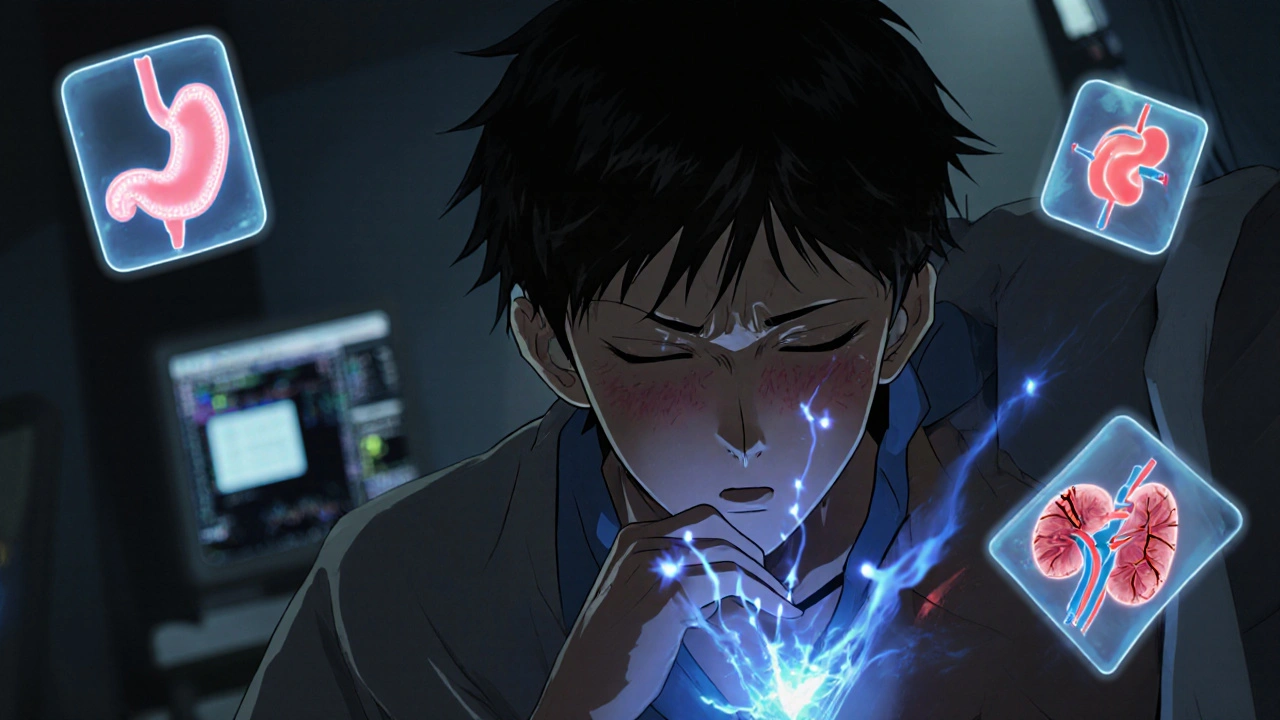
When you're in severe pain-after surgery, a bad injury, or a flare-up of chronic condition-you want something that works fast. Ketorolac is one of those drugs doctors reach for when other painkillers aren't enough. It’s strong. It’s effective. But it’s not something you just grab off the shelf. If you’re considering ketorolac for pain relief, you need to know exactly what you’re getting into. This isn’t just another NSAID. It comes with real dangers if used the wrong way.
How Ketorolac Works
Ketorolac is a nonsteroidal anti-inflammatory drug, or NSAID. That means it blocks enzymes in your body called COX-1 and COX-2, which are responsible for producing prostaglandins. These chemicals cause inflammation, swelling, and pain. By stopping them, ketorolac cuts pain signals quickly. It’s not a narcotic, so it doesn’t cause drowsiness or addiction like opioids. But it also doesn’t treat the root cause of pain-it just mutes the symptoms.
What makes ketorolac different from ibuprofen or naproxen is how powerful it is. A single 10mg injection can reduce pain as effectively as a low dose of morphine. That’s why hospitals use it after major operations. It’s also available as pills and nasal spray, but those forms are usually reserved for short-term use after initial injection.
The Pros: Why Doctors Prescribe It
There are good reasons ketorolac is still in use. First, it works fast. If you’ve had a broken bone, a hernia repair, or dental surgery, you’ll feel relief within 30 minutes of an injection. For many patients, it means fewer opioids, which reduces the risk of dependence.
Second, it’s non-addictive. Unlike opioids, ketorolac doesn’t trigger dopamine spikes in the brain. That’s a big deal in today’s opioid crisis. Many patients who’ve struggled with addiction avoid ketorolac because it doesn’t carry that risk.
Third, it reduces swelling. If you’re recovering from trauma or surgery, swelling can delay healing. Ketorolac helps with that too. Athletes recovering from acute injuries sometimes use it under medical supervision to get back on their feet faster.
Finally, it’s versatile. You can get it as an injection, tablet, or nasal spray. The nasal spray is especially useful for people who can’t swallow pills after surgery. It’s absorbed through the nose and hits the bloodstream in under 15 minutes.
The Cons: The Real Risks You Can’t Ignore
But here’s the catch: ketorolac is not safe for long-term use. The FDA warns it should never be taken for more than five days. Why? Because it can cause serious damage to your stomach, kidneys, and heart.
Stomach ulcers and bleeding are the most common dangers. Ketorolac suppresses protective prostaglandins in the stomach lining. Without them, acid eats away at the tissue. One study found that people taking ketorolac for more than three days had a 5x higher risk of gastrointestinal bleeding compared to those on regular NSAIDs. That risk goes up if you’re over 65, take blood thinners, or drink alcohol.
Kidney damage is another silent threat. Ketorolac reduces blood flow to the kidneys. In healthy people, that’s usually not a problem. But if you’re dehydrated, have high blood pressure, or already have kidney issues, your kidneys can start failing within days. Emergency rooms see cases every year of patients who took ketorolac for a backache, then ended up in dialysis because their kidneys shut down.
Heart risks are less talked about but just as real. Long-term use of NSAIDs, including ketorolac, increases the chance of heart attack and stroke. This isn’t just for people with heart disease. Even healthy adults aren’t immune. The risk climbs after just a few days of use.
And here’s something most people don’t realize: ketorolac can interact with over 200 other medications. If you’re on antidepressants, blood pressure pills, or even common supplements like fish oil or garlic extract, you could be putting yourself at risk. Always tell your doctor everything you’re taking.

Who Should Avoid Ketorolac
Some people should never take ketorolac. That includes:
- Anyone under 18 years old
- People with active stomach ulcers or bleeding disorders
- Those with severe kidney disease or on dialysis
- Women in the third trimester of pregnancy
- People with a history of asthma triggered by NSAIDs
- Anyone allergic to aspirin or other NSAIDs
If you’ve had a heart attack, stroke, or bypass surgery in the last year, your doctor will likely avoid ketorolac entirely. Even if you’re young and healthy, it’s not worth the gamble unless the pain is severe and short-term.
What Happens If You Take It Too Long
People sometimes think, “I just need it for a few more days.” That’s how problems start. After five days, the benefits stop increasing-but the risks keep climbing. One patient I saw in Melbourne last year took ketorolac tablets for 12 days after a knee injury. He didn’t feel pain anymore, so he assumed it was fine. He ended up with a perforated ulcer and needed emergency surgery. His kidneys were also damaged.
There’s no safe way to “build up” tolerance to ketorolac. It doesn’t get stronger over time, and your body doesn’t adapt. Instead, your organs start breaking down. The damage can be permanent.

Alternatives to Ketorolac
If you need strong pain relief but can’t risk ketorolac, there are other options:
- Acetaminophen (Tylenol): Safe for longer use, doesn’t hurt the stomach or kidneys. Works well for moderate pain.
- Low-dose opioids: For severe acute pain, short-term use under strict supervision is still a valid option.
- Corticosteroid injections: Great for localized inflammation, like sciatica or joint pain.
- Physical therapy and ice/heat: Often overlooked, but highly effective for muscle and joint pain.
- Topical NSAIDs: Gels or patches with diclofenac or ibuprofen deliver pain relief without gut damage.
Many patients don’t realize that combining acetaminophen with a topical NSAID can give you the same pain control as ketorolac-without the risks.
How to Use Ketorolac Safely
If your doctor prescribes ketorolac, follow these rules:
- Take it exactly as directed. Never exceed 5 days.
- Don’t drink alcohol while using it.
- Stay hydrated. Drink plenty of water to protect your kidneys.
- Watch for warning signs: black stools, vomiting blood, dizziness, swelling in legs, or reduced urination.
- Stop immediately and call your doctor if you feel chest pain, shortness of breath, or sudden weakness.
- Don’t combine it with other NSAIDs like ibuprofen or naproxen.
Keep a pain diary. Write down when you take it, how much pain you have, and any side effects. That helps your doctor decide if it’s still the right choice.
Final Thoughts
Ketorolac is a powerful tool-but it’s not a solution. It’s a temporary fix for severe pain, meant to be used in controlled, short bursts. It’s not for chronic back pain, headaches, or arthritis. Using it longer than recommended doesn’t make you tougher-it makes you vulnerable.
If you’ve been prescribed ketorolac, ask your doctor: “Is this the shortest possible course?” and “What’s the plan if I still hurt after five days?” You deserve pain relief. But you also deserve to stay safe.
Can ketorolac be used for chronic pain like arthritis?
No. Ketorolac is not approved for long-term use and should never be used for chronic conditions like arthritis. It carries a high risk of stomach bleeding, kidney damage, and heart problems when used beyond five days. For arthritis, safer options include acetaminophen, topical NSAIDs, physical therapy, or disease-modifying drugs prescribed by a rheumatologist.
Is ketorolac stronger than ibuprofen?
Yes, ketorolac is significantly stronger than ibuprofen. A 10mg dose of ketorolac provides pain relief similar to a low dose of morphine, while ibuprofen at 400-800mg offers only moderate relief. Ketorolac is designed for acute, severe pain-like after surgery-while ibuprofen is meant for mild to moderate pain over longer periods.
Can I take ketorolac with other painkillers?
You should not combine ketorolac with other NSAIDs like aspirin, naproxen, or ibuprofen. Doing so increases the risk of stomach ulcers and kidney damage. Acetaminophen (Tylenol) is generally safe to use alongside ketorolac, but always check with your doctor first. Also avoid blood thinners like warfarin or herbal supplements like fish oil, which can raise bleeding risk.
What are the signs of ketorolac overdose?
Signs of overdose include severe stomach pain, vomiting blood or material that looks like coffee grounds, dark or tarry stools, dizziness, confusion, reduced urination, swelling in the hands or feet, and rapid heartbeat. In extreme cases, it can lead to kidney failure, internal bleeding, or heart attack. If you suspect an overdose, seek emergency medical help immediately.
Is ketorolac safe for older adults?
It’s riskier for older adults. People over 65 are more likely to develop stomach ulcers, kidney problems, and high blood pressure from ketorolac. Doctors often avoid prescribing it to seniors unless absolutely necessary and then only for the shortest time possible. If you’re older and prescribed ketorolac, monitor for swelling, confusion, or changes in urination-these can be early signs of kidney stress.
How quickly does ketorolac wear off?
Ketorolac starts working within 15 to 30 minutes after injection or nasal spray, and within 1 hour if taken as a pill. Its effects last about 4 to 6 hours. Because it wears off quickly, people sometimes take extra doses-this is dangerous. Never take another dose sooner than every 4 hours, and never exceed 40mg per day.


Sherri Naslund
November 19 2025i swear if i had a nickel for every time some doctor handed me ketorolac like it was candy... i could buy a whole pharmacy. they act like it's magic but then act shocked when you end up in the er with a bleeding ulcer. why not just give you a f***ing ice pack and call it a day? 🤷♀️