
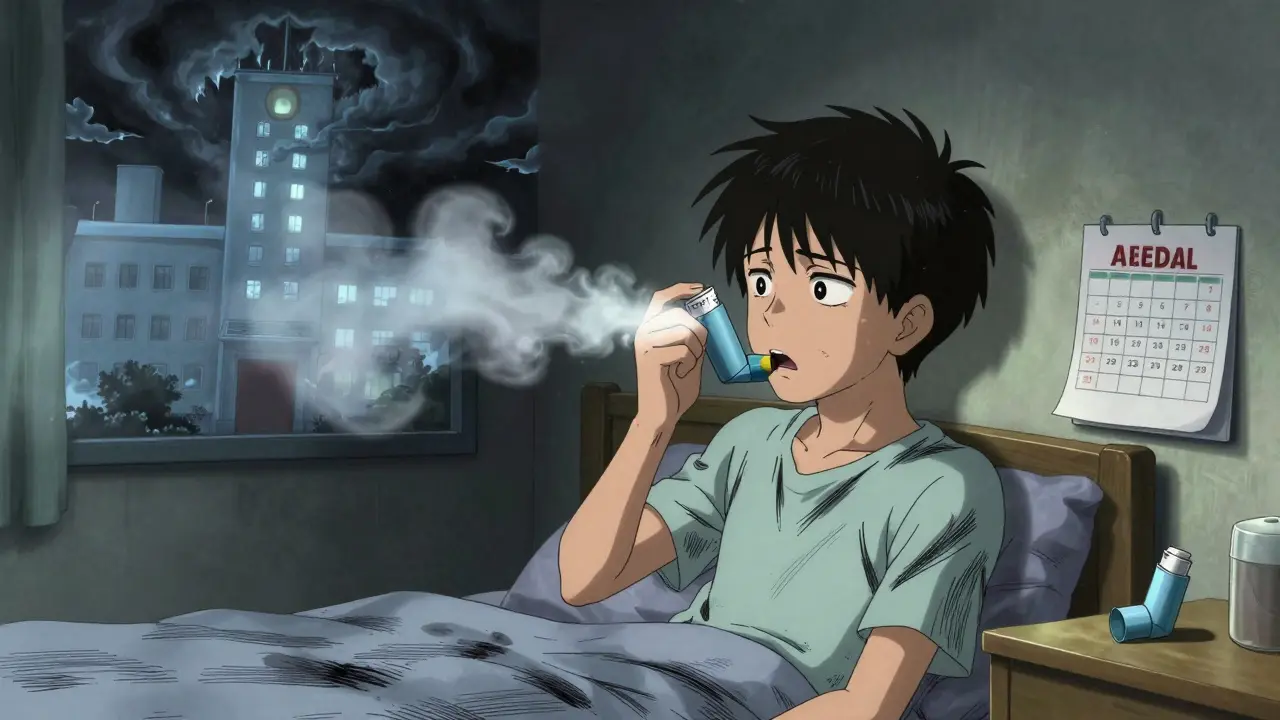
Using an expired inhaler during an asthma attack isn’t just risky-it can be life-threatening. You might think, "It’s only been a few months past the date," or "I’ve used it before and it worked." But when your body is fighting for air, that 20% drop in medication potency could mean the difference between relief and an emergency room visit. The same goes for eye drops and topical creams. Expired doesn’t always mean "harmful," but it almost always means "unreliable." And in medical emergencies, reliability is everything.
Why Expiration Dates Matter More Than You Think
Expiration dates aren’t random. They’re based on real-world testing by manufacturers under controlled conditions. The FDA requires that medications maintain at least 90% of their labeled potency until the date printed on the package. After that, there’s no guarantee. For most pills, potency fades slowly. But for inhalers, eye drops, and creams? The rules change.
Take metered-dose inhalers (MDIs) like Ventolin or ProAir. Once they leave the foil pouch, they start degrading faster. A 2021 study in the Journal of Aerosol Medicine found that after just six months past expiration, some dry powder inhalers lost up to 20% of their dose. That’s not a small drop-it’s enough to fail during a severe asthma flare. And it’s not just about strength. The propellant in these devices can weaken, leading to inconsistent spray patterns. One puff might deliver a full dose. The next? Nothing.
Eye drops are even more dangerous. They’re sterile when sealed. Once opened and past their expiration date, bacteria can grow. A 2022 study in Clinical Ophthalmology found that 38% of expired artificial tears showed contamination. That’s not a typo. Nearly four in ten bottles had germs in them. Using those could lead to eye infections, corneal ulcers, or even vision loss.
Topical creams? Less urgent, but still risky. Hydrocortisone cream, for example, might still feel cool on your skin after expiration-but its anti-inflammatory power drops. At 30°C (86°F), potency falls to 65% after six months. If you’re using it for eczema or a rash, you’re not getting the relief you paid for.
What Happens When You Use Expired Medications?
Let’s be clear: you probably won’t die from using an expired cream. But you might not get better. Or worse-you might think you’re getting better, when you’re not.
For asthma patients, this is terrifying. The American College of Allergy, Asthma, and Immunology found that 12% of avoidable asthma ER visits each year come from people using expired inhalers. One case from the Journal of Emergency Medicine in 2023 involved a 24-year-old who had an attack, used his expired albuterol inhaler, and ended up in the hospital because the medication didn’t work. He had no backup. No new prescription. Just an old canister he thought was fine.
On Reddit’s r/asthma community, 67% of 428 respondents admitted to using expired inhalers. Over a third said they noticed reduced effectiveness. One user wrote: "I used my expired inhaler during a panic attack. Felt nothing. Had to call 911." That’s not an anomaly. It’s a pattern.
Eye drops? You won’t know you’re infected until it’s too late. Redness, pain, blurred vision-symptoms that start mild can spiral fast. And once bacteria get in, they’re hard to remove. No one checks the expiration date on their eye drops until they’re out of stock. Then they reach for the old bottle. Don’t.
Topical medications are often treated like over-the-counter lotions. But if you’re using expired hydrocortisone for a flare-up, you’re not treating the problem-you’re just masking it. And that delay can make things worse.
How to Dispose of Expired Inhalers Safely
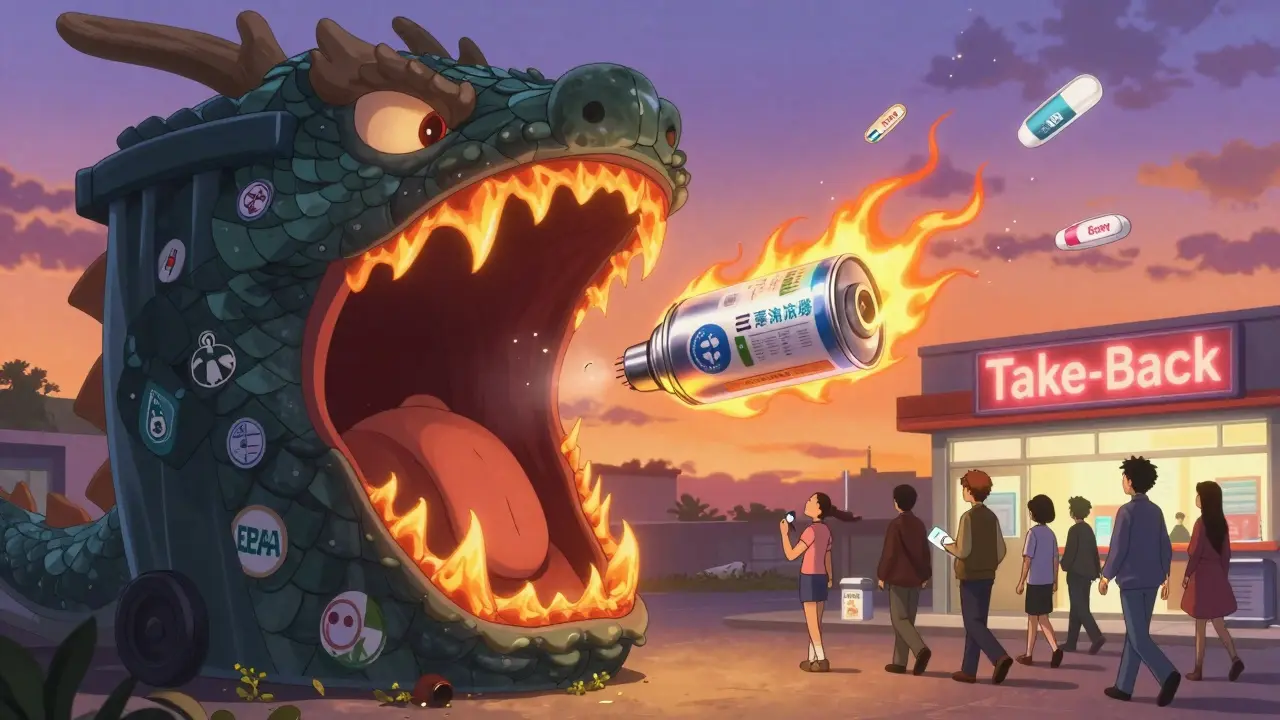
Throwing an inhaler in the trash isn’t just bad for the environment-it’s dangerous. Many inhalers contain propellants like HFA (hydrofluoroalkane), which are flammable and classified as hazardous waste. When crushed in a landfill, they can explode. Yes, really.
The safest way? Use a drug take-back program. The DEA runs the National Prescription Drug Take Back Day, and there are over 11,000 collection sites across the U.S. as of early 2024. Most major pharmacies like CVS and Walgreens have permanent drop boxes. You don’t need a receipt. You don’t need to be the original patient. Just walk in with your expired inhaler.
If there’s no drop box nearby, some states offer free prepaid mailers. Washington State, Oregon, and California all have them. Amazon Pharmacy started a free mail-back program in October 2023 and has already processed 12,000 inhalers. You request a kit online, put the inhaler in, seal it, and drop it in the mailbox.
What if you’re stuck? The FDA’s backup plan: remove the canister from the plastic holder. Spray the medicine into the sink or toilet (away from others) until it’s empty. Then throw the empty metal canister in the recycling bin. Don’t puncture it. Don’t burn it. Just spray until no more comes out. This reduces explosion risk and environmental harm.
How to Dispose of Expired Eye Drops and Topical Medications
Eye drops are simple: if it’s expired, throw it away. No exceptions. Don’t pour it down the drain. Don’t flush it. Just seal the bottle in a plastic bag with something unappetizing-coffee grounds, cat litter, dirt-and toss it in the trash. This keeps kids and pets from getting into it.
For topical creams, the same rule applies. Scrape out as much as you can into a sealable container. Mix it with sawdust, used paper towels, or even old cereal. Seal it. Throw it away. Why? Because pharmaceuticals in landfills eventually leak into groundwater. The U.S. Geological Survey found traces of medications in 80% of U.S. waterways. You don’t want to be part of that.
Some pharmacies now offer special bins for creams and ointments. Ask your pharmacist. If they say no, ask why. If they still say no, go elsewhere. Your local CVS or Walgreens almost certainly has one.
What to Do If You Can’t Afford a New Prescription
Let’s be honest: cost is why most people use expired meds. A new albuterol inhaler can cost $60 without insurance. For low-income families, that’s a luxury. The Asthma and Allergy Foundation of America found that 41% of Medicaid patients use expired inhalers because they can’t afford replacements.
But there are options. Many manufacturers offer patient assistance programs. GlaxoSmithKline (Ventolin) and Teva (ProAir) both have free or low-cost programs for eligible users. Call their customer service lines. Ask for "patient assistance." You don’t need to be perfect. You just need to be honest.
Community health centers and nonprofit clinics often give away free inhalers. The Asthma and Allergy Foundation partnered with 1,200 clinics in 2023 to hand out free disposal kits and new inhalers to people who need them. If you’re struggling, call 1-800-222-1222-the Medicine Safe Disposal Hotline. They’ll connect you to local help.
And if you’re on Medicaid or Medicare, ask about the Inflation Reduction Act’s drug pricing caps. In 2024, insulin and some inhalers are capped at $35 per month. That’s a game-changer.
How to Prevent This From Happening Again
Set a reminder. Put it in your phone. Every six months, check your medicine cabinet. Write the expiration date on the bottle with a Sharpie if it’s faded. Keep inhalers in a cool, dry place-not the bathroom. Humidity kills them faster.
Buy only what you need. Don’t stockpile. Most inhalers last 12 months after opening. You don’t need three. One is enough. Keep one at home. Keep one in your bag. Keep one at work. Rotate them. Use the oldest one first.
And if you’re ever unsure? Call your pharmacist. They’re trained to answer this exact question. No judgment. No lecture. Just help.
What’s Changing in 2026?
Things are getting better. Propeller Health’s smart inhaler cap, released in Q2 2023, now alerts users 30 days before expiration and even texts disposal instructions. More pharmacies are rolling out automated disposal kiosks. The FDA is considering extending expiration dates for certain inhalers under strict storage conditions.
By 2027, 90% of major pharmacies are expected to offer full disposal services. Rural areas still lag-only 22% of rural counties have access-but urban centers are catching up fast.
The message is clear: expired medications aren’t worth the risk. Not for asthma. Not for your eyes. Not for your skin. And not for the planet.
Can I still use an expired inhaler if it looks fine?
No. Even if the inhaler looks clean and the canister hasn’t leaked, the medication inside may have lost potency. For asthma patients, this is especially dangerous. A 2021 study found that expired albuterol inhalers can deliver as little as 60-70% of the intended dose during an attack. That’s not enough to open your airways. Relying on it could lead to hospitalization.
Is it safe to flush expired eye drops?
No. Flushing eye drops contributes to pharmaceutical pollution in waterways. The EPA found medication residues in 46% of U.S. streams. Instead, seal the bottle in a plastic bag with coffee grounds or dirt, then throw it in the trash. This prevents pets or children from accessing it and reduces environmental harm.
Why can’t I just throw expired inhalers in the recycling bin?
Because inhalers are pressurized. The propellant inside can explode if crushed in a recycling truck or landfill. Many are classified as hazardous waste. Always empty the canister first (by spraying until empty), then remove it from the plastic holder. The plastic can be recycled, but the metal canister should be disposed of through a take-back program or sealed trash.
Are there free programs to get new inhalers if I can’t afford them?
Yes. Manufacturers like GlaxoSmithKline (Ventolin) and Teva (ProAir) offer free or low-cost programs for qualifying patients. Community health centers and nonprofits also distribute free inhalers. Call the Medicine Safe Disposal Hotline at 1-800-222-1222-they’ll connect you to local resources. Under the Inflation Reduction Act, some inhalers are now capped at $35 per month with Medicare.
How long do topical creams last after expiration?
Topical creams like hydrocortisone may retain some potency for a few months past expiration if stored below 25°C (77°F). But potency drops sharply above that. At 30°C, hydrocortisone loses 25% of its strength within six months. Even if it feels cool, it may not be working. Don’t risk treating a flare-up with ineffective cream. Replace it.


Prateek Nalwaya
February 16 2026Man, this post hit different. I’ve been using my uncle’s old Ventolin since last monsoon - just prayed harder when I felt the wheeze coming. But now? I’m terrified. That stat about 20% potency drop? That’s not a number - that’s a death sentence waiting for a puff. I’m heading to the pharmacy tomorrow. No more gambling with my lungs.