
Every year, over 100,000 people in the U.S. die from drug overdoses. Most of those deaths involve opioids - especially synthetic ones like fentanyl - and many happen at home, in front of family members who don’t know what to do. The good news? You can change that. With a simple, clear overdose emergency plan, your household can turn panic into action - and possibly save a life.
Why This Plan Matters More Than You Think
You might think, "We don’t use opioids. This doesn’t apply to us." But here’s the reality: 51.6 million U.S. adults got an opioid prescription in 2022. That’s more than 1 in 5 people. And many of those prescriptions are for back pain, arthritis, or post-surgery recovery - not addiction. Even if no one in your home uses drugs recreationally, someone might be taking pain meds. And if they are, they’re at risk. Fentanyl is 50 to 100 times stronger than morphine. It can knock someone out in under three minutes. If you wait for an ambulance, you’re waiting too long. Emergency responders take an average of 8 minutes to arrive - and in rural areas, it can be longer. But naloxone, the life-saving antidote, works in 2 to 5 minutes. And it’s legal to carry and use in every state. This isn’t about fear. It’s about preparedness. Like having a fire extinguisher or a first aid kit. You hope you never need it. But if you do, you’ll be glad it’s there - and you know how to use it.Step 1: Know the Signs of an Overdose
You can’t respond to something you don’t recognize. An overdose doesn’t always look like someone slumped on the floor. Here are the three key signs to watch for:- Unresponsive: Shake their shoulder hard. Call their name. If they don’t wake up, it’s not sleep. It’s danger.
- Abnormal breathing: Are they gasping? Gurgling? Or not breathing at all? Normal breathing is 12 to 20 breaths per minute. Less than 12 is a red flag.
- Pinpoint pupils: Shine a light in their eye. If the black part (pupil) is tiny like a pinhead, that’s a classic sign of opioid overdose.
Step 2: Get Naloxone - And Keep It Accessible
Naloxone (brand names Narcan, Kloxxado, or generic nasal spray) reverses opioid overdoses. It’s safe. It doesn’t work on alcohol, benzodiazepines, or stimulants - but it won’t hurt someone if they don’t need it. That’s why every household with opioids should have at least two doses. You can get it without a prescription in 46 states. Walk into any CVS, Walgreens, or pharmacy in Australia (where naloxone is available over-the-counter) and ask for it. In the U.S., it’s often $0 with insurance thanks to the 2024 Inflation Reduction Act. Without insurance, it’s $25-$40 - far less than a prescription co-pay. Store it where everyone can find it - not locked in a cabinet. Keep it in the bathroom, kitchen, or bedroom - somewhere familiar. Avoid heat and sunlight. Don’t leave it in the car. Room temperature (68-77°F) is best. Check the expiration date every 18 months. Naloxone doesn’t suddenly become dangerous after it expires - it just loses strength. Replace it if it’s old.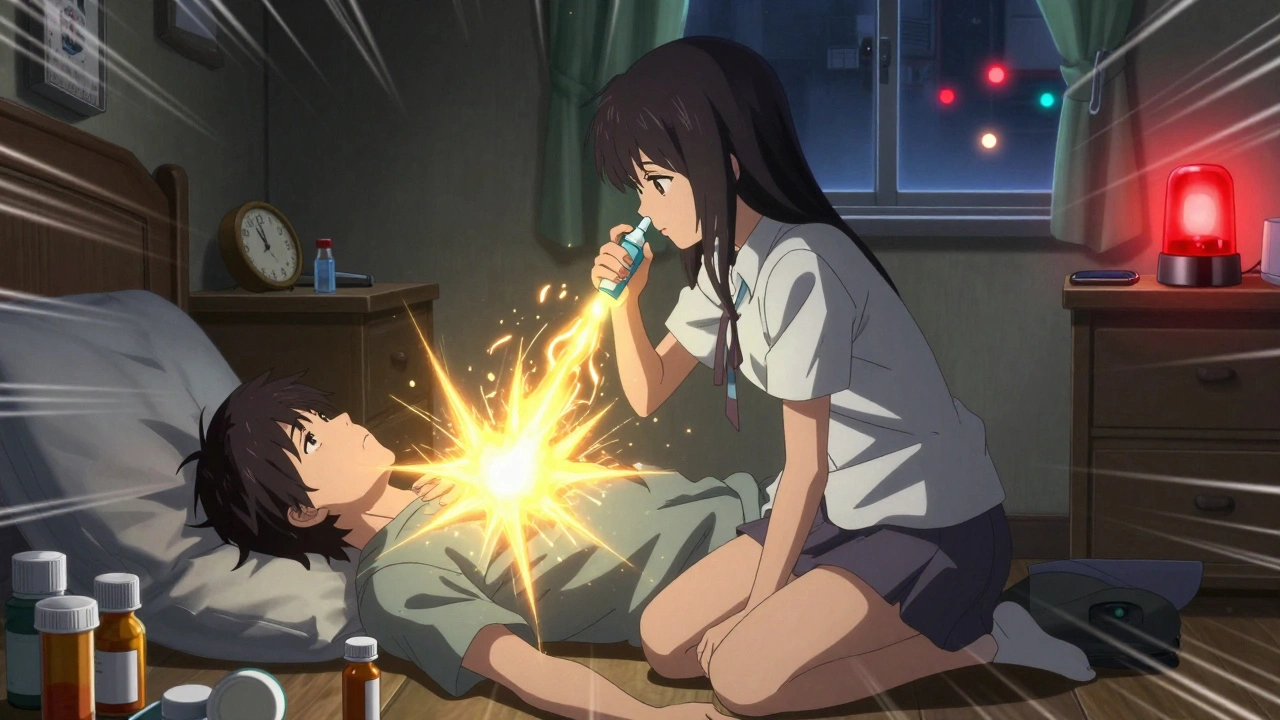
Step 3: Build Your Emergency Response Sequence
When you suspect an overdose, follow this simple order:- Assess: Check for unresponsiveness, slow breathing, pinpoint pupils.
- Naloxone: Administer one dose of nasal spray into one nostril. No need to tilt the head. Just spray. If you’re using an injection, give 0.4-2mg into the thigh or upper arm.
- Call 911: Even if they wake up, call immediately. The effects of naloxone wear off after 30-90 minutes. Fentanyl can come back. They need medical care.
- Have more ready: Keep the second dose nearby. If they don’t respond in 3-5 minutes, give the second dose.
- Observe: Stay with them. Put them on their side (recovery position) so they don’t choke. Monitor breathing. Don’t leave them alone.
- Review: After EMS arrives, talk to them. What happened? What meds were taken? This helps doctors treat them properly.
Step 4: Train Everyone in the Household
A plan is useless if no one knows how to use it. That’s the biggest failure point. In Washington State, only 52% of families who had naloxone could correctly administer it during a follow-up test. Hold a 15-minute family meeting. Show them the kit. Let them practice on a training device (many pharmacies give them out for free). Watch a short video from the American Red Cross - their free online course has 89% skill retention after three months. Include teens. In 2023, 34% of teens aged 14-17 said they knew someone who overdosed. They might be the first one home. They need to know what to do. Make a laminated card with:- Emergency contacts (911, poison control, family doctor)
- List of all medications in the house - names, doses, who they’re for
- Step-by-step instructions for naloxone use
- Location of the naloxone kit
What This Plan Doesn’t Do - And What It Does
This plan won’t cure addiction. It won’t stop someone from using drugs. But it gives them a second chance. Studies show 89% of people who survive an overdose with naloxone go on to seek treatment. That’s not a coincidence. It’s because they were given time - time to breathe, time to recover, time to choose help. It also doesn’t replace EMS. You still call 911. But you don’t wait for them to arrive before acting. That’s the difference between life and death. And while it’s most effective for opioid overdoses (92% success rate when used correctly), it’s useless for alcohol or benzo overdoses. If someone took a mix of drugs, you still give naloxone - it won’t hurt - but you also need to watch for other symptoms like seizures or vomiting.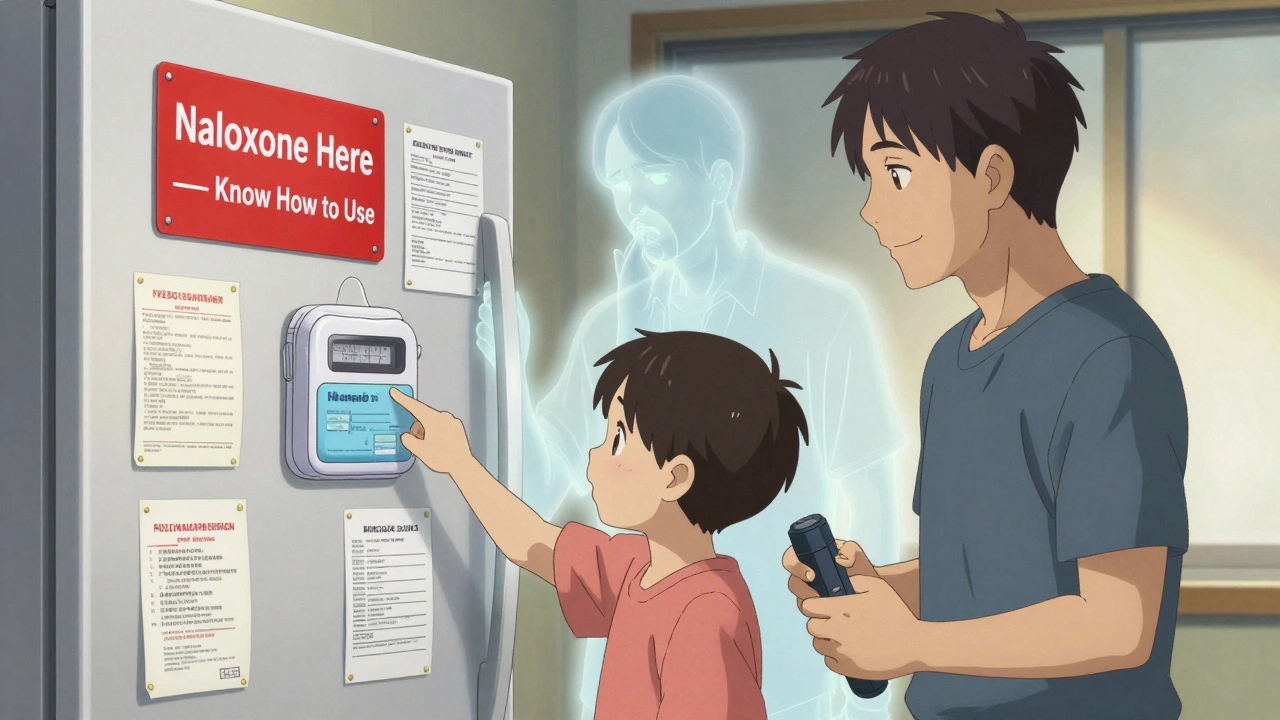
Common Mistakes - And How to Avoid Them
Most failures come from simple errors:- Expired naloxone: 31% of families who tried to use it had old kits. Check dates. Replace yearly.
- Wrong administration: 24% sprayed it into the wrong nostril, didn’t push the plunger fully, or thought it worked instantly. Practice.
- Delayed 911 call: 63% of preventable deaths happened because people waited too long. Call immediately - even if they wake up.
- Psychological denial: 19% of families thought the person was "just sleeping." Overdose doesn’t look like sleep. It looks like stillness. Like silence.
Where to Get Help - And Free Kits
In the U.S., you can get free naloxone from:- CVS and Walgreens (over 1,200 locations nationwide)
- Your local health department
- Nonprofits like Harm Reduction International or the National Alliance for Model State Drug Laws
- Tribal organizations and community clinics
Final Thought: This Isn’t About Fear - It’s About Love
Creating this plan isn’t about expecting the worst. It’s about loving someone enough to be ready for the worst - so you can give them the best chance. You don’t need to be a doctor. You don’t need to be brave. You just need to be prepared. Start today. Get the naloxone. Teach your family. Write down the steps. Put it on the fridge. Because when seconds matter - you won’t have time to search for answers. You’ll need to act.Can I get naloxone without a prescription?
Yes. In 46 U.S. states and in Australia, naloxone is available over the counter at pharmacies without a prescription. You can walk into CVS, Walgreens, or any major pharmacy and ask for it. Many pharmacies offer it for $25 or less, even without insurance. Some health departments give it away for free.
Will naloxone work on any drug overdose?
No. Naloxone only reverses overdoses caused by opioids - like prescription painkillers, heroin, or fentanyl. It won’t work on alcohol, benzodiazepines, cocaine, or methamphetamine. But if you’re unsure what was taken, give naloxone anyway. It won’t harm someone who doesn’t need it, and it could save their life if opioids are involved.
How many doses of naloxone should I keep at home?
Keep at least two doses. Synthetic opioids like fentanyl are so strong that one dose of naloxone often isn’t enough. The Washington State Department of Health recommends 2-3 doses per household. If the person doesn’t respond after 3-5 minutes, give the second dose.
What if I’m scared to use naloxone?
It’s normal to feel scared. But naloxone is simple to use - nasal spray requires no training beyond watching a 5-minute video. The American Red Cross offers free online training. Remember: doing nothing is riskier than doing something. If someone is not breathing, giving naloxone is the safest first step.
Do I still need to call 911 after giving naloxone?
Yes. Always. Naloxone wears off in 30 to 90 minutes. Opioids - especially fentanyl - can stay in the body longer. The person could stop breathing again. Medical professionals need to monitor them for at least 2-4 hours to prevent "renarcotization." Calling 911 is not optional - it’s essential.
Is it legal to give naloxone to someone else?
Yes. All 50 U.S. states and Australia have Good Samaritan laws that protect people who administer naloxone in good faith. You cannot be charged for helping someone during an overdose. These laws exist to encourage bystanders to act without fear of legal consequences.
How often should I check the naloxone expiration date?
Check every 18 to 24 months. Naloxone doesn’t become dangerous after expiration - it just becomes less effective. Replace it if it’s past the date. Some pharmacies will replace expired kits for free. Keep a note on your calendar to remind yourself.


Regan Mears
December 12 2025I had no idea naloxone was this accessible-walked into my local CVS last week and got two kits for free. I kept one at home, one in my car. My sister’s a nurse and she said this is the most practical thing I’ve done all year. Seriously, if you have pain meds in the house, get this. It’s not fear-it’s responsibility.
Also, the A.N.C.H.O.R. method? Genius. I printed it out and taped it to the fridge next to the microwave instructions. Now my 16-year-old knows what to do if someone stops breathing.
Stop waiting for someone to ‘deserve’ help. You don’t need permission to save a life.