
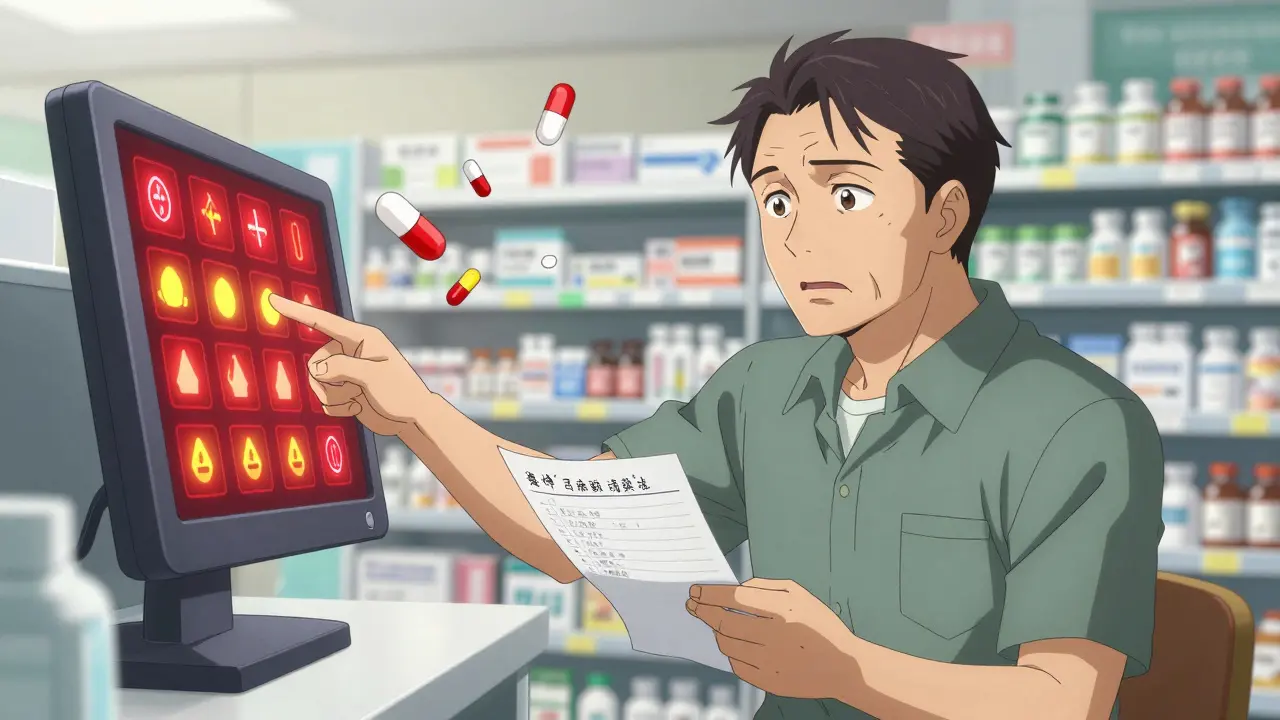
Getting a new prescription can feel overwhelming. You’re handed a pill bottle, told when to take it, and sent on your way. But what if that new pill could make your other meds less effective-or worse, cause a dangerous reaction? Drug interactions are one of the most common and preventable causes of hospital visits, yet most people never ask about them. You don’t need to be a medical expert to protect yourself. You just need to know what to ask.
Why Drug Interactions Matter More Than You Think
More than half of American adults take at least one prescription drug. One in five take three or more. And for those taking five or more, the chance of a harmful interaction skyrockets. The CDC reports that preventable drug interactions send 700,000 people to the emergency room every year. That’s not a rare accident-it’s a systemic risk. And it’s not just about pills. Interactions can happen with vitamins, herbal supplements, even grapefruit juice or alcohol. A simple over-the-counter cold medicine can raise your blood pressure if you have heart disease. Calcium supplements can block thyroid medication from working. Warfarin, a common blood thinner, can turn deadly when mixed with certain antibiotics.What Exactly Counts as a Drug Interaction?
Not all interactions are the same. There are four main types:- Drug-drug: When two or more medications affect each other. For example, ciprofloxacin (an antibiotic) can make warfarin (a blood thinner) too strong, leading to dangerous bleeding.
- Drug-food/beverage: Grapefruit juice can stop your body from breaking down statins, causing toxic buildup. Dairy products can interfere with antibiotics like tetracycline.
- Drug-supplement: St. John’s Wort, a popular herbal remedy for mood, can reduce the effectiveness of birth control, antidepressants, and even some cancer drugs.
- Drug-condition: Decongestants like pseudoephedrine can spike blood pressure in people with hypertension. Antihistamines can worsen glaucoma or an enlarged prostate.
The FDA lists over 300 serious drug-drug interactions that require warning labels. Of those, 150 are life-threatening. And that’s just what’s officially tracked. Real-world data shows that nearly 12,000 serious adverse events linked to drug interactions were reported in 2022 alone.
Seven Questions to Ask Your Doctor or Pharmacist
Don’t wait for them to bring it up. You need to lead the conversation. Here are the exact questions to ask when you get a new prescription:- Will this interact with any of my other medications, supplements, or vitamins? This is the most important. Don’t assume your doctor knows everything you’re taking. Many people forget to mention fish oil, magnesium, or melatonin-but those can all interact.
- Should I avoid certain foods, drinks, or products while taking this? Grapefruit, alcohol, caffeine, dairy, and even leafy greens (if you’re on blood thinners) can all matter.
- What side effects should I watch for, and which ones mean I need to call you right away? Some side effects are normal. Others are red flags. Know the difference.
- Will this affect my existing health conditions? If you have diabetes, kidney disease, heart problems, or liver issues, your body handles drugs differently. This isn’t just about the pill-it’s about your whole health picture.
- Can I take this with my other meds at the same time, or do I need to space them out? Some drugs need to be taken hours apart. Taking them together can reduce effectiveness or increase risk.
- Is there a safer or more effective alternative for my situation? Sometimes, there’s another option that doesn’t interact with your current meds. It’s worth asking.
- Have you checked for gene-drug interactions? More doctors are now using pharmacogenetic testing to see how your genes affect how you metabolize drugs. If your provider doesn’t mention it, ask if they use tools like Genomind or similar systems.
Bring a Full Medication List-Every Time
Doctors and pharmacists can’t check for interactions if they don’t know what you’re taking. That’s why 68% of medication errors happen due to incomplete lists. Don’t rely on memory. Write it down.Your list should include:
- All prescription medications (including doses and frequency)
- All over-the-counter pills (pain relievers, antacids, sleep aids)
- All vitamins, minerals, and herbal supplements
- Any recreational substances you use (alcohol, tobacco, marijuana)
Keep one copy at home and carry another in your wallet or phone. Show it to every provider-your doctor, pharmacist, even the ER nurse. It’s not annoying. It’s lifesaving.
Pharmacists Are Your Best Ally
Most people think doctors are the only ones who check for interactions. But pharmacists are the real frontline defenders. According to the American Pharmacists Association, 92% of pharmacists run full interaction checks before filling a prescription. And here’s the kicker: 37% of serious drug interactions are caught by pharmacists before they ever reach you.Don’t just pick up your script and leave. Take five minutes to ask your pharmacist:
- “Is this safe with everything else I’m taking?”
- “Can you show me the package insert? It has more details than the label.”
- “Will you call my doctor if something looks risky?”
Major pharmacy chains like CVS, Walgreens, and Express Scripts have teams of specially trained pharmacists who review every prescription. They’ll call your doctor if something’s wrong. That’s part of their job. Use them.

Technology Can Help-But It’s Not a Replacement
There are great tools out there. WebMD’s Drug Interaction Checker has data on over 24,000 medications, 4,000 supplements, and 800 foods. It’s free, updated quarterly, and easy to use. But it’s not perfect. It doesn’t know your full medical history. It doesn’t know if you’re drinking grapefruit juice every morning or if you’ve been taking turmeric for joint pain for five years.Some clinics now use pharmacogenetic software that looks at your DNA to predict how you’ll process drugs. These tools are growing fast-28% of new drugs approved in 2023 included genetic interaction data, up from just 5% in 2015. But even the best software can’t replace a clear conversation with your care team.
What Happens When You Don’t Ask
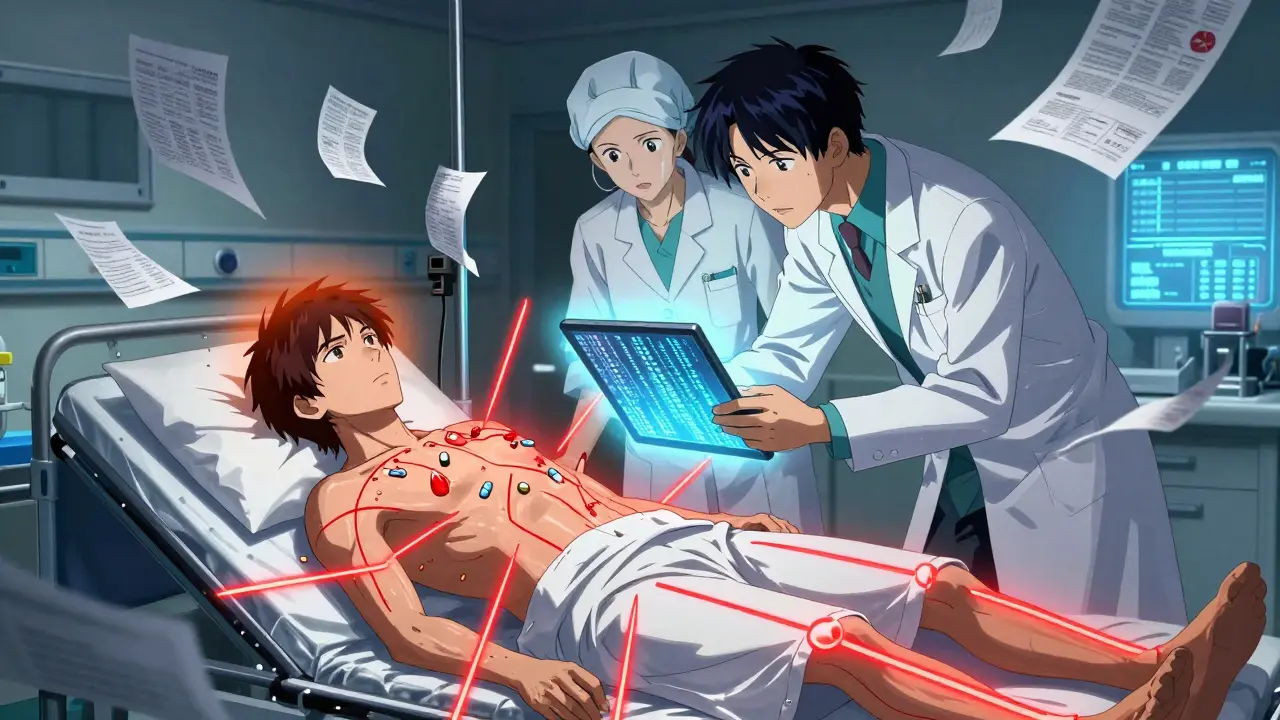
Real people get hurt. A 68-year-old man in Ohio started taking ciprofloxacin for a UTI. He was already on warfarin. He didn’t ask about interactions. Within days, he had internal bleeding. He ended up in the ICU. He survived-but barely.Another case: a woman in Florida took an OTC decongestant for a cold. She had high blood pressure. She didn’t realize it could spike her numbers. She had a stroke. That interaction alone caused over 4,200 ER visits in 2021.
These aren’t rare. They’re preventable. And they happen because people assume someone else is checking. They’re not. You have to do it.
What to Do Next
Right now, before your next appointment:- Make or update your medication list.
- Write down the seven questions above.
- Bring the list to your doctor and your pharmacist.
- Ask for the package insert. Read it. It’s written for patients, not just doctors.
- If you’re on five or more meds, consider asking if pharmacogenetic testing is right for you.
Medication safety isn’t about being difficult. It’s about being informed. You’re not just a patient-you’re the most important person in your own care. No one else has as much at stake.
What should I do if I realize I’ve been taking a dangerous combination?
Stop taking the medication immediately and call your pharmacist or doctor. Don’t wait. If you’re experiencing symptoms like unusual bleeding, chest pain, confusion, severe dizziness, or trouble breathing, go to the nearest emergency room. Bring your medication list with you. Many interactions can be reversed quickly if caught early.
Do I need to tell my doctor about herbal supplements and vitamins?
Yes. Supplements aren’t harmless. St. John’s Wort, ginkgo biloba, garlic pills, and even high-dose vitamin E can interfere with prescription drugs. Many doctors assume patients don’t take them, so they won’t ask. It’s up to you to bring them up. List everything-no matter how natural or harmless it seems.
Can I use a drug interaction app instead of asking my doctor?
Apps like WebMD’s checker are helpful for quick checks, but they’re not a substitute for professional advice. They don’t know your full medical history, allergies, kidney or liver function, or whether you’ve had reactions before. Use them as a tool-not a final answer. Always confirm with your pharmacist or doctor.
What if my doctor says, ‘It’s fine’ but I’m still worried?
It’s your right to ask for a second opinion. Say, ‘I’ve read about possible interactions with this drug and I’m concerned. Could we check with your pharmacist or get a second look?’ Most doctors welcome this. If they get defensive, it’s a red flag. You’re not being difficult-you’re being responsible.
How often should I update my medication list?
Update it every time you start, stop, or change a dose of any medication-prescription, over-the-counter, or supplement. Keep it on your phone as a note, and print a copy to carry. Review it every time you see a new provider, even for a minor issue like a cold or a skin rash.
Are there any medications that are especially risky for older adults?
Yes. Older adults are more sensitive to drug interactions because metabolism slows down. Common risky drugs include benzodiazepines (for anxiety or sleep), anticholinergics (in some allergy and bladder meds), NSAIDs (like ibuprofen), and certain antibiotics. Always ask if there’s a safer alternative for your age group.


Pat Dean
January 18 2026Wow, another one of these ‘just ask your doctor’ feel-good guides. Newsflash: most doctors are rushed, overworked, and don’t care enough to even look at your supplement list. I’ve been in the system for 15 years. They’ll nod, scribble something, and move on. Your ‘lifesaving’ list? It’s just noise to them. You think they’re gonna check for St. John’s Wort? Nah. They’re too busy billing for the next patient. This whole thing is performative safety.