

Imagine a patient walking away from a pharmacy counter without their medicine simply because the price jumped by fifty dollars. It happens more often than you'd think. In fact, data shows that brand-name drug abandonment rates are 266% higher than those for generics. This isn't just a financial glitch; it's a clinical failure. When a patient can't afford their meds, they don't take them, and their health declines. This is where patient advocacy by healthcare providers becomes a literal lifesaver.
Advocating for generics isn't about cutting corners or saving the insurance company money. It's about ensuring the patient actually gets the treatment they need. For many, the barrier isn't just the price tag-it's a deep-seated fear that a cheaper pill is "lesser" or less effective. Providers are the only ones with the trust and the technical knowledge to break that myth.
The Science Behind the Switch
Before a doctor can confidently tell a patient to switch, they need to understand what they are actually prescribing. In the U.S., the FDA is the regulatory body that ensures generic drugs are bioequivalent to their brand-name counterparts. This isn't a vague suggestion; it's a rigorous mathematical standard.
For a drug to be approved as a generic, it must prove pharmaceutical equivalence. This means it has the same active ingredient, dosage form, strength, and route of administration. But the real magic is in bioequivalence. The FDA requires a 90% confidence interval for the ratio of population geometric means to fall between 80% and 125% for both the area under the curve (AUC) and the peak plasma concentration (Cmax). In plain English: the generic drug must get into the bloodstream at the same rate and to the same extent as the brand name.
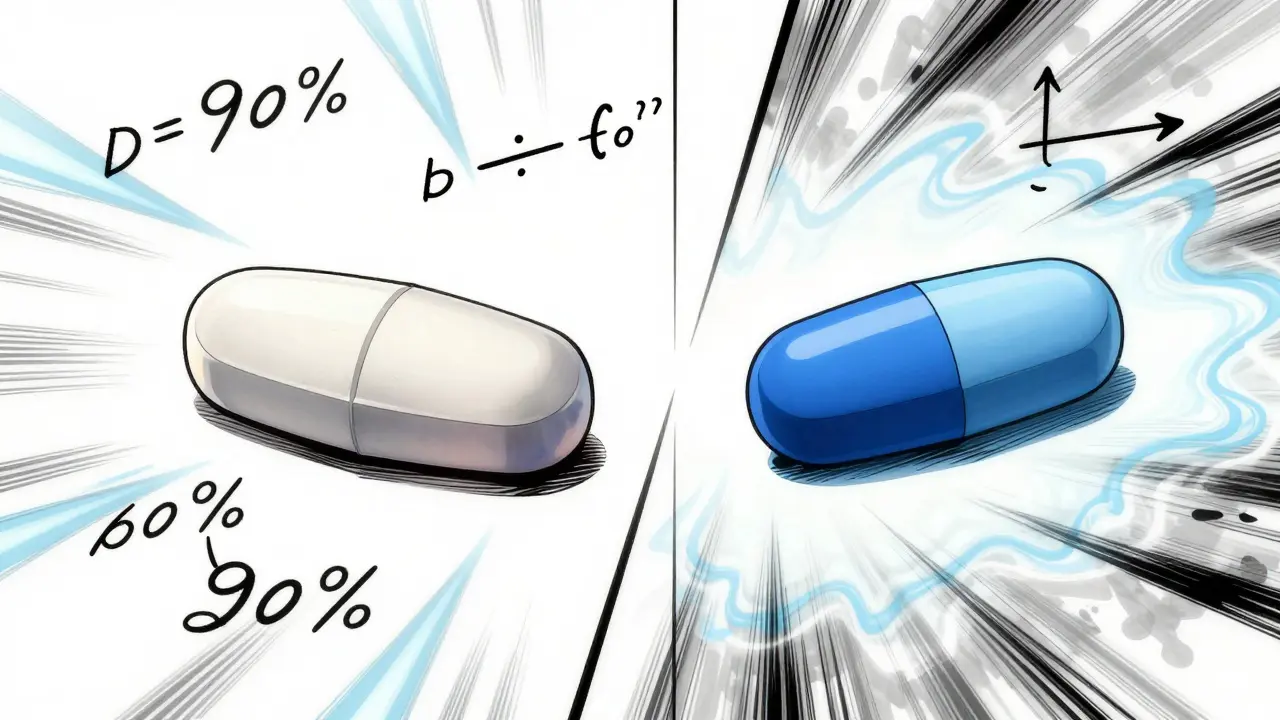
One common point of confusion is the "inactive ingredients." While the active drug is the same, the fillers, binders, or dyes might differ. These differences are why a generic pill might be blue while the brand is white. Providers must explain that these changes don't impact the drug's safety or efficacy, though they might be the primary reason a patient feels the medication is "different."
Why Provider Endorsement is the Turning Point
Patients often trust their doctor more than they trust the pharmaceutical industry. A systematic review published in PMC found that while general opinions of generics have improved, a core group of patients still believes they are inferior. Interestingly, this mistrust often vanishes if the physician explicitly recommends the generic version.
This is the "multiplier effect." When a provider frames a generic as a smart, clinically sound choice rather than just a "cheap alternative," the patient's confidence spikes. This advocacy is an ethical obligation. The American Academy of Family Physicians (AAFP) views the physician as the primary advocate who must balance the patient's clinical needs with their financial reality.
| Feature | Brand-Name Drug | Generic Version |
|---|---|---|
| Active Ingredient | Standardized | Identical |
| Approval Standard | Original Patent Research | Bioequivalence Proof |
| Typical Copay | Often > $20 (61% of cases) | Often < $20 (90% of cases) |
| Appearance | Consistent | May vary by manufacturer |
| Abandonment Rate | Significantly Higher | Significantly Lower |
Navigating the Clinical Nuances
Is a generic always the right move? Not always. While the American College of Physicians (ACP) generally recommends generics, they acknowledge specific scenarios where brand names are necessary. The biggest concern is Narrow Therapeutic Index (NTI) drugs.
NTI drugs are medications where a tiny difference in concentration can lead to either a failed treatment or toxicity. In these rare cases, a slight variation in how a generic is absorbed could be problematic. This is why the AAFP opposes mandatory generic substitution; the clinician needs the freedom to decide based on the individual patient's biology, not a blanket policy.
Beyond NTI drugs, providers must also deal with the "patent thickets" used by some companies to delay generic entry. This administrative battle often leaves providers fighting with insurance companies over Prior Authorizations (PAs). Removing PAs for generics can reduce the time to therapy by an average of 2.3 days, getting the patient on their meds faster.

Practical Communication Strategies for Busy Clinics
Most primary care visits last only 13 to 16 minutes. It's hard to find time for a deep dive into pharmacology. However, spending two minutes on generic counseling now saves hours of cleanup later when a patient stops their therapy because they are confused by a change in pill color.
Effective advocacy uses a proactive rather than reactive approach. Instead of waiting for the patient to complain that their meds look different, the provider should initiate the conversation. Here are a few proven techniques:
- Lead with the FDA's Standard: Explain that the FDA holds all approved products-brand or generic-to the same high standards of safety and efficacy.
- Connect Cost to Adherence: Explicitly tell the patient, "This generic version will likely cost you under $20, which makes it easier to stay consistent with your treatment."
- Warn About Visual Changes: Tell the patient, "Your pharmacy might dispense a pill that looks slightly different in color or shape, but the medicine inside is identical."
- Use the 'Confidence' Frame: Instead of saying "it's cheaper," say "this is a high-quality, bioequivalent option that I trust for your condition."
The Future of Generic Advocacy
We are seeing a shift toward more personalized cost-transparency tools within electronic health records. Soon, providers will see the exact price difference at the point of prescribing, allowing them to advocate for the most affordable option in real-time.
There is also the emerging world of Biosimilars, which are the generic equivalents for complex biologic drugs. These are much harder to manufacture than traditional chemical generics, and the advocacy challenge is even steeper. However, with price differentials often exceeding 30%, the need for provider-led advocacy is just as critical here as it is for a simple statin or blood pressure med.
One red flag to watch is the recent volatility in generic pricing. The American Society of Health-System Pharmacists (ASHP) has warned that some essential generics are actually becoming more expensive due to supply chain issues. This means advocacy now requires staying updated on market availability, not just cost-savings.
Does a generic drug really work as well as a brand-name drug?
Yes. The FDA requires generic drugs to be bioequivalent, meaning they deliver the same amount of active ingredient into the bloodstream at the same rate as the brand-name drug. While inactive ingredients like dyes or fillers may differ, the clinical outcome is the same.
Why do some doctors insist on brand-name medications?
In most cases, generics are preferred. However, for Narrow Therapeutic Index (NTI) drugs-where small dose changes can be dangerous-some providers prefer the exact consistency of a single brand to avoid any potential variability in absorption.
Why does my generic medication look different every time I refill it?
Pharmacies often switch between different generic manufacturers based on availability and cost. Because different companies use different inactive ingredients (fillers and colors), the physical appearance of the pill may change even though the active medicine remains identical.
How does using generics improve patient health?
The primary benefit is adherence. Because generics are significantly cheaper (often under $20), patients are far less likely to skip doses or abandon their prescriptions entirely due to cost, which leads to better long-term health outcomes.
What are biosimilars, and are they the same as generics?
Biosimilars are similar to generics but are made from living cells (biologics) rather than chemicals. Because they are more complex, they aren't "identical" in the way chemical generics are, but they are designed to be highly similar and have no clinically meaningful differences in safety or effectiveness.