

When you pick up a prescription, you might see two options: the familiar brand-name pill with a flashy label, or a plain white tablet with a generic label and a much lower price. It’s natural to wonder - is the cheaper one just as good? The short answer is yes, for most people, most of the time. But there’s more to it than just price. Understanding bioequivalence and how it affects your treatment can help you make smarter, safer choices without overpaying.
What Exactly Makes a Generic Drug "Generic"?
A generic drug isn’t a copycat or a knockoff. It’s the exact same medicine, chemically speaking. The FDA requires that generic versions contain the same active ingredient, in the same strength, and delivered the same way - whether it’s a pill, injection, or cream - as the original brand-name drug. That means if you’re taking atorvastatin for cholesterol, the generic version has the same molecule as Lipitor. No extra ingredients. No hidden differences in the core drug. The big difference? The inactive stuff. Fillers, dyes, coatings, and preservatives can vary. These don’t affect how the drug works in your body, but they can change how it looks or tastes. For most people, this doesn’t matter. But for those with rare allergies or sensitivities, even a small change in inactive ingredients can cause a reaction. That’s why your pharmacist might ask if you’ve had issues with certain dyes or lactose before switching.How Do We Know Generics Work the Same?
The FDA doesn’t require generic manufacturers to run new clinical trials on thousands of patients. That would be expensive and unnecessary. Instead, they use a smarter shortcut: bioequivalence testing. Here’s how it works. A small group of healthy volunteers - usually 24 to 36 people - take both the brand-name drug and the generic version in a controlled study. Blood samples are taken over time to measure how much of the drug enters the bloodstream and how quickly it’s absorbed. Two key numbers are checked: Cmax (the highest concentration reached) and AUC (the total amount absorbed over time). For a generic to be approved, these numbers must fall within 80% to 125% of the brand-name drug’s values. That doesn’t mean the generic has only 80% of the active ingredient - it means the body absorbs it within a very narrow range. In real-world studies, the average difference in absorption between generics and brands is just 3.5%. That’s less than the natural variation your body shows from day to day. A 2014 analysis of over 2,000 bioequivalence studies found that 98% of generics had absorption differences under 10%. That’s not just close - it’s clinically meaningless for most conditions.Cost Savings That Actually Matter
Let’s talk numbers. In 2023, generic drugs saved the U.S. healthcare system $373 billion. That’s not a guess. That’s from the Generic Pharmaceutical Association’s official report. Take Lipitor, the brand-name cholesterol drug. At full price, a 30-day supply costs over $335. The generic version? $0.00 with a GoodRx coupon. Same drug. Same effect. Same risk. Same benefit. Plavix, used to prevent blood clots, costs around $450 brand-name. The generic? Again, $0.00 with a coupon. That’s not a discount. That’s a complete price collapse. In Australia, where I live, the Pharmaceutical Benefits Scheme (PBS) lists generics as the default option for most prescriptions. Patients pay a co-payment of around $30 for brand-name drugs, but only $7 for generics. That’s not a suggestion - it’s policy. The system is designed to save money without sacrificing care.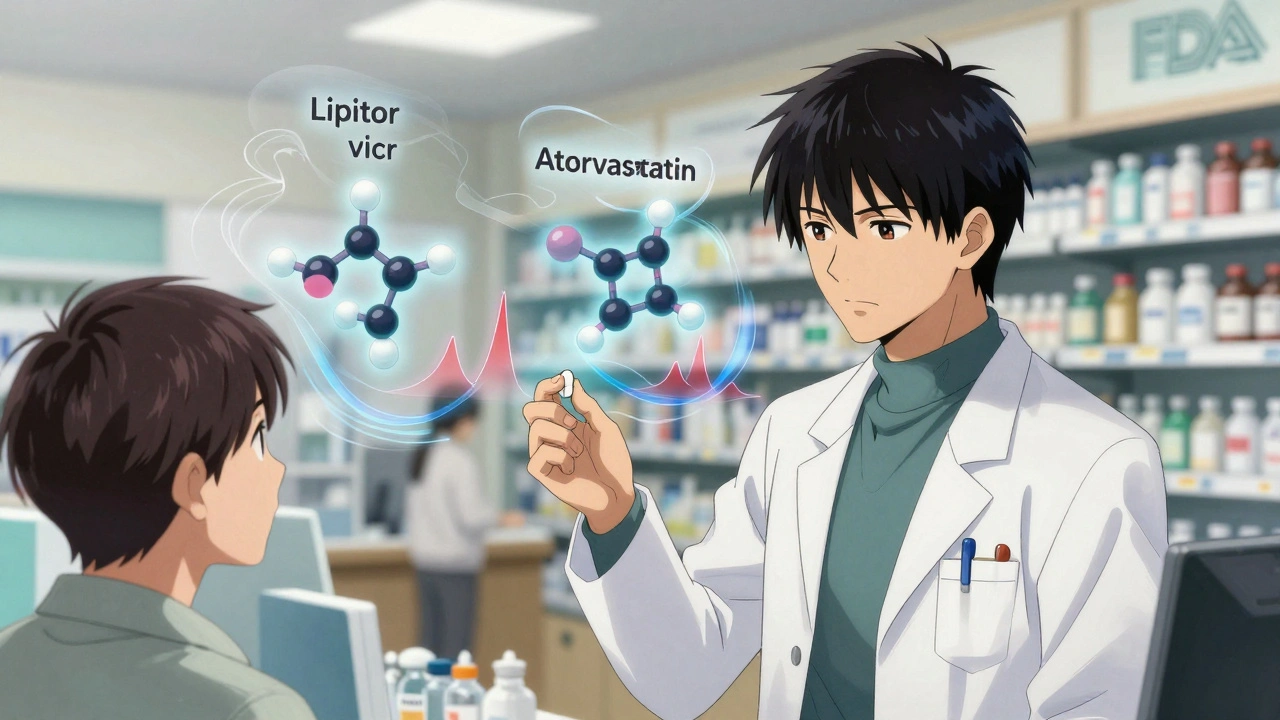
When You Should Be Careful
Not all drugs are created equal when it comes to substitution. Some have a narrow therapeutic index (NTI). That means even a tiny change in blood levels can make the difference between working and being dangerous. Drugs like warfarin (for blood thinning), levothyroxine (for thyroid), phenytoin (for seizures), and lithium (for bipolar disorder) fall into this category. For these, switching from brand to generic - or even between two different generics - can sometimes cause problems. That doesn’t mean you can’t use generics. It means you need to be monitored. If you’re on warfarin and your pharmacist switches you to a generic version, your doctor should check your INR levels within 7 to 14 days. Same with levothyroxine - a change in brand can affect your TSH levels, and you’ll need a blood test to make sure you’re still in the right range. A 2023 study of 512 doctors found that 78% knew warfarin needed monitoring after a switch. But only 32% recognized that levothyroxine did too. That’s a gap in awareness that can put patients at risk.What the Research Really Shows
A large 2020 study in Austria looked at 1.2 million patients on 17 different drug classes. The results were clear: generics performed just as well as brand-name drugs - and in some cases, better. For 10 of the 17 drugs, patients on generics had fewer deaths. For 11, they had fewer major heart or brain events. Another review of 38 studies on heart medications found clinical equivalence in 35 of them. That includes statins, beta-blockers, ACE inhibitors, and antiplatelets - the backbone of cardiovascular care. So why do some people swear their brand-name drug works better? Placebo effect plays a role. If you believe the brand-name version is superior, your brain might convince you it is. Marketing plays a role too. Big pharma spends billions on ads that imply generics are second-rate. But the science doesn’t back that up. A 2022 survey found that 43% of patients believed generics were less effective. Yet, 89% of users in a GoodRx survey reported no difference in how they felt after switching.
What You Can Do
If your doctor prescribes a brand-name drug, ask: "Is there a generic available?" Most of the time, the answer will be yes. Ask your pharmacist to check the FDA’s Orange Book. It lists which generics are rated AB - meaning they’re therapeutically equivalent. Avoid B-rated generics unless your doctor specifically recommends them. If you’re on a narrow therapeutic index drug, don’t assume switching is safe. Always ask for a follow-up blood test after a switch. And if you notice new side effects - dizziness, fatigue, irregular heartbeat - tell your doctor right away. Don’t let fear of generics cost you more than you need to. The data is clear: for 90% of prescriptions, generics are just as safe and effective. The only thing that changes is the price tag.What’s Next for Generic Drugs?
The FDA is now fast-tracking approvals for complex generics - things like inhalers, injectables, and topical creams - that are harder to copy. In 2023, they approved 247 of them, up 19% from the year before. New technology is also helping. A 2023 MIT study showed that advanced manufacturing could reduce absorption variation in warfarin generics to under 2%. That means even NTI drugs might soon be safer to switch. But there’s a catch. Drug shortages are rising. In 2023, there were 312 shortages of generic drugs, mostly sterile injectables. That’s up 17% from 2022. Supply chain issues aren’t about quality - they’re about manufacturing capacity and raw material access. For now, the message is simple: unless you’re on a high-risk medication, choose the generic. It’s not a compromise. It’s the standard.Are generic drugs really as effective as brand-name drugs?
Yes, for most medications, generics are just as effective. The FDA requires them to have the same active ingredient, strength, dosage form, and route of administration. Bioequivalence testing proves they are absorbed into the bloodstream at nearly identical rates - with average differences under 3.5%. Large studies involving millions of patients show no meaningful difference in outcomes for conditions like high blood pressure, cholesterol, and diabetes.
Why do some people say generics don’t work for them?
Some people notice differences, but it’s often due to inactive ingredients - like dyes or fillers - that can affect how a pill feels or tastes. In rare cases, these can trigger mild reactions. For drugs with a narrow therapeutic index - like levothyroxine or warfarin - even small changes in absorption can matter, so monitoring is needed. Psychological factors also play a role; if you believe the brand-name version is better, you might perceive it as working better. But clinical evidence overwhelmingly supports equivalence.
Can I switch from a brand-name drug to a generic without my doctor’s permission?
In most cases, yes - pharmacists can substitute generics unless the prescription says "dispense as written" or "no substitution." But if you’re on a narrow therapeutic index drug like warfarin, lithium, or phenytoin, it’s best to consult your doctor first. Even if substitution is allowed, follow-up blood tests are recommended to ensure your levels stay stable.
How do I know if a generic is FDA-approved and safe?
Look for the AB rating in the FDA’s Orange Book, which lists all approved generic drugs and their equivalence status. AB-rated generics are considered therapeutically equivalent to the brand-name drug. Your pharmacist can tell you if your generic has this rating. All FDA-approved generics, regardless of manufacturer, must meet the same strict standards for quality, safety, and effectiveness.
Why are generic drugs so much cheaper?
Generic manufacturers don’t have to repeat expensive clinical trials because they prove bioequivalence instead. They also don’t spend billions on advertising or marketing. Once a patent expires, multiple companies can produce the same drug, creating competition that drives prices down. On average, generics cost 80-85% less than brand-name drugs. That’s why they make up 90% of all prescriptions filled in the U.S. - not because they’re inferior, but because they’re smart.


Hamza Laassili
December 14 2025GENERIC DRUGS?? LOL. I seen a guy take 'em and his face turned purple. I ain't riskin' it. My cousin's dog got sick on generics. FDA? More like Faux Drug Admin. $$$ for brand-name, or I'm out. $$$ $$$ $$$!!!