

Imagine spending twenty minutes scanning a label, feeling confident that a snack is safe, only to have a severe reaction minutes after the first bite. For millions of people, this isn't a hypothetical fear-it's a daily reality. The gap between what a label says and what is actually in the food can be dangerous. With nearly 32 million Americans affected by food allergies, including over 5 million children, the stakes for accurate labeling couldn't be higher. But there is a silver lining: new standards are changing how we identify food labels and allergies, making it easier to spot hidden risks before they hit your plate.
The New Rules of the Game: FDA 2025 Guidance
If you haven't checked your pantry lately, you might notice some changes. The FDA is the U.S. Food and Drug Administration, the federal agency responsible for protecting public health by ensuring the safety and security of our food supply. In January 2025, they released a major update to their guidance on allergen labeling. This wasn't just a tweak; it was designed to kill the confusion that often leads to accidental ingestion of allergens.
The goal is simple: transparency. For years, a label might just say "milk," leaving people who are allergic to cow's milk but can handle goat's milk in the dark. Now, the FDA is pushing for specificity. This means if a product uses goat milk or duck eggs, the label needs to say exactly that. No more guessing games or spending hours emailing manufacturers to ask where their dairy comes from.
Breaking Down the "Big Nine" Allergens
To stay safe, you first need to know which players are on the field. The FDA recognizes nine major food allergens that must be clearly declared. Understanding these is your first line of defense.
- Milk: Now requires the animal source (e.g., "goat milk").
- Egg: Also requires animal specificity (e.g., "duck egg").
- Fish: Must be categorized by species type, such as bony fish (trout), cartilaginous fish (shark), or jawless fish (lamprey eels).
- Crustacean Shellfish: This specifically covers shrimp, crab, and lobster.
- Tree Nuts: A diverse group, but notably, coconut has been removed from this major allergen list.
- Peanuts: Always a high-risk priority.
- Wheat: Common in processed foods and thickeners.
- Soybeans: Often hidden in lecithin or vegetable oils.
- Sesame: The newest addition to the list via the FASTER Act.
Spotting Hidden Allergens and Labeling Traps
Hidden allergens are the real villains of the grocery store. They often hide under technical names or in the "fine print" of an ingredient list. For example, Casein is a protein found in milk that might not immediately scream "dairy" to a casual observer. Similarly, Albumin is a common protein found in egg whites.
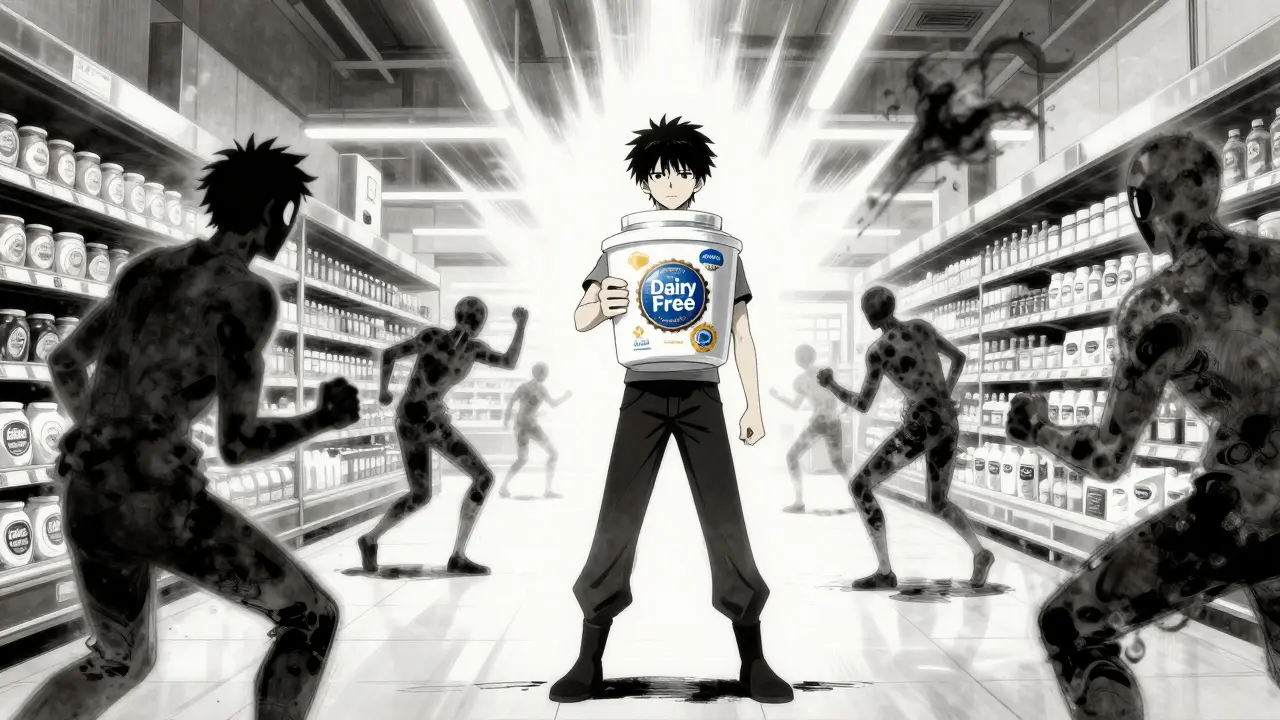
One of the biggest points of confusion has been the "free-from" claims. You've probably seen a package that says "Dairy-Free" but then has a tiny warning at the bottom saying "May contain milk." This is a contradiction that can cause a panic attack in the cereal aisle. The 2025 guidance shuts this down: a company cannot claim a product is "free-from" an allergen if they also use an advisory statement for that same allergen. If it's milk-free, it's milk-free-period.
| Allergen Group | Old Labeling Style | New 2025 Requirement | Impact |
|---|---|---|---|
| Milk/Eggs | "Milk" or "Egg" | Specific animal source | Higher safety for specific allergies |
| Fish | "Fish" | Species category (e.g., bony) | Clearer identification |
| Shellfish | Broad shellfish list | Crustaceans only | Mollusks now excluded |
| Tree Nuts | Included Coconut | Coconut removed | Less unnecessary avoidance |

The Danger of Cross-Contact
Even if the ingredient list is clean, there is the issue of Cross-Contact, which is the unintentional transfer of an allergen from one food or surface to another. This often happens in factories where the same equipment is used for different products. You'll see this flagged as "May contain [allergen]" or "Processed in a facility that also handles [allergen]."
Here is the tricky part: these advisory statements are voluntary. The FDA doesn't force companies to use them, but if they do, the labels must be truthful. This means a company can't just put "May contain peanuts" on everything to avoid liability if they actually have a rigorous cleaning process. On the flip side, if a company says they are "peanut-free," they must actually guarantee that there is no residue from cross-contact. If you see "free-from," you can generally trust it more than a vague advisory warning.
Specific Risks: The Mollusk Gap
While most of the 2025 updates are wins for safety, there is one area where caution is needed. The FDA narrowed the definition of shellfish to include only crustaceans (like shrimp and lobster). This means Mollusks-including oysters, clams, mussels, and scallops-are no longer required to be listed as a major allergen.
If you have a mollusk allergy, you are now in a higher-risk category. You can't rely on a "Contains Shellfish" statement to catch a clam in a chowder. You'll need to dig deeper into the ingredient list and look for the specific names of these mollusks. This change has left many in the allergy community feeling exposed, so be extra vigilant if this applies to you.
Practical Shopping Checklist for Allergy Safety
Navigating the store can feel like a minefield. To make it easier, use this mental checklist every time you pick up a new product:
- Check the 'Contains' Statement: This is the fastest way to see if any of the big nine are present.
- Scan the Ingredients for Synonyms: Look for terms like "whey" (milk) or "lecithin" (often soy).
- Verify 'Free-From' Claims: Ensure there isn't a contradictory "May contain" statement hiding at the bottom.
- Look for Specificity: Does it say "Milk" or "Goat Milk"? If you're allergic to only one, this is your gold mine.
- Audit for Mollusks: If you're allergic to clams or oysters, don't assume the "Shellfish" label covers them anymore.
Looking Ahead: What's Next for Food Safety?
The 2025 guidance isn't the end of the road. The FDA is currently evaluating other allergens that aren't yet on the "Big Nine" list to see if they deserve mandatory labeling. As food allergy rates continue to climb-with children's cases increasing by 50% in some demographics over the last few decades-the pressure on the industry to be perfect is growing.
We are also seeing a massive surge in the allergen testing market, which is projected to hit $1.4 billion by 2029. This means companies are using better technology to detect microscopic traces of proteins, which should eventually lead to more reliable "free-from" labels and fewer accidental reactions. Until then, the best tool you have is an educated eye and a cautious approach to every label.
Does a "May contain" label mean the food is unsafe for me?
Not necessarily, but it means there is a risk of cross-contact. These labels are voluntary and indicate that the manufacturer cannot guarantee the product is 100% free of the allergen due to shared equipment. If you have a severe allergy where a trace amount can cause anaphylaxis, it is generally safest to avoid these products.
Why was coconut removed from the tree nut list?
The FDA updated its guidance based on the fact that many people with tree nut allergies can safely eat coconut, and a very small percentage of the population is actually allergic to coconut itself. Removing it prevents people with tree nut allergies from unnecessarily avoiding coconut products.
Can a product be both "Dairy-Free" and say "May contain milk"?
Under the 2025 FDA guidance, no. A product cannot make a voluntary "free-from" claim (like Dairy-Free) and simultaneously include a precautionary advisory statement (like May contain milk) for the same allergen. This is meant to reduce consumer confusion.
What should I do if I'm allergic to oysters or clams?
You must be extra careful. Because the FDA now defines "shellfish" as only crustaceans (shrimp, crab, lobster), mollusks like oysters and clams may not be highlighted in a "Contains" statement. You will need to read the full ingredient list carefully for the specific name of the mollusk.
Do these labeling rules apply to all foods in the US?
Most, but not all. These rules apply to FDA-regulated products like packaged foods, supplements, and infant formula. However, they do not apply to USDA-regulated products, such as fresh meat, poultry, and certain processed egg products.


Sam Hayes
April 4 2026Glad the FDA is finally cleaning up the dairy-free contradictions. It makes a huge difference for those of us dealing with severe allergies when the labels actually mean what they say