

Chronic eczema isn’t just dry skin - it’s a broken barrier
Most people think eczema is just about itchy, red patches. But if you’ve lived with it for months or years, you know it’s deeper than that. Your skin doesn’t just feel dry - it feels fragile, like it’s constantly leaking. That’s because chronic eczema, or atopic dermatitis (AD), starts with a skin barrier that’s been damaged at a molecular level. This isn’t something you can fix with a quick moisturizer. It takes understanding what’s broken and how to fix it - step by step.
Research from 2025 shows that up to 20% of kids and 1-3% of adults have this condition. And it’s getting worse. Over the last 30 years, cases have jumped by 20-30%. Why? One major reason: our skin’s natural armor - the barrier - is failing. It’s not just inflammation causing the flare-ups. The barrier breaks down first, often months before the first red patch appears. That’s why treating eczema without fixing the barrier is like putting a bandage on a leaking pipe.
What’s actually broken in your skin?
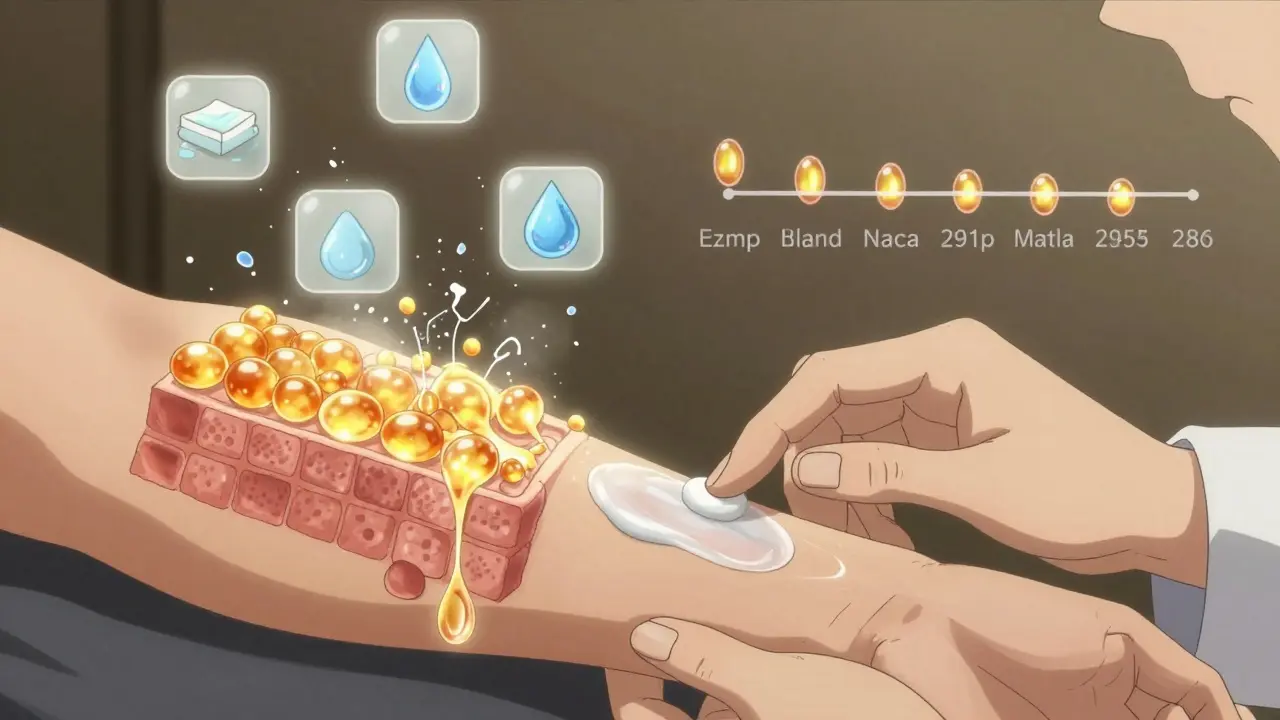
Your skin has four layers working together: physical, chemical, microbial, and immune. The physical layer is the stratum corneum - the outermost part made of dead skin cells (corneocytes) held together by lipids like ceramides, cholesterol, and fatty acids. In healthy skin, these lipids form a tight, layered structure like bricks and mortar. In eczema, that mortar is missing.
Studies show people with moderate to severe eczema have 30-50% less ceramide, especially ceramide 1 - the one that keeps everything sealed. Their skin also has too many short-chain ceramides that don’t fit right, creating gaps. This lets water escape (called transepidermal water loss, or TEWL). Healthy skin loses 8-12 grams of water per square meter per hour. Eczema skin? It can lose 25-40 grams. That’s why your skin feels tight, flaky, and cracked.
Genetics play a big role too. About half of people with moderate to severe eczema have mutations in the filaggrin gene (FLG). Filaggrin helps break down into natural moisturizing factors that keep skin hydrated. Without it, your skin can’t hold water, even if you slather on creams. That’s why some people use expensive barrier creams for months and see little change - their body just can’t make the right ingredients.
Barrier repair isn’t magic - it’s chemistry
Not all moisturizers are created equal. A basic petroleum jelly or cheap lotion might feel soothing, but it doesn’t fix the problem. True barrier repair means replacing what’s missing: ceramides, cholesterol, and free fatty acids - in the right ratio.
Studies show the magic formula is 1:1:1 - equal parts ceramide, cholesterol, and free fatty acids. Products with this ratio restore the skin’s natural structure. One NIH study found these physiologic lipid formulations worked 87% of the time, compared to only 52% with regular emollients. After four weeks, users saw a 78% improvement in their eczema severity score (SCORAD), while regular moisturizers only helped by 45%.
Brands like CeraVe, EpiCeram, and La Roche-Posay Lipikar use this science. They contain 3-5% ceramides, 2-4% cholesterol, and 1-3% fatty acids. And they’re formulated to match your skin’s natural pH of 5.0-5.5. Why does pH matter? Because enzymes that rebuild lipids work best at pH 5.0. At normal skin pH (7.0), they’re barely working - only 40% efficient. At pH 5.0, they’re at 90%.
One 2023 trial compared ceramide creams to petrolatum. After 28 days, the ceramide cream reduced TEWL by 42.7%. Petrolatum? Only 28.3%. The difference isn’t subtle - it’s life-changing for people who’ve been stuck in a cycle of scratching and flares.

What makes eczema flare up? You might be missing these triggers
Even with a repaired barrier, eczema can still flare. That’s because triggers are still out there. Some are obvious - soap, wool, stress. Others are sneaky.
- Hard water: High mineral content strips lipids and raises skin pH, making barrier repair harder.
- Detergents: Even "fragrance-free" laundry detergents can contain surfactants that damage the barrier.
- Temperature swings: Cold air dries skin. Hot showers strip oils. Both are killers.
- Sweat: Salt and ammonia in sweat irritate broken skin. Showering right after exercise helps.
- Staphylococcus aureus: This bacteria loves eczema skin. It colonizes cracks, releases toxins, and worsens inflammation. Barrier repair cuts its presence by 65-75% - much better than antibiotics alone.
One Reddit user, u/EczemaWarrior, tracked their TEWL before and after using CeraVe. It dropped from 38 to 15 g/m²/h in 30 days. They said nighttime scratching dropped 70%. That’s not luck - that’s barrier repair working.
How to stop the itch - without steroids
Itch is the worst part. It’s not just annoying - it’s exhausting. You scratch, the skin breaks, bacteria get in, inflammation spikes, and the itch gets worse. It’s a loop.
Barrier repair breaks that loop. When your skin is sealed, it doesn’t send out those "itch signals" as often. But you also need to calm the nerves. Cool compresses, wet wraps, and antihistamines (like cetirizine) help temporarily. But long-term? You need to reduce the inflammation at the source.
Topical steroids like betamethasone work fast - they cut TEWL by 35% in just 7 days. But they thin your skin over time. Pimecrolimus, a non-steroid option, works slower (22% TEWL reduction in 7 days), but it actually helps your skin rebuild its lipid layers. No thinning. No rebound flares. It’s ideal for sensitive areas like the face or neck.
For severe cases, newer drugs like JAK inhibitors (upadacitinib, abrocitinib) block the immune signals that drive inflammation. But they’re not first-line. They’re for when barrier repair alone isn’t enough - which happens in 25-40% of severe cases.
How to use barrier creams right - and why most people fail
Here’s the truth: 40% of people quit barrier repair because it feels greasy. Another 35% say it stings at first. But if you use it right, it works.
- Apply within 3 minutes after bathing. That’s when your skin is still holding water. Waiting even 10 minutes cuts effectiveness by 35%.
- Use enough. For each arm, use about 5 grams - that’s two fingertip units. Most people use half that. You need enough to cover the area without rubbing it in too hard.
- Apply twice daily. Morning and night. Consistency matters more than the brand.
- Wait 15 minutes before applying steroid creams. If you’re using both, don’t mix them. Apply barrier cream first, wait, then steroid.
- Give it 4-6 weeks. This isn’t overnight. Your skin rebuilds slowly. Most see real change after 28 days.
People who stick with it see flares drop from weekly to monthly. One 7-year-old in a 2023 case study cut steroid use by 80% after 12 weeks of daily barrier repair. That’s the power of getting it right.
Cost, insurance, and what’s coming next
Good barrier repair creams cost $25-$30 for 200g. Basic lotions? Around $10. That’s a big difference - especially if you’re using 200g a month. Insurance covers prescription barrier products like EpiCeram 80% of the time. Over-the-counter ones? Only 30% coverage.
But prices are falling. Newer brands are entering the market. And research is moving fast. In 2025, companies like Dermavant are partnering with 23andMe to match barrier creams to your filaggrin mutation. If you have a severe FLG mutation, you’ll get a product designed for your specific defect. Early tests show 85% accuracy in predicting what works.
Future treatments might include platelet-rich plasma (PRP) injections - shown in early studies to boost filaggrin production by 300%. Or microbiome-targeted creams that add good bacteria to crowd out Staph. The International Eczema Council predicts barrier repair will make up half of all eczema treatment by 2030.
What doesn’t work - and why
Some myths persist:
- Coconut oil: It’s comedogenic and can clog pores. It doesn’t contain ceramides or the right lipid ratios. Some users report worse flares.
- Essential oils: They’re irritants. Even lavender or tea tree oil can trigger reactions in broken skin.
- Just hydrating with water: Water evaporates. Without lipids to seal it in, you’re just making your skin drier over time.
- Waiting for flares to get worse before acting: By then, the barrier is too damaged. Prevention beats treatment every time.
If you’ve tried everything and nothing works, it’s not your fault. It’s likely your barrier is too damaged for topical repair alone. Talk to a dermatologist about JAK inhibitors or biologics. But don’t skip barrier repair - even if you need stronger meds, you still need it.
Real results take time - but they’re possible
Chronic eczema doesn’t vanish overnight. But it doesn’t have to rule your life either. People who fix their barrier, avoid triggers, and treat itch early report sleeping better, wearing shorts again, and not dreading showers. The science is clear: repair the barrier, and you break the cycle.
You don’t need to buy the most expensive cream. You just need one with the right ingredients - ceramides, cholesterol, fatty acids - in the right ratio. Apply it right. Be patient. And don’t give up.
Can barrier repair cure eczema?
No, barrier repair doesn’t cure eczema - but it controls it. Eczema is a chronic condition with genetic roots. Barrier repair fixes the skin’s physical damage, reduces flares, and lessens the need for steroids. For many, it turns daily flare-ups into rare, mild events.
Why does my barrier cream sting when I apply it?
It’s likely because your skin is cracked or inflamed. Barrier repair creams often have a slightly acidic pH (5.0-5.5) to activate repair enzymes. That can sting on open, raw skin. It usually fades after a few days. If it lasts longer than a week or gets worse, stop and talk to your doctor.
Do I need to use barrier cream forever?
Yes - like brushing your teeth. Once your barrier is repaired, you still need to maintain it. Stopping means your skin will slowly lose its protection, and flares will return. Think of it as daily maintenance, not a cure you can quit.
Can kids use barrier repair creams?
Absolutely. In fact, early barrier repair in infants with high genetic risk can reduce eczema development by up to 50%. Products like CeraVe Baby Moisturizing Cream are designed for sensitive skin and are safe from birth. Always check labels for fragrance-free, hypoallergenic formulas.
What’s the difference between a moisturizer and a barrier cream?
Moisturizers add water or humectants like glycerin. Barrier creams replace missing lipids - ceramides, cholesterol, fatty acids - to rebuild the skin’s protective layer. One hydrates. The other heals. You need both, but only barrier creams fix the root cause of eczema.
Is it worth spending more on ceramide creams?
If you’ve tried cheap lotions and still flare, yes. A $30 ceramide cream used twice daily costs about $1.50 a day. Compare that to doctor visits, steroid side effects, lost sleep, or missed work. The long-term savings - in money and quality of life - make it worth it.


Nick Flake
February 2 2026This is the most beautiful breakdown of eczema I’ve ever read 🥹 I’ve been living with this for 12 years and no one ever explained it like bricks and mortar. I cried reading the ceramide part. My skin finally feels like it’s *mine* again. Thank you.