
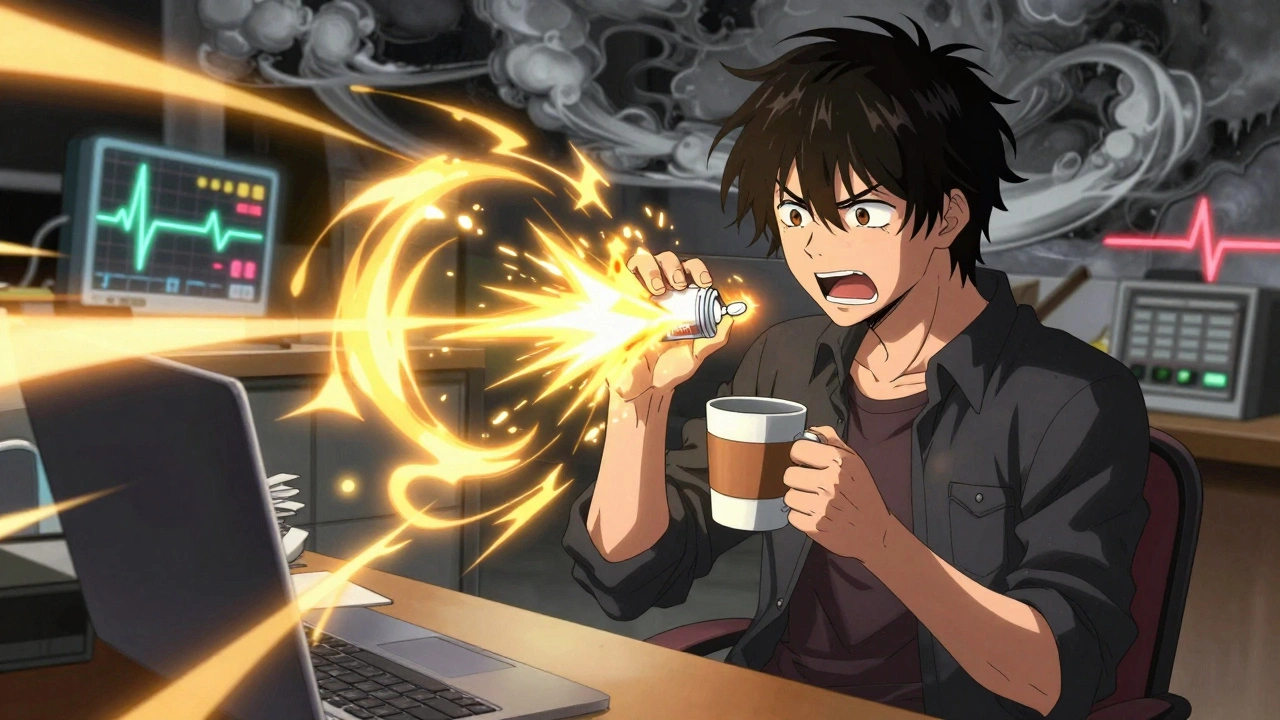
Many people with ADHD reach for a cup of coffee when their medication starts to wear off. It feels natural-both caffeine and ADHD meds are stimulants, right? But mixing them isn’t as simple as doubling up on focus. The truth is, caffeine and prescription ADHD medications like Adderall can boost each other’s effects… or make your heart race, your anxiety spike, and your sleep vanish. And it’s not just anecdotal. Data shows this combo is common-and risky.
How Caffeine and ADHD Meds Work Together
Caffeine and amphetamine-based ADHD meds like Adderall both increase dopamine in the brain. That’s why people feel more alert, focused, or even euphoric when they combine them. But here’s the catch: Adderall is a powerful, engineered drug. It blocks dopamine and norepinephrine reuptake with precision. Caffeine? It’s a blunt instrument. It blocks adenosine receptors, which indirectly boosts dopamine and norepinephrine too-but in a messy, unpredictable way.
Studies show Adderall is 3 to 5 times more effective than caffeine at reducing core ADHD symptoms like inattention and impulsivity. Caffeine alone? It’s about 60-70% less effective. But when you mix them, the brain doesn’t just add the effects-it multiplies them. That’s synergy. And synergy can be good… or dangerous.
One 2020 study found that a mix of 160 mg caffeine and 200 mg L-theanine improved focus in kids with ADHD better than caffeine alone. L-theanine, found in green tea, calms the nervous system without drowsiness. But that’s not the same as pouring espresso into your Adderall routine. Most people aren’t taking L-theanine. They’re just drinking coffee, energy drinks, or soda-often multiple times a day.
The Hidden Risks: Heart, Anxiety, and Sleep
The biggest danger isn’t poor focus. It’s your heart.
Both caffeine and Adderall raise blood pressure and heart rate. When you combine them, the risk jumps. A 2022 study from Johns Hopkins found that people using both had a 37% higher chance of tachycardia and a 29% higher chance of hypertension. That’s not theoretical. Emergency room visits linked to stimulant combinations rose 27% between 2019 and 2023-from 12,400 to 15,750 cases annually.
Anxiety is another silent killer here. On Reddit’s r/ADHD, 62% of 487 respondents reported using caffeine with Adderall. Of those, 59% said they felt worse-not better-because of increased anxiety. One user wrote: “20mg Adderall with one cup of coffee feels amazing until hour 3. Then I’m shaking, sweating, and can’t breathe. Half-caf fixed it.”
And sleep? Forget it. Adderall lasts 10-13 hours. Caffeine’s half-life is about 5 hours. That means if you take your Adderall at 8 a.m. and drink coffee at noon, half the caffeine is still in your system at 5 p.m. By 10 p.m., you’re wired. Sleep deprivation makes ADHD symptoms worse, creating a vicious cycle: poor sleep → more caffeine → worse focus → more meds.

Who’s at Highest Risk?
Not everyone reacts the same. Genetics matter. About 40% of people are “slow metabolizers” of caffeine due to a variant in the CYP1A2 gene. Their bodies clear caffeine slowly, so even small amounts build up. Combine that with Adderall, and you’re sitting on a time bomb.
People with existing heart conditions are also at higher risk. A 2023 JAMA Internal Medicine study found that 23% of adults with ADHD also have cardiovascular issues. For them, even 100 mg of caffeine-a single espresso-can be dangerous.
Teens and children? The American Academy of Pediatrics explicitly warns against mixing caffeine with stimulants. Their developing nervous systems are more sensitive. A 2020 study showed caffeine alone made inhibitory control worse in boys with ADHD. That’s not focus-that’s impulsivity on steroids.
What Does Safe Look Like?
There’s no official green light from the FDA. But if you’re going to use caffeine with ADHD meds, here’s what the experts recommend:
- Start low. No more than 100 mg of caffeine per day-that’s one small coffee. Avoid energy drinks, pre-workout powders, or caffeine pills. They’re unpredictable and often contain 200 mg or more per serving.
- Time it right. Wait 4 to 5 hours after taking your ADHD medication before consuming caffeine. This lets the peak of the drug pass before you add another stimulant. Some clinics report a 68% drop in side effects when patients follow this rule.
- Track everything. Use a journal or app to log: caffeine intake (include chocolate, tea, and soda), medication dose, heart rate (wearables help), sleep quality, and anxiety levels. Use the ASRS-v1.1 scale to track ADHD symptoms.
- Eat before you drink. Taking caffeine on an empty stomach spikes absorption. Food slows it down, reducing the risk of sudden jitters or crashes.
- Listen to your body. If you feel your heart pounding, your hands shaking, or your thoughts racing too fast-stop. That’s not focus. That’s overload.
Dr. Ned Hallowell, a leading ADHD specialist, says: “If you’re using caffeine to make your medication work better, you’re probably already taking too much. Don’t use caffeine as a booster. Use it as a gentle nudge-if at all.”
What About Alternatives?
If you’re using caffeine to extend your focus or fight the Adderall crash, there are safer ways:
- L-theanine. Found in green tea, this amino acid reduces anxiety without drowsiness. A 3:1 ratio with caffeine (e.g., 150 mg L-theanine to 50 mg caffeine) has shown promise in early studies for improving attention and calming the nervous system.
- Hydration. Dehydration mimics ADHD symptoms. Drinking water helps maintain mental clarity without stimulants.
- Short walks or movement breaks. Physical activity naturally boosts dopamine. A 10-minute walk after lunch can reset your focus better than another cup of coffee.
- Adjust your medication timing. Talk to your doctor about switching to a longer-acting form, or adding a small afternoon dose instead of relying on caffeine.
The Bottom Line
Caffeine isn’t evil. Coffee isn’t the enemy. But treating it like a supplement to your ADHD medication is dangerous. You’re stacking two stimulants without medical oversight. The risks-heart strain, panic attacks, sleep loss, and dependency-are real and documented.
Some people swear by their morning espresso with Adderall. Others end up in the ER. The difference? Awareness. Timing. Moderation.
If you’re combining these, you’re not alone. But you’re also not safe. Talk to your doctor. Track your symptoms. Don’t assume it’s harmless because it’s natural. Caffeine is a drug. And when paired with prescription stimulants, it becomes a high-stakes gamble.
The goal isn’t to eliminate caffeine entirely. It’s to use it wisely-so your focus lasts, your heart stays steady, and your nights are restful.
Can I drink coffee while taking Adderall?
Yes, but with caution. Many people do it, but combining caffeine and Adderall increases the risk of anxiety, rapid heart rate, and sleep problems. Limit caffeine to 100 mg per day (one small coffee), wait 4-5 hours after taking your medication, and avoid energy drinks or caffeine pills. Always monitor your heart rate and anxiety levels.
Does caffeine make ADHD medication work better?
Sometimes, but not reliably. Caffeine can temporarily boost focus in some people by increasing dopamine. However, it’s far less effective than prescription stimulants-about 60-70% less so. The combo can feel stronger, but it also increases side effects. It’s not a substitute for proper dosing or medical supervision.
How long should I wait between caffeine and Adderall?
Wait at least 4 to 5 hours. Caffeine’s half-life is about 5 hours, meaning half of it is still in your system after that time. Adderall peaks around 2-3 hours after ingestion. Waiting gives your body time to process the medication before adding another stimulant, reducing the risk of overload.
Is caffeine safe for teens with ADHD?
The American Academy of Pediatrics advises against combining caffeine with ADHD stimulants in children and teens. Their brains are still developing, and stimulant combinations can lead to increased anxiety, heart rhythm issues, and sleep disruption-worsening ADHD symptoms over time.
What are the signs I’m taking too much caffeine with my ADHD meds?
Watch for: racing heart, chest tightness, shaking hands, panic attacks, trouble sleeping, or extreme irritability. If you feel jittery or anxious after your usual coffee, that’s your body telling you to cut back. Keep a log of symptoms and talk to your doctor if these happen regularly.
Are there safer alternatives to caffeine for ADHD focus?
Yes. L-theanine (in green tea or supplements) can improve focus without the jitters. Regular movement, hydration, and short walks boost dopamine naturally. Adjusting your medication timing with your doctor may also reduce the need for extra stimulants. Avoid energy drinks and caffeine pills-they’re high-risk.
Can caffeine cause ADHD medication to wear off faster?
No, caffeine doesn’t make Adderall wear off faster. But it can mask the crash by keeping you wired, leading to a harder rebound later. When the caffeine wears off, you may feel more tired or irritable than if you hadn’t used it at all. This isn’t extended focus-it’s delayed burnout.
How do I know if I’m a slow caffeine metabolizer?
If you drink one cup of coffee and feel jittery for hours-or can’t sleep even if you drink it at noon-you might be a slow metabolizer. About 40% of people have a genetic variant (CYP1A2) that slows caffeine clearance. Genetic tests can confirm this, but if you’re sensitive to caffeine, assume you’re in this group and cut your intake in half.
Next steps: If you’re currently combining caffeine and ADHD meds, start tracking your intake and symptoms for one week. Note your heart rate, sleep quality, and anxiety levels. Then schedule a chat with your prescriber. You don’t need to quit caffeine-but you do need to understand how it’s affecting your body. Your focus should last all day-not just until your next coffee.


Geraldine Trainer-Cooper
December 5 2025Caffeine is just a legal drug that lets people pretend they’re productive without actually doing the work
Adderall’s already doing the heavy lifting
Adding coffee is like putting a turbo button on a race car that’s already at 200mph
You’re not enhancing focus-you’re just delaying the crash