
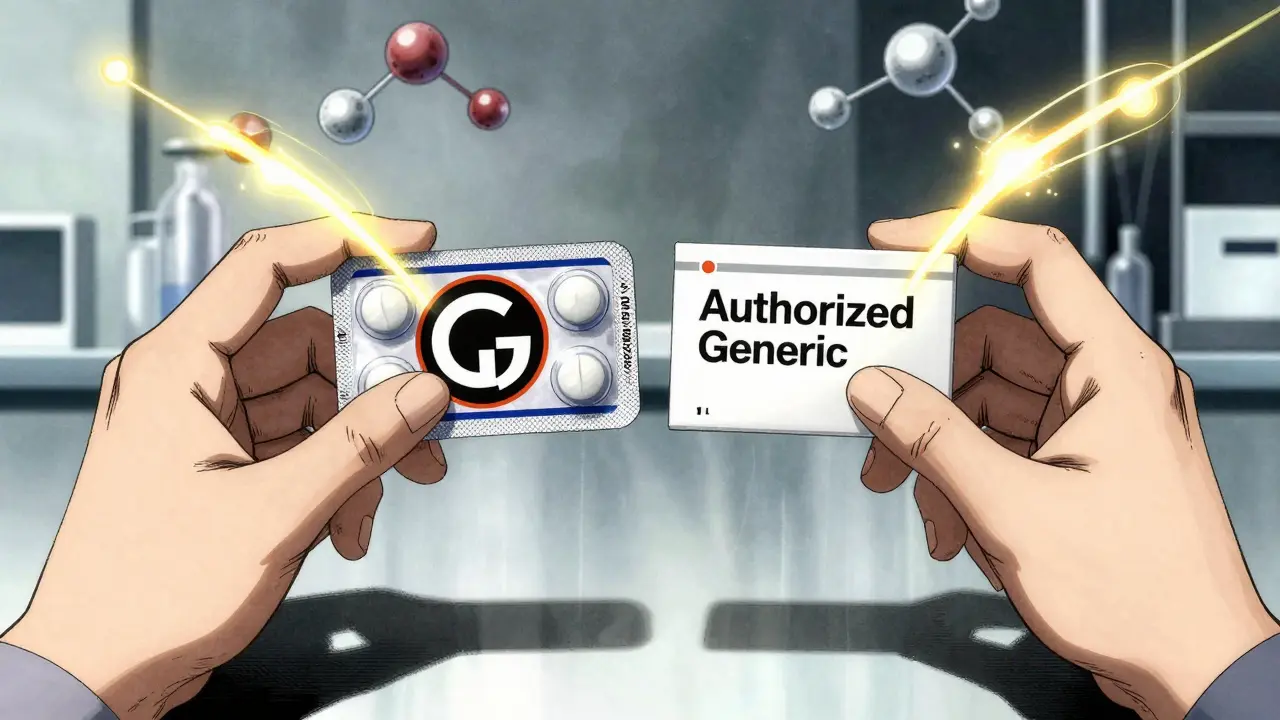
Switching from a brand-name drug to a generic can save you money - but not all generics are the same. If you’ve ever noticed a change in how a medication works after switching, or felt uneasy about a new pill shape or color, you’re not alone. That’s where authorized generics come in. They’re not just another cheap option. They’re the exact same drug as your brand-name version, made by the same company, with identical ingredients, and sold at generic prices.
What Exactly Is an Authorized Generic?
An authorized generic is a drug produced by the original brand-name manufacturer and sold under a private label - no brand name, no fancy packaging, just the same formula you’ve been taking. Think of it like a store-brand version of your favorite cereal, but made by Kellogg’s. The active ingredient? Same. The inactive ingredients - fillers, dyes, binders? Also the same. Even the way your body absorbs it? Identical.
Unlike traditional generics, which only need to prove they’re bioequivalent (meaning they work similarly in your body), authorized generics are exact copies. They’re made under the brand’s original New Drug Application (NDA), not the generic’s Abbreviated New Drug Application (ANDA). This means they skip the bioequivalence testing entirely because they’re not a copy - they’re the real thing, just sold cheaper.
Why This Matters for Your Health
For most people, traditional generics work just fine. But for some, even tiny changes in inactive ingredients can cause problems. Take levothyroxine, a drug used for thyroid conditions. A small difference in filler material can throw off absorption enough to cause fatigue, weight gain, or heart palpitations. A 2023 study in US Pharmacist found that 32% of patients on narrow therapeutic index drugs like warfarin, levothyroxine, or seizure medications reported side effects after switching to a traditional generic.
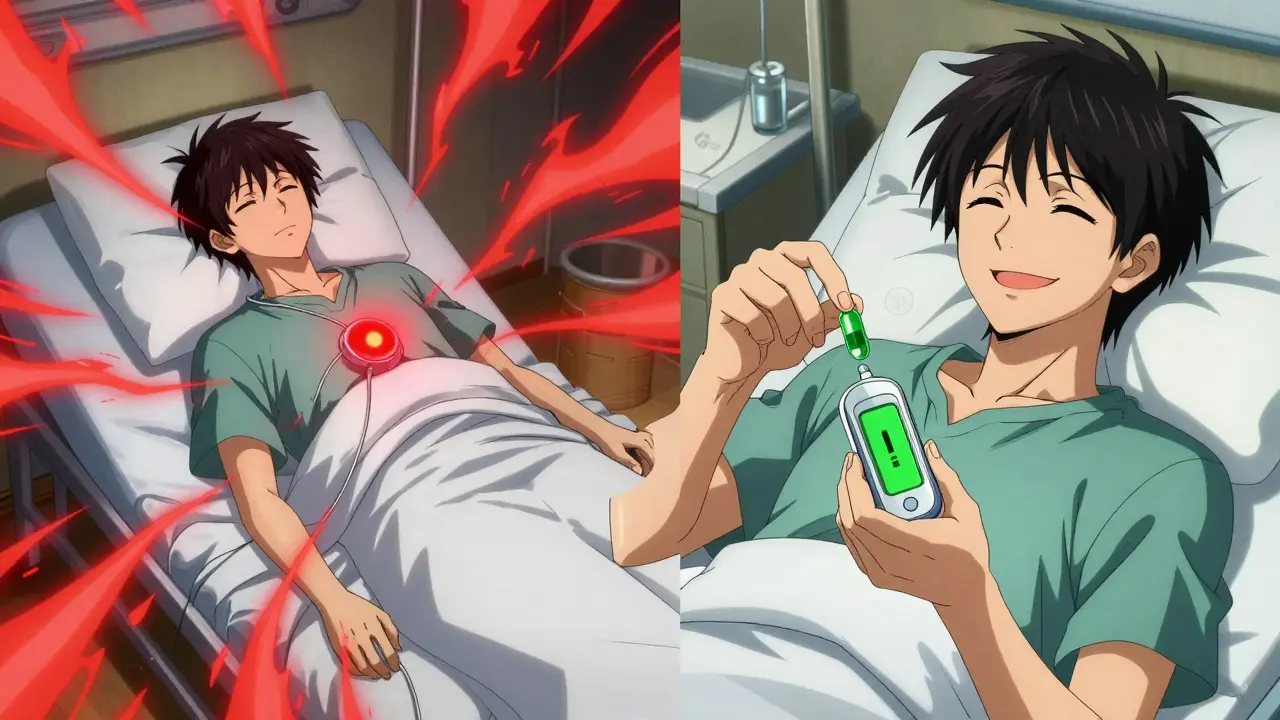
One pharmacist in Melbourne shared a real case: a patient on levothyroxine had been stable for years on the brand version. After switching to a generic, her TSH levels spiked. She switched back - and her levels normalized. Then she tried the authorized generic. Same TSH levels as the brand. No side effects. Same pill, same effect, half the price.
Authorized generics eliminate this uncertainty. No guesswork. No trial-and-error. Just the same drug you trusted, now at a lower cost.
How They Compare to Traditional Generics
| Feature | Authorized Generic | Traditional Generic |
|---|---|---|
| Manufacturer | Original brand company | Separate generic manufacturer |
| Active Ingredients | Identical | Identical |
| Inactive Ingredients | Identical | May differ |
| Approval Process | Under brand’s NDA | Under generic’s ANDA |
| Bioequivalence Testing Required | No | Yes |
| Typical Cost Reduction | 15-20% less than brand | 40-80% less than brand |
| Best For | Narrow therapeutic index drugs, sensitive patients | Most common medications |
Traditional generics are great for drugs like ibuprofen or metformin - where small formulation changes don’t matter. But for drugs where your body is finely tuned - like blood thinners, thyroid meds, or epilepsy drugs - that difference in filler can mean the difference between stability and a hospital visit.
How Authorized Generics Hit the Market
Here’s the twist: authorized generics don’t usually appear until after the first generic enters the market. Why? Because of a loophole in U.S. drug law. When a generic company files a patent challenge, they get 180 days of exclusivity - meaning no other generic can launch during that time. But here’s the catch: the brand company can launch its own authorized generic during that window.
That’s not a coincidence. According to a 2022 Health Affairs study, 75% of authorized generics launched right after the first generic. It’s a smart business move - the brand company keeps market share, undercuts the first generic, and keeps prices low. The result? Consumers win. Prices drop 25-30% more than if only the first generic had entered.
But critics say this tactic undermines the system meant to encourage generic competition. The Generic Pharmaceutical Association points out that 43% of authorized generics were launched during the 180-day exclusivity period, effectively squeezing out the first generic. It’s a debate between competition and corporate strategy - but for patients, the outcome is simple: more affordable, reliable options.
Are Authorized Generics Covered by Insurance?
Yes - and usually at the same cost as traditional generics. Medicare Part D covers them at generic copay levels 92% of the time. Commercial insurers follow suit in 78% of cases. That means if your brand-name drug costs $150 a month, the authorized generic might cost $30-$40. The traditional generic? Maybe $15.
But here’s the catch: you won’t always know you’re getting it. Pharmacists aren’t required to tell you. A 2022 Kaiser Family Foundation survey found 28% of patients didn’t realize they’d been switched to an authorized generic until they noticed the pill looked different. If you’re sensitive to changes, ask your pharmacist: “Is this an authorized generic?”
How to Find Out If Your Drug Has an Authorized Generic
Not every brand has one. As of 2023, only 15-20% of brand-name drugs have an authorized generic version. But the list is growing. The FDA is updating its Orange Book in mid-2024 to include a dedicated section for authorized generics - making them easier to find.
For now, check GoodRx or Drugs.com. Search your brand-name drug, then look for the “Authorized Generic” label. If it’s there, it’s available. You can also ask your pharmacist to check the National Drug Code (NDC) - 87% of chain pharmacies already use this system to identify them.
Who Benefits the Most?
Three groups benefit most from authorized generics:
- Patients on narrow therapeutic index drugs (like warfarin, levothyroxine, or phenytoin)
- People who had bad reactions to traditional generics
- Those on expensive brand drugs with no other affordable options
If you’ve ever been told, “The generic might not work the same,” or if your doctor wrote “dispense as written,” an authorized generic could be your solution. It’s the only option that gives you the brand’s consistency at a generic’s price.
What to Do Next
Here’s your action plan:
- Check your current prescription - is it a brand-name drug?
- Search for it on GoodRx or Drugs.com - look for the “Authorized Generic” tag
- If it’s listed, ask your pharmacist: “Can I get the authorized generic?”
- If you’re on a sensitive medication, bring this up with your doctor - they can write “dispense as written” if needed
- Keep your pill bottle and compare the NDC code if you notice changes
You don’t have to stick with a brand-name drug just because you’re afraid of generics. Authorized generics are the bridge between safety and savings. They’re not a compromise. They’re the real thing - just without the brand name.
Are authorized generics the same as brand-name drugs?
Yes. Authorized generics contain the exact same active and inactive ingredients as the brand-name drug. They’re made by the same manufacturer using the same formula, equipment, and quality controls. The only differences are the packaging and label - no brand name, no logo.
Can I switch from a brand to an authorized generic without my doctor’s approval?
In most cases, yes. Pharmacists can substitute a brand-name drug with an authorized generic unless your doctor specifically wrote “dispense as written” or “no substitution.” But if you’ve had issues with generics before, it’s smart to check with your doctor first - especially if you’re on a drug with a narrow therapeutic index.
Why don’t all brand-name drugs have authorized generics?
Manufacturers only launch them when it makes business sense - usually after a generic competitor enters the market. For some drugs, especially older ones with low sales, it’s not worth the cost. Only 15-20% of brand drugs currently have an authorized generic version.
Do authorized generics cost more than traditional generics?
Sometimes, yes - but only slightly. Authorized generics are typically 15-20% cheaper than the brand, while traditional generics can be 40-80% cheaper. But if you’ve had bad reactions to traditional generics, the extra few dollars may be worth the peace of mind and better outcomes.
Is it safe to switch to an authorized generic if I’ve been on the brand for years?
Absolutely. Since authorized generics are identical to the brand in every way - including inactive ingredients - switching is as safe as staying on the brand. Many patients switch without any issues. If you’re concerned, monitor how you feel for the first two weeks and check in with your pharmacist or doctor.
If you’re paying full price for a brand-name drug, you’re not just spending more - you’re potentially risking unnecessary side effects. Authorized generics are the smart, simple alternative. No guesswork. No compromise. Just the same medicine, at a better price.


Prateek Nalwaya
February 18 2026Man, I never knew authorized generics were a thing until I read this. I’ve been on levothyroxine for years and switched to a generic once-felt like I was dragging through mud for weeks. Turns out, my body just hates random fillers. This whole authorized thing is like getting your favorite coffee brewed by the same barista, just without the fancy cup. Why didn’t anyone tell me this sooner?