
When a CT scan or MRI finds a lump on your adrenal gland-something you didn’t even know you had-it’s called an adrenal incidentaloma. It’s not rare. About 2% of adults have one, and that number jumps to over 7% if you’re over 70. Most of these lumps are harmless. But some can be dangerous. The real challenge isn’t finding them-it’s figuring out which ones need action and which ones can be left alone.
What Exactly Is an Adrenal Incidentaloma?
An adrenal incidentaloma is any adrenal mass larger than 1 cm that shows up on a scan done for another reason-like checking for kidney stones, abdominal pain, or trauma. It’s not something you feel. You don’t have symptoms. It’s found by accident. That’s why it’s called “incidental.” The adrenal glands sit on top of each kidney. They make hormones that control your blood pressure, metabolism, stress response, and sex drive. When a tumor forms there, it might start making too much of one of these hormones-or it might just sit there, doing nothing. About 80% of these tumors are benign, non-functioning adenomas. That means they’re not cancerous and they’re not releasing extra hormones. The other 20%? That’s where things get tricky.Three Types of Adrenal Masses: Functioning, Malignant, or Benign
Not all adrenal tumors are the same. They fall into three clear groups:- Functioning tumors: These make extra hormones. That includes cortisol (causing Cushing’s), aldosterone (raising blood pressure), adrenaline (causing panic attacks and high blood pressure), or sex hormones (leading to unexpected hair growth or menstrual changes).
- Malignant tumors: These are cancerous. Either primary adrenal cancer (adrenocortical carcinoma) or cancer that spread from elsewhere (like lung or breast cancer).
- Benign non-functioning tumors: These are just lumps. No hormone overproduction. No cancer. Examples include adenomas, myelolipomas (fat and blood vessel tumors), and adrenal cysts.
Step 1: The First Test-CT Scan Without Contrast
The first thing doctors do is look at the CT scan that found the mass. Not the fancy one with dye-just the plain one. Why? Because the density of the tumor, measured in Hounsfield units, tells you a lot. If the tumor has a density of less than 10 HU, there’s a 70-80% chance it’s a benign adenoma. That’s because benign adenomas are often filled with fat. Cancerous tumors or pheochromocytomas don’t have that fat content, so they show up brighter. But here’s the catch: about 10-15% of tumors look unclear on CT. They’re not obviously benign or malignant. Those need follow-up scans or more tests.Step 2: Rule Out Pheochromocytoma-No Exceptions
Before you even think about surgery, you must rule out a pheochromocytoma. This is a tumor that makes adrenaline and noradrenaline. It’s rare-only about 4% of incidentalomas-but if you miss it and operate, you could trigger a deadly surge in blood pressure during anesthesia. The test? Measure plasma-free metanephrines or 24-hour urinary fractionated metanephrines. These are the most accurate tests we have. If they’re normal, pheochromocytoma is extremely unlikely. If they’re high, you need a specialist, alpha-blockers for at least 7-14 days before surgery, and a careful plan.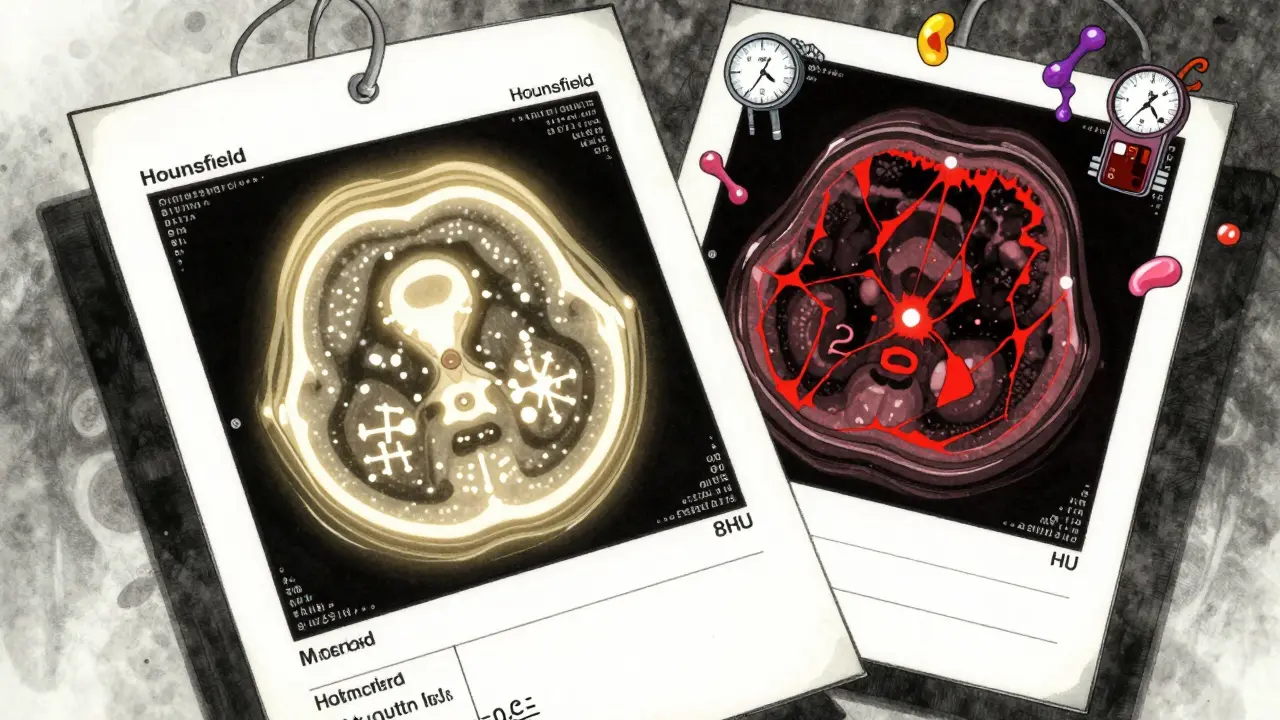
Step 3: Check for Cortisol Overproduction
Next, test for cortisol excess. Even small amounts of extra cortisol can cause high blood pressure, diabetes, weight gain, and bone loss-long before you notice symptoms. That’s called subclinical Cushing’s syndrome. The standard test is the 1-mg dexamethasone suppression test. You take a pill at night. The next morning, your cortisol level is checked. If it’s above 1.8 μg/dL (50 nmol/L), it suggests your body isn’t responding to the suppression signal. That’s a red flag. About 5% of incidentalomas cause this. Some experts now argue that if cortisol is above 5.0 μg/dL after the test, surgery may improve metabolic health. New tests like urinary steroid metabolomics are coming in, with 92% accuracy-better than the dexamethasone test.Step 4: Screen for Aldosterone Only If You Have High Blood Pressure
If you have high blood pressure or low potassium, check for primary hyperaldosteronism. This is when the adrenal gland makes too much aldosterone, which keeps your body holding onto salt and water. That raises blood pressure. The test is simple: measure plasma aldosterone concentration and plasma renin activity. If aldosterone is high and renin is low, that’s a classic sign. About 4% of incidentalomas are aldosterone-producing adenomas.When Do You Need Surgery?
Not every adrenal tumor needs to come out. But surgery is mandatory in these cases:- Any tumor that makes hormones: Pheochromocytoma, cortisol-producing, or aldosterone-producing tumors-all need removal, no matter the size.
- Tumors larger than 4 cm: The bigger the tumor, the higher the chance it’s cancer. At 4 cm, the risk of cancer jumps to 5-10%. At 6 cm or more, it’s about 25%.
- Tumors with suspicious imaging: Irregular edges, uneven texture, or signs of invasion into nearby organs.
- Rapid growth: If the tumor grows more than 1 cm per year, or its volume doubles in under a year, it’s likely malignant.
What About Small, Benign, Non-Functioning Tumors?
If your tumor is under 4 cm, doesn’t make hormones, and looks benign on CT-then you probably don’t need surgery or even regular scans. Studies show these tumors rarely change. The Endocrine Society says no routine follow-up is needed. But if the scan is unclear, or you’re anxious, doctors might suggest a repeat CT in 6-12 months. That’s it. No more unless something changes.
Why This Matters: The Cost of Missing It
An adrenal incidentaloma might seem like a small thing. But the stakes are high. Missing a pheochromocytoma can kill you. Letting a cancer grow unchecked can turn a treatable tumor into a deadly one. Even subclinical cortisol excess increases your risk of heart disease and death. On the flip side, removing a harmless tumor can lead to lifelong hormone replacement, surgical complications, or unnecessary stress. That’s why the evaluation has to be precise.The Real Problem: Not All Hospitals Are Equipped
Here’s the ugly truth: only 45% of community hospitals can run plasma metanephrine tests right away. Many don’t have endocrinologists who know how to interpret the results. Radiologists without adrenal expertise misread CT scans up to 30% of the time. That’s why patients often get bounced around-from primary care to radiology to endocrinology-without a clear plan. The best outcomes happen at specialized adrenal centers. One 2023 study found 92% of patients treated at these centers were satisfied. At regular hospitals? Only 68%.What’s New in 2025?
The guidelines are evolving. In 2024, the Endocrine Society is expected to update its recommendations based on new data showing that surgery for subclinical Cushing’s improves blood sugar, blood pressure, and weight in patients with cortisol levels above 5.0 μg/dL. New tests like urinary steroid metabolomics are becoming available in major centers. They’re more accurate than the dexamethasone test and don’t require taking a pill. There’s also growing recognition that adrenal incidentalomas aren’t just a radiology finding-they’re a whole-system issue. They need coordinated care: endocrinology, radiology, and surgery working together.What Should You Do If You’re Diagnosed?
If you’ve been told you have an adrenal incidentaloma:- Don’t panic. Most are harmless.
- Ask if your hospital has a specialized adrenal program.
- Make sure you get: a plain CT scan review, metanephrine test, and dexamethasone suppression test.
- If any test is abnormal, see an endocrinologist who specializes in adrenal disorders.
- If surgery is suggested, ask about the surgeon’s experience with adrenal cases.
- Don’t accept vague answers. You deserve a clear plan.
Adrenal incidentalomas are a perfect example of modern medicine’s double-edged sword. Imaging finds things we didn’t know we had. But finding them doesn’t always mean fixing them. The goal isn’t to remove every lump. It’s to find the few that matter-and leave the rest alone.


Thomas Anderson
December 16 2025Most people panic when they hear 'tumor' on a scan. Truth is, if it's under 4 cm and not spitting out hormones, you're probably fine. No need to chase shadows with yearly scans. Just get the metanephrines and dexamethasone test done, and if those are clean, go live your life.