

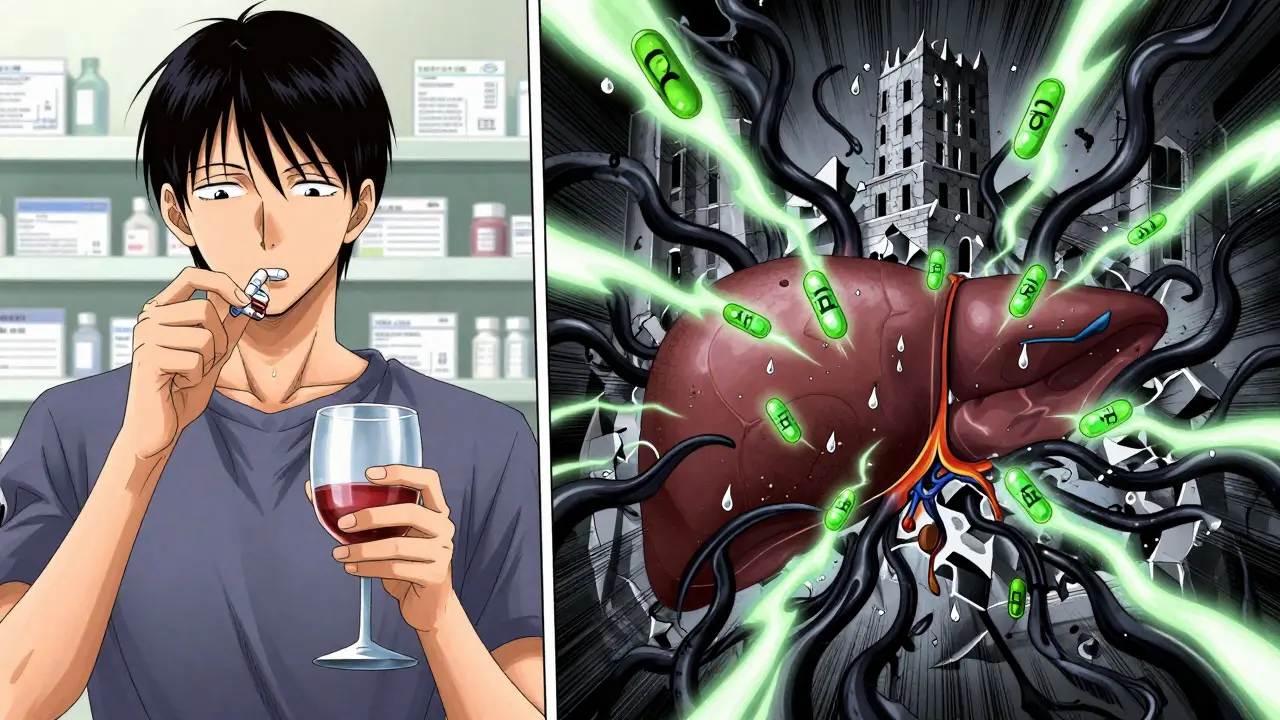
Acetaminophen is one of the most common pain relievers in the world. You’ll find it in Tylenol, Excedrin, Vicodin, Percocet, and dozens of other pills you might take for a headache, fever, or back pain. But here’s the scary part: acetaminophen overdose is the number one cause of acute liver failure in the U.S. And most people don’t realize they’re at risk until it’s too late.
How Much Is Too Much?
The official safe limit for adults is 4,000 milligrams in 24 hours. That’s eight 500 mg pills. Sounds like a lot, right? But here’s where things go wrong. Most people don’t realize that acetaminophen hides in other medications. Vicodin? It has 300 mg of acetaminophen per tablet. Percocet? Same thing. If you take two Vicodin for back pain and then take two Tylenol for a headache, you’ve already hit 1,200 mg - and you’re not even halfway to the daily limit.
And it’s not just about pills. Alcohol makes things worse. If you drink regularly, even one drink while taking acetaminophen can push your liver over the edge. The same goes for people with hepatitis B or C - their livers are already weakened. A 2023 study from the Cleveland Clinic found these patients are 65% more likely to suffer severe liver damage from a standard dose.
It’s not just about taking too much at once. Spreading out doses over days can be just as dangerous. Taking 1,000 mg every 6 hours for four days? That’s 8,000 mg. Your liver doesn’t get a break. And if you’re malnourished - skipping meals, eating poorly - your body’s natural defense (glutathione) drops by 25-30%. That’s like removing the fire extinguisher before the fire starts.
The Silent Progression: Four Stages of Liver Damage
Acetaminophen poisoning doesn’t hit like a heart attack. It creeps up. And that’s why so many people wait too long.
Stage 1 (0-24 hours): You might feel nauseous. Maybe you vomit once. Or you feel fine. About 40% of people show no symptoms at all. This is the stage where most people think, “I’m okay.” They go to bed. They wait it out. Big mistake.
Stage 2 (24-72 hours): Now the pain starts. Right side of your abdomen - sharp, deep, constant. Your skin might look yellow. Your urine turns dark. Your blood tests show liver enzymes (ALT) rising fast. Normal ALT is 7-56 IU/L. In overdose, it can spike past 10,000. That’s like your liver screaming for help.
Stage 3 (72-96 hours): This is the crisis. Jaundice is obvious. Your hands shake. You get confused. Your blood won’t clot - you bruise easily, bleed from gums. Kidneys start failing. Pancreas gets inflamed. This is when people end up in the ICU. Without treatment, 25-40% die.
Stage 4 (5+ days): Either you recover - and most do, if treated - or you don’t. About 85-90% of people who get help in time bounce back completely. But if you wait past 72 hours, your odds drop fast.
The Only Antidote: N-Acetylcysteine (NAC)
There’s one drug that saves lives: N-acetylcysteine, or NAC. It’s not magic. But it’s the only thing that works. NAC rebuilds your liver’s natural defense system - glutathione - and mops up the toxic byproduct (NAPQI) that’s destroying your cells.
Here’s the catch: timing is everything.
If you get NAC within 8 hours of taking too much acetaminophen, your survival rate is 98%. After 8 hours? Drops to 75%. After 15 hours? It’s down to 55%. Every hour you wait increases your risk of death by 8.5%. And yet, 60% of people don’t show up until after that window.
Why? Because they didn’t feel sick at first.
The standard IV dose? 150 mg/kg over one hour, then 50 mg/kg over four hours, then 100 mg/kg over 16 hours. That’s a 21-hour drip. Oral NAC? Takes 72 hours - and it’s harder to keep down if you’re vomiting. That’s why hospitals use IV.
Even if you’re more than 24 hours late, NAC still helps. Studies show it can reduce damage up to 48 hours after overdose. Don’t wait for symptoms. If you think you took too much - go to the ER. Now.
What Happens in the ER?
When you walk in, they’ll ask: When did you take it? How much? What else did you take? They’ll draw blood - not just for liver enzymes, but for the actual acetaminophen level in your blood. That number gets plotted on the Rumack-Matthew nomogram. If it’s above 150 µg/mL at 4 hours, you get NAC. No debate.
If you arrived within 1-2 hours, they might give you activated charcoal - a black powder that soaks up the drug before it enters your system. It’s not always effective, but it’s worth trying.
They’ll also give you IV fluids. Anti-nausea meds like ondansetron. Vitamin K if your blood won’t clot. And they’ll watch your kidneys, your brain, your oxygen levels. Liver failure doesn’t stay in the liver. It takes down everything.
When Is a Transplant Needed?
Most people recover. But a small number - about 1-2% - go into full liver failure. That’s when the King’s College Criteria come in. If your blood pH is below 7.3, your INR (clotting time) is over 6.5, and your creatinine (kidney marker) is above 3.4 mg/dL - you’re in critical condition. Without a transplant, death is almost certain.
Transplants work. About 85% of people who get a new liver survive at least five years. But you can’t just sign up. You have to be sick enough. And you have to be on the list. It’s not guaranteed.
Why This Keeps Happening
People think acetaminophen is safe because it’s over the counter. They don’t read labels. They mix meds. They drink. They assume, “I’ve taken this before, it’s fine.”
But here’s the truth: a single night of taking 10 pills - even if you spaced them out - can kill you. And you won’t feel it until it’s too late.
Since 2011, the FDA forced manufacturers to lower the max dose in prescription combos from 750 mg to 500 mg per tablet. That cut acetaminophen-related liver failure by 21%. But it didn’t fix the problem. People still take multiple pills. Still combine them. Still drink.
And here’s the hidden danger: 68% of patients on health forums didn’t know that painkillers like Vicodin contain acetaminophen. They thought they were only taking opioids. They didn’t realize they were doubling up.

What You Can Do Right Now
- Always check the “Active Ingredients” on every pill bottle - even if it’s from a different pharmacy.
- Never take more than one product with acetaminophen at the same time.
- Never take acetaminophen if you’ve had more than 3 drinks in 24 hours.
- If you have hepatitis B or C, talk to your doctor about safe limits - it might be as low as 2,000 mg per day.
- If you’re sick, malnourished, or on seizure meds like carbamazepine - cut your dose in half.
- If you think you’ve taken too much - go to the ER. Don’t wait. Don’t call your doctor. Go.
What’s Next in Treatment?
Scientists are working on faster ways to detect damage. A new blood test for microRNA-122 can spot liver injury within 2 hours - way before enzymes rise. That could change everything. Imagine knowing you’re in danger before you even feel sick.
Another breakthrough? Nitric oxide. Early animal studies show it helps the liver regenerate on its own - even after the toxin has done damage. That could extend the treatment window beyond 8 hours. But it’s still experimental.
For now, NAC is your best shot. And time is your enemy.
Recovery and Long-Term Outlook
If you survive and get treated in time, your liver will heal. About 92% of people regain full function within three months. Their enzymes return to normal. They go back to work. They live normally.
But 8% have mild, ongoing liver enzyme elevations. They need checkups every 6 months. No alcohol. No extra meds. Just monitoring.
The cost? On average, a single hospital stay for acetaminophen overdose runs $38,500 in the U.S. That’s not just money - it’s lost time, lost work, lost peace of mind.
It doesn’t have to happen. You just need to know the signs. And act before it’s too late.
Can you overdose on acetaminophen by taking too many cold medicines?
Yes. Many cold, flu, and sinus medications contain acetaminophen. Taking one Tylenol along with a cold tablet like NyQuil or DayQuil can easily push you past 4,000 mg in a day. Always check the label for "acetaminophen" or "APAP" - it’s the same thing.
Is it safe to take acetaminophen every day for chronic pain?
Not without medical supervision. Long-term daily use - even at 3,000-4,000 mg - increases liver stress. People with alcohol use, obesity, or hepatitis are at higher risk. Talk to your doctor about alternatives like physical therapy, NSAIDs (if safe for you), or non-drug pain management.
Can you die from a single night of taking 10 Tylenol pills?
Yes. Ten 500 mg tablets = 5,000 mg - over the safe limit. Even if spaced out, this can overwhelm your liver’s ability to detoxify. Many deaths happen after people take 8-12 pills in one night, thinking they’re just "pushing the limit." There’s no safe margin.
Does NAC have side effects?
IV NAC can cause nausea, vomiting, flushing, or rash - especially if given too fast. But these are far less dangerous than liver failure. Doctors slow the drip if needed. Oral NAC tastes awful and causes stomach upset, but it’s still lifesaving. The risk of side effects is tiny compared to the risk of not taking it.
If I feel fine after taking too much, do I still need to go to the hospital?
Yes. Up to 40% of people show no symptoms in the first 24 hours. That doesn’t mean your liver is safe. The damage is happening silently. Blood tests and the Rumack-Matthew nomogram are the only reliable ways to know if you need treatment. Waiting for symptoms could cost you your life.
Can children overdose on acetaminophen too?
Absolutely. Pediatric doses are based on weight, not age. Giving a child an adult pill - or giving too much liquid suspension - can cause acute liver failure. Always use the measuring device that comes with the medicine. Never guess the dose.


Liz MENDOZA
December 27 2025I can't believe how many people I've seen take Tylenol with a beer and think they're fine. My cousin did this after a night out-thought she just had a bad stomachache. Turned out she was in liver failure by morning. She's fine now, but it took three weeks in the hospital. Please, just check the label. It's not that hard.